Moving to the UK: 8 Pre-Arrival Tax Steps for Americans

- 1. Are You Eligible for the 4-Year FIG Regime?
- 2. Do You Have Income or Gains You Can Realize Before Becoming a UK Tax Resident?
- 3. Are You Holding Foreign Mutual Funds or US-Based Investments?
- 4. Do You Have a Trust, Offshore Entity, or Holding Company?
- 5. Do You Own Property That You Plan to Sell or Rent?

If you are planning a move to the United Kingdom, a few weeks of pre-arrival tax planning can save you thousands of pounds and protect you from costly surprises in your first UK tax year. The UK overhauled its rules for new residents on April 6, 2025, replacing the old non-dom remittance basis with a 4-year Foreign Income and Gains (FIG) regime, which means how and when you set foot on UK soil now directly affects your worldwide tax bill.
You should pay close attention if you fall into any of these groups:
- U.S. citizens or green card holders relocating for work, retirement, or family reasons
- Long-term non-residents returning to the UK after 10 or more tax years abroad
- High-income earners with bonuses, RSUs, or equity vesting around your move date
- Anyone with foreign trusts, rental property, or non-U.S. investment funds
Filing is one piece of the bigger picture in our guide to living in the UK as an American.

Moving to the UK? The Tax Decisions That Matter Most Happen Before You Arrive.
The eight steps below walk you through the decisions that matter most before you arrive, including how to qualify for the FIG regime, how to time gains, and how to keep U.S. and UK tax rules from working against each other. As a U.S. citizen or green card holder, you keep your U.S. filing obligation no matter where you live, so every step here is built around both tax systems. For the bigger picture of life after arrival, see our U.S. expat tax guide for living in the UK and our step-by-step guide to moving to the UK from the USA.
How Did the UK’s Tax Rules Change in April 2025?
From April 6, 2025, the UK moved away from the old domicile-based system for most new arrivals. Under the old rules, “non-doms” could elect the remittance basis, paying UK tax on foreign income and gains only when they brought (remitted) the money to the UK. Under the new rules, the UK runs a residency-based system with a four-year on-ramp for qualifying new residents.
The four-year regime has its own eligibility rules, its own trade-offs, and its own claim process, all covered in our guide to the UK FIG regime and your U.S. tax bill.
Once you fall under the arising basis, foreign income is taxable the moment you earn it, even if it stays in a U.S. brokerage or bank account. That is the single biggest planning shift, and it drives almost every step that follows.
Step 1: Are You Eligible for the 4-Year FIG Regime?
You qualify for the FIG regime if you have not been a UK tax resident in any of the 10 tax years immediately before the year you arrive. If you qualify, your foreign income and foreign capital gains are completely exempt from UK tax for your first four UK tax years of residence. However, foreign employment earnings sit outside the regime and are handled by Overseas Workday Relief instead. You can also bring that money into the UK without triggering remittance charges, which was not possible under the old regime.
The clock starts the UK tax year in which you become resident, not the calendar year you arrive. The UK tax year runs from April 6 to April 5.
Action: Confirm your eligibility before you book your flight. If you are close to the 10-year boundary, even a small change in your arrival date can preserve or forfeit four years of UK tax relief on foreign earnings.
Important trade-offs before you elect FIG:
- U.S. citizens lose the FTC offset. Paying zero UK tax leaves you with no UK tax to credit against your U.S. liability under the Foreign Tax Credit, so you pay full U.S. tax on the same income.
- You give up UK allowances. The Personal Allowance (£12,570) and the Capital Gains Tax annual exempt amount (£3,000) both go for any year you claim FIG.
- Which way the math lands depends on the size of your foreign income relative to the allowance you give up, so it is worth running both paths before you elect.
Run the numbers on both paths with a cross-border advisor before you make a decision.
Step 2: Should You Realize Income or Gains Before You Become a UK Tax Resident?
Once you are a UK tax resident, your worldwide income and capital gains are taxed as they arise, unless you qualify for and elect the FIG regime. If FIG is not available to you, accelerating income or selling appreciated assets before your UK residency starts can lock in U.S.-only treatment.
Consider whether you should realize:
- Year-end bonuses or deferred compensation paid before your move
- Vested RSUs or stock option exercises scheduled around the move
- Capital gains from selling U.S. stocks, crypto, or business interests
- Roth conversions or large IRA distributions
Example: Timing a U.S. Stock Sale
Sarah, a U.S. citizen, plans to move to London. She holds $400,000 of appreciated U.S. tech stock with a $150,000 cost basis, giving her a $250,000 unrealized gain. Her facts:
| Scenario | UK Capital Gains Tax | U.S. Capital Gains Tax | Total |
|---|---|---|---|
| Sells before becoming UK resident | $0 | ~$50,000 (20% federal) | ~$50,000 |
| Sells after becoming UK resident (no FIG) | ~$60,000 (24% UK rate) | ~$50,000, offset by UK FTC | ~$60,000 |
Selling before her UK residency starts saves Sarah roughly $10,000 and avoids the cash-flow problem of paying UK tax up front while waiting on the U.S. credit. Run the same analysis on every appreciated position before you arrive.
Step 3: How Are Your U.S. Mutual Funds and ETFs Treated Under UK Rules?
This is the single most expensive blind spot for Americans moving to the UK. Most U.S. mutual funds and ETFs are not “UK reporting funds” with HMRC, which means any gain when you sell is taxed as offshore income gain at UK income tax rates of up to 45%, instead of the 18% to 24% capital gains rate.
At the same time, if you move into UK-domiciled funds, the IRS may treat them as Passive Foreign Investment Companies (PFICs), which trigger punitive U.S. tax and complex annual reporting on Form 8621. You can get squeezed on both sides if you do not plan.
Action:
- Review your taxable brokerage account and consider which positions to sell before arrival, while you are still outside the UK tax net.
- Avoid buying UK or EU-domiciled funds as a U.S. citizen, due to PFIC exposure.
- Look for U.S. ETFs that are also on the HMRC reporting fund list, which keeps gains at UK capital gains rates rather than income rates.
This is one of the most common areas where U.S. and UK rules collide, and it is rarely solved by your U.S. broker or a UK-only advisor working alone.
Step 4: What Happens to Your Trusts, Offshore Entities, and Holding Companies?
UK rules around trusts and offshore structures are dense and unforgiving. Once you are a UK tax resident, you may face:
- UK tax on worldwide trust income, even if you never receive a distribution
- Attribution of offshore company income to you personally under transfer-of-assets-abroad rules
- Inheritance tax exposure on assets held in non-UK structures once you become a long-term resident
If you set up an offshore trust, LLC, or holding company while you were a U.S. resident, the structure was likely optimized for U.S. tax, not UK tax. The same vehicle that saved you money on the U.S. side can create reporting headaches and surprise UK tax once HMRC starts treating you as a resident.
Action: Get the structure reviewed by a cross-border advisor before you arrive. Sometimes the right move is to unwind, distribute, or restructure before your UK residency starts. Done after the fact, the same change can trigger UK tax in the year you make it.
Step 5: How Will UK Tax Affect the Property You Plan to Sell or Rent?
If you own real estate in the U.S. or a third country, the timing of your sale matters.
- Sales after UK residency start are subject to UK Capital Gains Tax on the worldwide gain, even if you never bring the proceeds to the UK.
- Sales of your U.S. principal residence may qualify for the U.S. Section 121 exclusion ($250,000 single, $500,000 joint), but the UK does not honor that exclusion in the same way, so a U.S. tax-free sale can be UK-taxable
- Foreign rental income is reportable to HMRC and to the IRS, with tax treaty relief and the Foreign Tax Credit available to prevent double taxation.
Action: If you are planning to sell your U.S. home, consider closing the sale before you become a UK tax resident. If you intend to rent it out, set up clean books from day one, and remember that you owe both a U.S. Schedule E and a UK Self Assessment return on the rental.
Step 6: Are Your Pension and Retirement Accounts UK-Compatible?
The U.S.-UK tax treaty does a relatively good job protecting traditional IRAs, 401(k)s, and Roth IRAs from UK tax on growth inside the account. That said, the details matter, and the protections are not automatic.
Watch for:
- Roth IRA distributions are generally treated as tax-free in the UK under the treaty, but only if you take the treaty position correctly on your Self Assessment
- Pre-tax 401(k) and traditional IRA distributions are taxable in both countries, with the FTC and treaty rules avoiding double taxation.
- HMRC can recharacterize lump-sum withdrawals in ways that result in a worse outcome than steady withdrawals.
- Non-U.S. employer pensions may be tax-deferred in the UK but are currently taxable in the U.S., depending on the plan.
Action: Review your distribution timing before you move. If you are close to retirement, taking distributions in your final U.S.-resident year, in a planned Roth conversion sequence, or after the FIG regime applies can yield very different results.
Step 7: Does Your Estate Plan Account for UK Inheritance Tax?
UK Inheritance Tax (IHT) is now based on a long-term residence test from April 6, 2025. If you have been a UK tax resident for at least 10 of the previous 20 tax years, you are treated as a long-term resident, and your worldwide estate becomes subject to UK IHT at 40% on the value above your nil-rate band.
For Americans, this can conflict with the U.S. estate tax system, which uses a much higher exemption amount ($13.99 million per individual for decedents in 2025). The result is that a move to the UK can pull your estate into UK IHT long before any U.S. estate tax would apply.
Action: Have your will, trusts, and beneficiary designations reviewed by an advisor who handles both jurisdictions. Common pre-move changes include:
- Re-titling certain assets out of your name before UK residency starts
- Reviewing life insurance ownership structures
- Updating your will to reflect UK formal requirements
- Looking at the U.S.-UK estate and gift tax treaty for relief
Step 8: How Do U.S. and UK Tax Rules Interact for Citizens and Green Card Holders?
The U.S. is one of the few countries that taxes its citizens and green card holders on worldwide income, regardless of where they live. That means even after you become a UK tax resident, you still file Form 1040 every year, plus information returns on your UK accounts and assets.
The main tools that keep you from being taxed twice on the same dollar are:
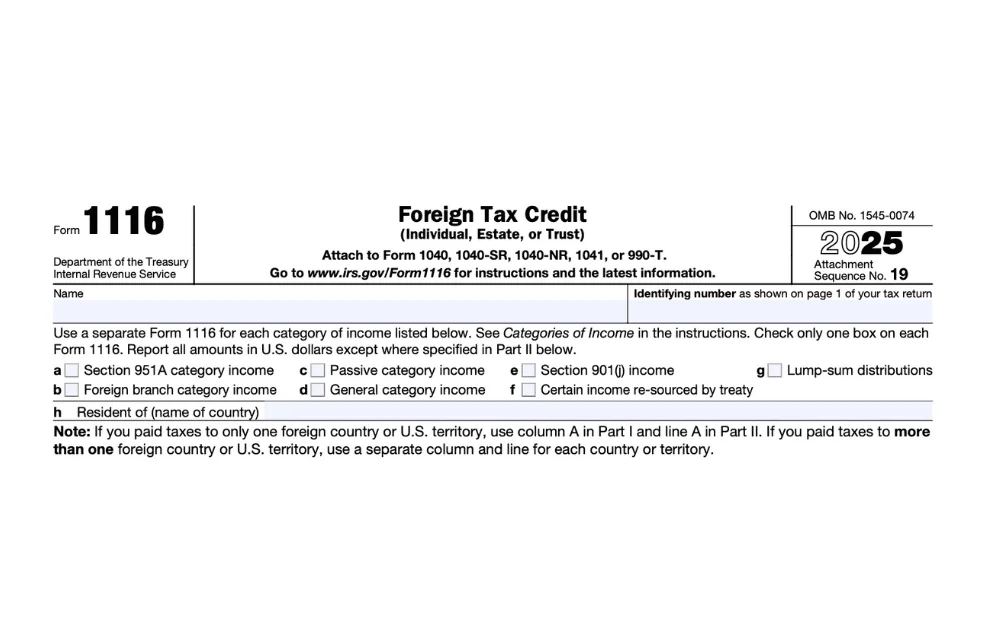
- The Foreign Tax Credit, claimed on Form 1116, gives you a dollar-for-dollar U.S. tax credit for UK income tax paid
- The Foreign Earned Income Exclusion, which excludes up to $130,000 of foreign-earned wages in 2025 ($132,900 in 2026), though most Americans in the UK find the FTC more valuable due to high UK rates
- The U.S.-UK Tax Treaty, which sorts out which country taxes specific items first
- The U.S.-UK Totalization Agreement, which prevents double Social Security and National Insurance contributions
You will also have two reporting obligations that catch many new arrivals by surprise:
- The FBAR (FinCEN Form 114) is required if your foreign accounts combined exceed $10,000 at any point in the year
- Form 8938, if your foreign financial assets exceed FATCA thresholds
If you are already behind on past returns, the Streamlined Filing Procedures let you catch up without penalties when you qualify.
Two often-missed pre-move items belong on the same step:
- Sever state tax ties before you go. California, New York, Virginia, and a few other sticky states can keep taxing you after you move if you do not formally break residency. Close domicile ties before you leave.
- If you are a dual U.S.-UK citizen, your filing picture is different from that of a single-citizenship American. See our U.S.-UK dual-citizen tax guide for specifics.
Who We Help: Americans in the UK
If you are in the middle of a major life transition, such as a move to the UK, you do not have to figure out cross-border tax rules alone. Learn more about how we help Americans living in the UK and our coordinated U.S. and UK tax preparation.

Americans in the UK File in Two Countries Every Year. You Don’t Have to Manage It Alone.
Frequently Asked Questions About Moving to the UK and U.S. Taxes
You are a UK tax resident for a tax year if you meet any of the automatic UK tests, or if you spend 183 or more days in the UK in that tax year, or if you meet the “sufficient ties” test under the Statutory Residence Test. The UK tax year runs from April 6 to April 5, which is offset from the U.S. calendar tax year, so split-year treatment often applies in your first year.
Yes, as a U.S. citizen or green card holder, you continue to file a full Form 1040 on your worldwide income every year, regardless of where you live. The FEIE, FTC, and U.S.-UK treaty work together to prevent double taxation in most cases.
Americans abroad receive an automatic two-month extension to June 15, with the option to extend to October 15 by filing Form 4868. UK Self Assessment returns are due online on January 31, following the end of the UK tax year on April 5.
Not always. The FIG regime eliminates UK tax on foreign income, which sounds great, but it also eliminates the UK tax credit you would otherwise use to offset your U.S. liability. If your only foreign income is from the U.S., the FIG election can leave you paying full U.S. tax with no offsetting UK tax to claim. Run the numbers on both paths before you make your decision.
Generally, no, growth inside a 401(k), traditional IRA, or Roth IRA is not taxed by the UK while it remains in the account. Distributions are taxable in the U.S. and may also be taxable in the UK, depending on the account type and treaty position you take.
The remittance basis ended for tax years beginning on or after April 6, 2025. Former non-doms with unremitted foreign income and gains from earlier years can use the Temporary Repatriation Facility (TRF) to bring those funds into the UK at a reduced rate of 12% for the 2025-26 and 2026-27 tax years, rising to 15% in 2027-28.
Plan Your UK Move With Both Tax Systems in Mind
A move to the UK does not have to come with cross-border tax surprises. With the right plan, you can lock in your FIG eligibility, time your gains, structure your investments, and arrive ready to file in both countries.
Our team can help you build a pre-move plan that covers your U.S. obligations, your new UK obligations, and the treaty and credit rules that connect them. If you have already moved and are catching up on past filings, we handle that too. Visit our UK tax services page or get started today, and we will match you with an accountant who handles both sides of the Atlantic every day.

Get Both Tax Systems Right From Day One
This article is for informational purposes only and does not replace personalized tax advice. UK and U.S. tax rules are complex, change frequently, and apply differently to each person’s facts. Speak with a qualified cross-border tax advisor before making decisions tied to your move, your investments, or your estate plan.
Related Resources


Featured In