IRS Announces January 26 Start Date for the 2026 Tax Season



The IRS has announced that the 2026 tax filing season will begin on Monday, January 26, 2026. This key date marks the start of filing season for Americans around the world, including U.S. expats preparing to meet federal tax obligations.
While “Opening Day” is a milestone for every taxpayer, US expats face a particularly complex landscape this year. With the recent passage of the One Big Beautiful Bill (OBBB) Act, significant shifts in international tax law have taken effect, fundamentally changing how Americans abroad report income and claim credits.
Below is what expats need to know about the IRS tax season start date, key deadlines, and important 2026 changes that matter specifically if you live outside the U.S.
Expat Taxes Are What We Do
When Can You Start Filing Taxes in 2026?
You can start filing your 2025 U.S. tax return on January 26, 2026. However, as an American abroad, your calendar looks slightly different than a stateside taxpayer’s.
Key IRS Tax Dates for the 2026 Filing Season
Here are the most important IRS dates expats should mark on their calendars.
| Date | What It Means |
|---|---|
| January 15, 2026 | 4th quarter 2025 estimated tax payment due |
| January 26, 2026 | IRS begins accepting 2025 tax returns |
| February 2, 2026 | Deadline for W-2s and many 1099 forms |
| April 15, 2026 | Tax Day: The deadline to pay any taxes owed to avoid interest and penalties. This is also the standard deadline for the FBAR (FinCEN Form 114), though it receives an automatic extension to October. |
| June 15, 2026 | The automatic two-month filing extension deadline for U.S. citizens and green card holders living outside the U.S. (filing only, not payment) |
| October 15, 2026 | The final extended deadline for those who filed Form 4868 by June 15. This is also the final deadline for the FBAR. |
Special Filing Rules for Expats (June 15 Deadline)
If you live outside the United States, you usually qualify for an automatic filing extension to June 15, 2026.
Important details:
- This extension applies only to filing, not payment
- Any taxes owed were still due April 15, 2026
- Interest starts accruing after April 15, even if you file later
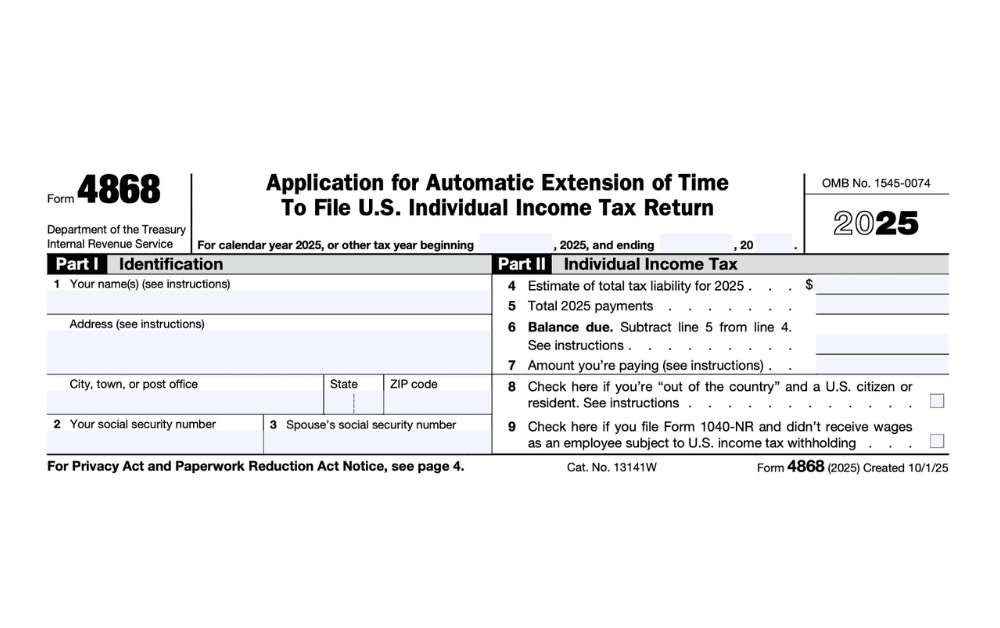
If you need more time beyond June 15, you must file Form 4868 to extend your filing deadline to October 15.
Related Article: Form 2350 vs. Form 4868: What Is the Difference?
What’s Different for Expats in the 2026 Tax Season
IRS Direct File Is No Longer Available
The IRS has discontinued its Direct File program for the 2026 season.
That means:
- Expats cannot file directly through an IRS-built platform
- Filing must be done via Free File partners or private tax preparation services
- Returns involving foreign income and international forms will still require specialized software or professional help
Fewer Paper Checks in 2026
For the 2026 filing season, the U.S. Treasury and IRS are continuing a broader shift away from paper checks for both refunds and certain payments.
What this means in practice:
- Paper checks are being de-emphasized, not encouraged
- Direct deposit and electronic payments are the preferred (and most reliable) options
- Paper checks sent abroad may face longer delays or delivery issues
For expats, this makes electronic filing and direct deposit more important than ever. If your U.S. bank account details have changed—or if you’ve relied on mailed checks in the past—this is a good year to update your information before filing.
Related Article: Top 21 Questions Expats Have About the IRS Phasing Out Paper Checks
New 1% Remittance Tax
Starting in 2026, a 1% federal excise tax applies to international transfers funded by:
- Cash
- Money orders
- Cashier’s checks
Electronic transfers (ACH or wire) remain exempt. Most expats won’t be affected — but it’s important for anyone handling large or irregular cross-border payments.
Updated FEIE and Standard Deduction Amounts
For 2025 income filed in 2026:
- Foreign Earned Income Exclusion (FEIE): $130,000
- Standard Deduction:
- $15,750 (Single)
- $31,500 (Married Filing Jointly)
These inflation adjustments can materially change whether the FEIE or Foreign Tax Credit produces a better outcome.
Expect a More Challenging Filing Season
The National Taxpayer Advocate has warned that the 2026 filing season may be challenging due to IRS staffing reductions.
What that means in practice:
- Electronic filing is strongly recommended
- Refund timing may be less predictable for complex returns
- Filing early reduces processing risk, especially for expats
GILTI Has Been Replaced by NCTI (For Certain 2025 Income Filed in 2026)
Under the One Big Beautiful Bill (OBBB) Act, the Global Intangible Low-Taxed Income (GILTI) regime has been restructured and replaced with Net CFC-Tested Income (NCTI).
For affected expat business owners, this may first appear on 2025 tax returns filed in 2026, depending on entity structure and effective dates.
Key differences include:
- No more QBAI exclusion: The prior 10% exclusion tied to tangible business assets has been eliminated.
- Revised effective tax rate: The applicable rate has shifted to approximately 12.6%.
- Improved use of foreign tax credits: Limitations on crediting foreign taxes have been eased, allowing more local taxes to offset U.S. liability.
These are structural changes, not simple rate adjustments, and they can materially affect how foreign corporate income is reported and taxed.
Why This Matters (If You’re Affected)
If you own a foreign corporation, filing in 2026 may be the first time these rules impact your return. That makes entity classification, income characterization, and credit planning especially important this season.
For everyone else, this section can be safely ignored, your filing timeline and core expat tax rules remain unchanged.
Built for Americans Living Abroad
Reporting Requirements
In addition to income tax returns, US taxpayers abroad must adhere to other reporting requirements like the Report of Foreign Bank and Financial Accounts (FBAR) and the Foreign Account Tax Compliance Act (FATCA). The deadline for FBAR filing is April 15, with an automatic extension to October 15.
Why Expats May Want to File Early in 2026
Greenback data showed an unprecedented number of extensions filed in 2025. Even though many expats qualify for an automatic filing extension to June 15, filing earlier in the 2026 tax season can reduce risk and simplify the process.
Filing early can help you:
- Get refunds faster: The IRS continues to prioritize e-filed returns with direct deposit. Early filers avoid peak-season processing backlogs.
- Avoid document delays: Missing foreign income statements, late 1099s, or corrected forms are easier to resolve early in the season.
- Reduce identity-theft risk: Filing as soon as your information is complete lowers the chance of fraudulent returns being filed in your name.
- Navigate 2026 changes with less stress: This season includes multiple adjustments affecting expats, from filing logistics to business-owner rules. Starting early gives you time to make informed decisions.
- Manage international logistics: Mail delays, time-zone differences, and bank verification issues are easier to handle outside the April rush.
Early filing doesn’t mean rushing. It means giving yourself room to file accurately, especially if your return includes foreign income, credits, or reporting requirements.
Final Takeaway: Know the Dates and Plan for the Details
For the 2026 tax season:
- January 26, 2026 is when you can start filing your 2025 U.S. tax return
- April 15, 2026 is the payment deadline
- June 15, 2026 is the automatic filing extension for many expats
- October 15, 2026 is the final deadline if you request an extension
But for Americans living abroad, knowing when to file is only part of the equation. This season brings real operational and legal nuances, from filing methods and refund delivery to business-owner reporting rules, that can affect outcomes if they’re overlooked.
Greenback Expat Tax Services focuses exclusively on U.S. expats. If you want help filing correctly, minimizing risk, and understanding how this season’s changes apply to your situation, working with an expat-only tax team can make the process significantly easier.
Filing From Abroad Doesn’t Have to Be Hard
IRS Tax Season Start Date for Expats: FAQs
Expats can start filing their 2025 U.S. tax return when the IRS opens the filing season on January 26, 2026, the same date as domestic filers.
Yes. Most U.S. citizens and green card holders living abroad qualify for an automatic filing extension to June 15, 2026. However, any taxes owed were still due by April 15, 2026 to avoid interest.
You can prepare your return in advance, but the IRS will not accept or process it until January 26, 2026. Some software allows you to “stage” your return and submit it once filing opens.
Often, yes. Filing early can help expats receive refunds faster, reduce identity-theft risk, and avoid processing delays, especially for returns with foreign income, tax credits, or international reporting.
Paper checks are still available, but the IRS and U.S. Treasury are continuing to move toward electronic payments. For expats, direct deposit is typically faster and more reliable than receiving a check by mail abroad.
Yes. Many expats still have a filing requirement even if they owe no tax after applying the Foreign Earned Income Exclusion or Foreign Tax Credits. Filing is how you remain compliant.
No. Some changes, such as new rules affecting foreign corporations, apply only to a narrow group of expat business owners. Most expats filing wages or self-employment income are unaffected by those provisions.
You can request an additional extension to October 15, 2026 by filing Form 4868. This extends the filing deadline only, not the payment deadline.
Greenback focuses exclusively on U.S. expat tax returns, pairing Americans abroad with dedicated accountants who understand foreign income, international reporting requirements, and expat-specific deadlines, so returns are filed accurately, on time, and with less stress.
Related Articles
- Expat Tax Extensions: A Guide for Americans Living Abroad
- Why Do I Have to Pay U.S. Taxes If I Live Abroad?
- IRS E-File Shutdown 2025: Dates, Deadlines, and What’s Different This Year
- Navigating the Tax Season: Insights on American and Expat Filing Trends
- What Are the 2025 Tax Year Deadlines for American Expats?