Can I E-File My U.S. Tax Return From Abroad?
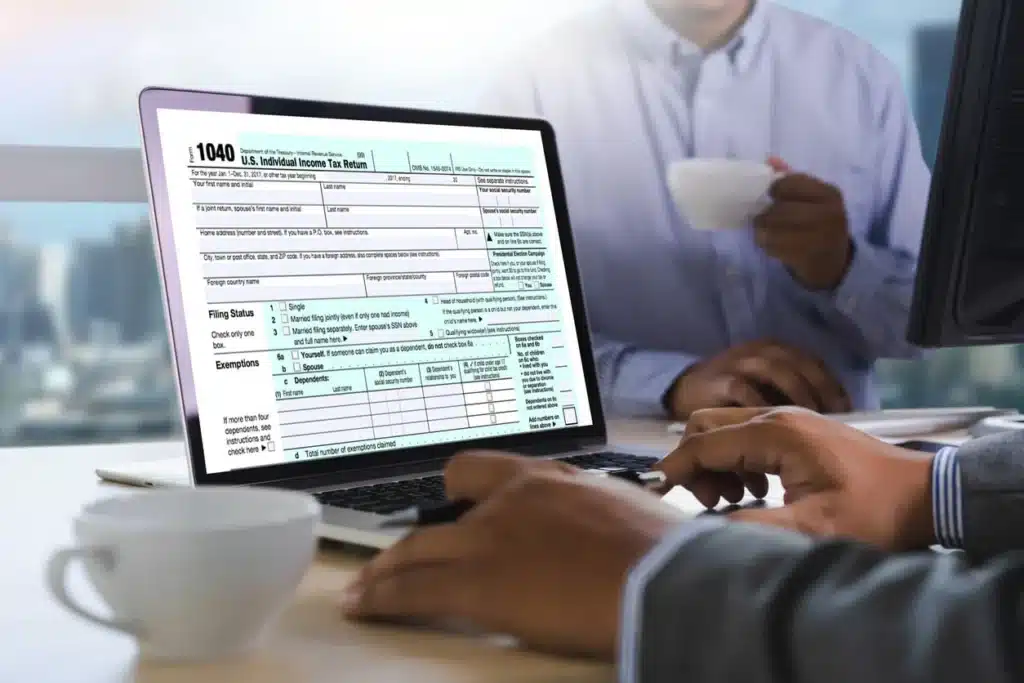

Yes. Most Americans living abroad can and should e-file their federal tax return. E-filing is faster, more secure, and gives you instant confirmation that the IRS received your return. Refunds for e-filed returns are typically issued within 21 days, compared to six weeks or longer for paper returns mailed internationally.
According to IRS data, the vast majority of individual tax returns are now filed electronically. For expats specifically, e-filing eliminates the risk of international mail delays, lost envelopes, and the weeks of uncertainty that come with mailing paper forms across borders.
However, not all expat tax situations can be e-filed. Certain forms, elections, and first-time filings still require paper submission. Here’s exactly how e-filing works for Americans abroad, your options for filing electronically, and when you may need to file on paper instead.

Ready to E-File Your U.S. Taxes From Abroad?
How Does E-Filing Work?
E-filing (electronic filing) means submitting your tax return to the IRS digitally through an IRS-approved system, rather than printing and mailing paper forms. When you e-file, the IRS receives and begins processing your return almost immediately.
The basic process:
- Prepare your return using tax software or through a tax professional
- Submit electronically through an IRS-approved e-file system
- Receive confirmation that the IRS accepted your return (usually within 24-48 hours)
- Track your refund using the Where’s My Refund tool, starting about four weeks after submission
E-filing is available from late January (when the IRS opens the filing season) through October 15 each year. The IRS temporarily shuts down e-file in late December for annual system maintenance. For this year’s specific dates, see our guide on the IRS e-file shutdown schedule.
What Are My E-Filing Options as an Expat?
Americans abroad have three main ways to e-file.
1. Through an Expat Tax Professional
This is the most common choice for Americans abroad. A CPA or Enrolled Agent who specializes in expat taxes prepares your return and submits it electronically on your behalf. Benefits include:
- They handle all expat-specific forms (Form 2555, Form 1116, Form 8938, and others)
- They submit electronically and provide confirmation of IRS acceptance
- They can advise on FEIE vs. FTC strategy, treaty positions, and foreign account reporting
- They manage situations that require a mix of e-filed and paper-filed forms
This is especially valuable if your return involves multiple foreign income sources, self-employment abroad, foreign business ownership, or catching up on late returns.
2. Commercial Tax Software
Programs like TurboTax, H&R Block, and TaxAct allow you to prepare and e-file your return yourself. However, there are important limitations for expats:
- Basic tiers often don’t include expat forms. You typically need a premium version to access Form 2555 (FEIE) and Form 1116 (FTC). Check before purchasing.
- Foreign address formatting can cause issues. Some software doesn’t handle non-U.S. addresses well, which can result in rejections.
- Complex expat situations may not be supported. Multi-country income, foreign business ownership, treaty positions, and some information returns may not be available in consumer software.
- Limited guidance on expat-specific decisions. Software won’t tell you whether the FEIE or FTC saves you more money in your specific situation.
If your expat tax situation is straightforward (single income source, no foreign business, no late returns), commercial software can work. For anything more complex, a specialist is usually worth the investment.
3. IRS Free File
The IRS partners with commercial tax software providers to offer Free File for taxpayers with an adjusted gross income (AGI) at or below the current threshold. Free File supports most standard forms, including some expat-specific schedules.
There is also Free File Fillable Forms, which is available to all taxpayers regardless of income. This is essentially a digital version of paper forms with basic math calculations. It supports e-filing but provides no guidance, no interview process, and no error checking beyond basic math.

The IRS Direct File pilot program, which allowed taxpayers to file directly through the IRS website, was discontinued for the 2026 filing season. Free File through commercial partners remains available.
What Can Be E-Filed and What Requires Paper?
Most expat returns can be e-filed, but certain situations require paper filing. Here’s a quick reference.
Forms and Situations That Support E-Filing
| Form / Situation | E-File? |
|---|---|
| Form 1040 with a foreign address | Yes |
| Form 2555 (Foreign Earned Income Exclusion) | Yes |
| Form 1116 (Foreign Tax Credit) | Yes |
| Form 8938 (FATCA) | Yes (attaches to e-filed 1040) |
| Schedule E (rental income) | Yes |
| Schedule C (self-employment) | Yes |
| Form 4868 (extension request) | Yes |
| Form 8949 (capital gains) | Yes |
| FinCEN Form 114 (FBAR) | Separate electronic system (BSA E-Filing) |
Situations That May Require Paper Filing
| Form / Situation | Why Paper? |
|---|---|
| Form 8833 (treaty-based return positions) | Some treaty elections require paper attachment |
| First-time Form 5471 (foreign corporation) | Initial filing may require paper in some cases |
| Dual-status returns (year you moved abroad or returned) | Cannot be e-filed |
| Form 2350 (special extension for bona fide residence test) | Must be mailed |
| Amended returns (Form 1040-X) | Can now be e-filed in most cases, but some complex amendments still require paper |
| Returns with repeated e-file rejections | After multiple failed attempts, paper filing with Form 8948 is accepted |
Pro tip: If only one form on your return requires paper filing, your tax professional may be able to e-file the main return and mail the paper-only attachment separately. Ask about this option.
Why E-Filing Matters More for Expats Than Domestic Filers
For Americans in the U.S., the choice between e-file and paper is mostly about speed. For Americans abroad, it can mean the difference between a smooth filing and months of uncertainty.
- International mail is unreliable for tax returns. Paper returns mailed from overseas can take weeks to reach the IRS, and there’s no reliable tracking once the envelope enters the U.S. postal system. If the return is lost, you have no proof that it was filed.
- E-file gives you instant proof of filing. The IRS sends an electronic acknowledgment within 24-48 hours. This confirmation protects you from late-filing penalties and proves your return was submitted on time.
- Refunds arrive faster. E-filed returns with direct deposit typically produce refunds within 21 days. Paper returns mailed internationally can take six weeks or longer, especially during peak filing season. Under the new paper check phase-out rules, refunds without valid banking information may be further delayed.
- Fewer processing errors. E-filed returns undergo automated validation before submission, catching common errors such as mismatched Social Security numbers, math errors, and missing schedules. Paper returns are manually entered by IRS staff, increasing the risk of data entry errors.
Common E-File Problems for Expats (and How to Fix Them)
1. Foreign Address Rejection
Some e-file systems struggle with non-U.S. addresses. If your return is rejected due to an address formatting issue:
- Use the foreign address fields specifically designed for international addresses (country, province, postal code)
- Don’t try to force a foreign address into U.S. address fields
- If the software doesn’t support foreign addresses at all, consider switching to software that does or working with a tax professional
2. Prior-Year AGI Mismatch
The IRS uses your prior-year AGI to verify your identity when you e-file. If you didn’t file last year, used a different filing method, or the IRS hasn’t processed your prior return, your e-file may be rejected for an AGI mismatch. Solutions:
- Use your IRS transcript to confirm the exact AGI the IRS has on file
- If you didn’t file last year, enter $0 as your prior-year AGI
- Request an Identity Protection PIN (IP PIN) from the IRS, which bypasses the AGI check entirely
3. ITIN Issues
If you or a dependent uses an ITIN (Individual Taxpayer Identification Number) instead of a Social Security number, expired ITINs will cause e-file rejection. ITINs that haven’t been used on a tax return in three consecutive years expire and must be renewed before e-filing.
E-Filing the FBAR: A Separate Process
The FBAR (FinCEN Form 114) is not part of your tax return and cannot be e-filed through the same system. It must be filed separately through the BSA E-Filing System operated by FinCEN (the Financial Crimes Enforcement Network).
Key differences:
| Tax Return (Form 1040) | FBAR (FinCEN Form 114) | |
|---|---|---|
| Filed with | IRS | FinCEN (Treasury) |
| E-file system | IRS MeF (through software/preparer) | BSA E-Filing System |
| Deadline | April 15 (June 15 for expats, October 15 with extension) | April 15 (automatic extension to October 15) |
| Can a preparer file for you? | Yes | Yes (requires Form 114a authorization) |
For detailed FBAR guidance, see our FBAR filing guide.
Frequently Asked Questions
No. E-filing is not mandatory for individual taxpayers, though the IRS strongly encourages it. You can still file a paper return by mail. However, e-filing is significantly faster, more reliable, and provides proof of filing that paper returns do not.
Yes. You can e-file late returns through October 15 of the filing year. After that, you’ll need to paper-file or wait until the next e-file season opens in January. For Americans abroad who need to catch up on multiple years, see our guide on streamlined filing procedures.
You can e-file returns for the current tax year and the two prior years. Returns older than that must be paper filed.
No. You can e-file without providing banking information. However, without a U.S. bank account for direct deposit, your refund may be delayed under the new electronic payment rules. See our guide on IRS Notice CP53E for details on how this affects expats.
Most states that require income tax returns support e-filing, though the process and software vary by state. Your federal e-file software or tax professional can usually handle state e-filing at the same time.
You’ll receive a rejection notice with an error code explaining the issue. Common expat-related rejections include AGI mismatches, expired ITINs, and address formatting issues. You can fix the issue and resubmit. If the return is rejected multiple times, you can paper-file and attach Form 8948 (Preparer Explanation for Not Filing Electronically).
Yes. E-filing uses encrypted transmission and is more secure than mailing paper documents internationally. The IRS e-file system meets federal security standards for data protection.
E-filing from abroad doesn’t have to be complicated. At Greenback, we e-file thousands of expat returns every year and handle the complexities that trip up consumer software, from foreign address formatting to FEIE/FTC strategy to coordinating e-filed and paper-filed forms. Our CPAs and Enrolled Agents live in 14 time zones, and many are expats themselves.
If you’re ready to be matched with a Greenback accountant, click the get started button below. For general questions on expat taxes or working with Greenback, contact our Customer Champions.

E-File Your U.S. Taxes From Abroad With Confidence
This article is for informational purposes only and should not be considered tax advice. IRS e-filing rules and systems are subject to change. For the latest on electronic filing options, visit the IRS e-file page. Always consult with a qualified tax professional regarding your specific situation.
Related Resources
- How to File U.S. Taxes While Living Abroad: Step-by-Step Process
- IRS E-File Shutdown: Dates and What to Know
- IRS Paper Checks: What Americans Abroad Need to Know
- IRS Notice CP53E: What It Means and How to Get Your Refund
- Form 4868: How to File a Tax Extension as an Expat
- Do U.S. Expats Need to File Form 1040?
- FBAR: What It Is, Who Must File, and How to Report Foreign Accounts
- 2026 U.S. Tax Filing Deadlines for Americans Living Abroad
- Streamlined Filing for U.S. Expats
- U.S. Expat Taxes: The Complete Guide