Trump’s New Income Tax Comments: What Changes for Expats, and What Doesn’t


President Trump is once again floating the idea of cutting federal income tax, this time saying tariff revenue could replace it over the next few years. He made the latest comments on a Thanksgiving video call with U.S. service members, saying tariff income could be “so large” that it might allow income tax to be “cut out completely.” Many Americans abroad are watching the Trump income tax proposal closely to understand how it could reshape their filing requirements.
In this article, we’ll cover what has actually happened so far and what eliminating federal income tax would realistically mean for U.S. expats.
Whether or not major tax reform happens in 2026, what matters today is that this year’s return is filed correctly. Greenback can help you finish 2024 securely and start 2025 on solid footing. Get Started Today.
What Trump has actually said about income tax and tariffs
Since his first term, Trump has repeatedly linked two themes: substantially reducing or eliminating federal income tax and using tariff revenues to make up the difference. The framing has varied over time, but the idea has been consistent:
- In 2018–2020, administration officials floated concepts that included replacing major portions of income tax revenue with tariffs on imports and reshoring incentives.
- In 2023–2024, Trump advisers publicly discussed the “tariff-funded government” concept more directly, and policy groups began modeling whether tariffs could replace income tax revenue on their own.
- In 2024 and 2025, Trump returned to the idea in interviews and campaign-style appearances, often describing a future where Americans would “not need to pay income tax” because the U.S. would be collecting more money from other countries through trade.
- In November 2025, he was more explicit than ever: the goal would be to “cut out completely” the federal income tax “over the next couple of years” using tariff revenue as the primary replacement.
TL;DR: The possibility of a Trump income tax plan that replaces revenue with tariffs is a renewed version of a longer-standing idea, not a new policy direction.
Trump’s income tax impact on expats
If the United States actually got rid of federal income tax rather than simply cutting rates or expanding deductions, the clearest change for expats would be the elimination of U.S. federal income tax liability on foreign income. In a full repeal scenario:
- Salary, self-employment income, and investment income earned abroad would no longer be subject to federal income tax.
- Expats who currently owe residual U.S. tax, typically those in low-tax jurisdictions or with significant passive income, would see that federal tax bill drop to zero.
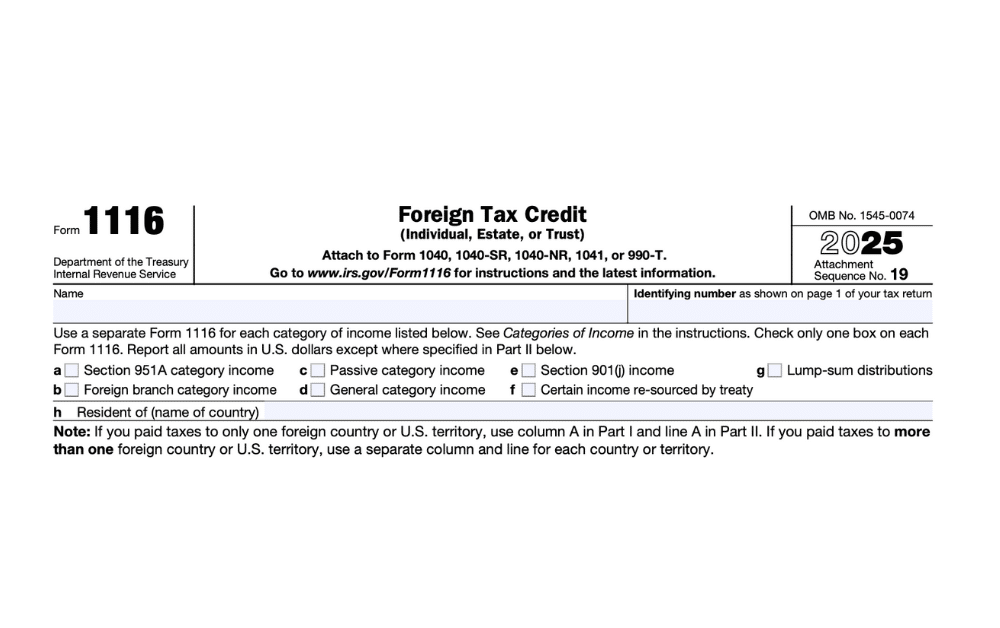
- If the Trump income tax proposal ever became law, the Foreign Earned Income Exclusion (FEIE) and the Foreign Tax Credit (FTC) would become functionally unnecessary because there would be no federal income tax to offset.
File confidently, even from abroad.
What would not automatically change for expats, even if income tax goes away
The U.S. tax system for Americans abroad is made up of multiple layers, and the income tax is only one of them.
Filing and worldwide reporting requirements could survive
Even if federal income tax rates were reduced to zero, the government could still require Americans abroad to file informational returns reporting worldwide income for transparency, enforcement, and benefits-eligibility purposes. In other words, the tax could disappear without the paperwork disappearing.
FBAR would remain fully in force
The requirement to report foreign financial accounts (FBAR) does not come from the Internal Revenue Code, it comes from a separate body of financial law. Eliminating federal income tax would not cancel FBAR, its filing rules, or its penalty structure.
FATCA could be decoupled from the tax return instead of being repealed
While Foreign Account Tax Compliance Act (FATCA) reporting currently accompanies the income tax return, the government could easily create a standalone FATCA filing requirement to preserve foreign financial account reporting. Foreign banks would still screen and report on U.S. citizens unless the law changed separately.
State income taxes remain independent
Getting rid of the federal income tax would not touch state-level taxation. Some expats remain, state taxpayers if their former state deems them domiciliaries, a rule that varies significantly across states.
Taken together, these realities mean that even in a no federal income tax world, many of the core stresses of expat compliance could remain unless separate reforms addressed reporting burdens.
The best thing expats can do right now is stay fully compliant under current law. Greenback makes the filing process straightforward, stress-free, and fully remote from anywhere in the world. Get Started Today.
Would eliminating federal income tax make life dramatically easier for all expats?
Depending on the individual’s financial profile, eliminating the federal income tax could be beneficial or more challenging than the current status quo.
Expats who would see major benefit
- High-income earners in countries with low or no income tax
- People with significant foreign investment income that currently triggers residual U.S. tax
- Digital nomads and remote workers in tax-advantaged jurisdictions
Expats who would see limited financial benefit
- Middle-income workers in normal- or high-tax countries who already reduce U.S. tax to zero through FEIE/FTC
- Retirees whose foreign pension income is already fully covered by foreign tax credits
Expats who would see little change in compliance burden
- Anyone with foreign financial accounts above the FBAR threshold
- Anyone subject to FATCA reporting
- Anyone for whom a home state still asserts tax residency
So what should expats do right now?
Despite the headlines, nothing has changed in U.S. tax law yet. Expats should continue to file normally, report worldwide income, use FEIE/FTC as appropriate, and comply with FBAR and FATCA.
However, the recent intensity of messaging does signal something important: tax reform affecting Americans abroad is back in the national conversation. For now, though, income-tax elimination remains a proposal, not policy, and until the law is rewritten, Americans overseas are still bound by citizenship-based filing rules.
If you still need to file your 2024 expat return, now is the time. E-file closes on December 26 for both individuals and businesses, and once it’s shut, returns can only be mailed and will process much more slowly. Greenback’s expat CPAs can get your return filed accurately and on time, even if you’re overseas or pressed for time.
Stay compliant, no matter what tax reforms come next.
Related Articles: