Form 8858 for Expats Explained: Reporting Foreign Disregarded Entities



If you are a U.S. person who owns a foreign disregarded entity or operates a foreign branch, you are required to file Form 8858 with the IRS. There is no income threshold. Even if the entity had zero activity during the year, filing is generally still required.
According to the IRS, Form 8858 is an information return that reports the financial activities of foreign disregarded entities (FDEs) and foreign branches (FBs) controlled by U.S. persons. The form itself does not create any new tax liability, but failure to file can trigger a $10,000 initial penalty per entity, per year, with continuation penalties reaching $50,000. Common situations that trigger a Form 8858 filing requirement include:
- Sole ownership of a foreign LLC, limited company, or similar single-member entity classified as disregarded for U.S. tax purposes
- Operating a foreign branch of a U.S. business
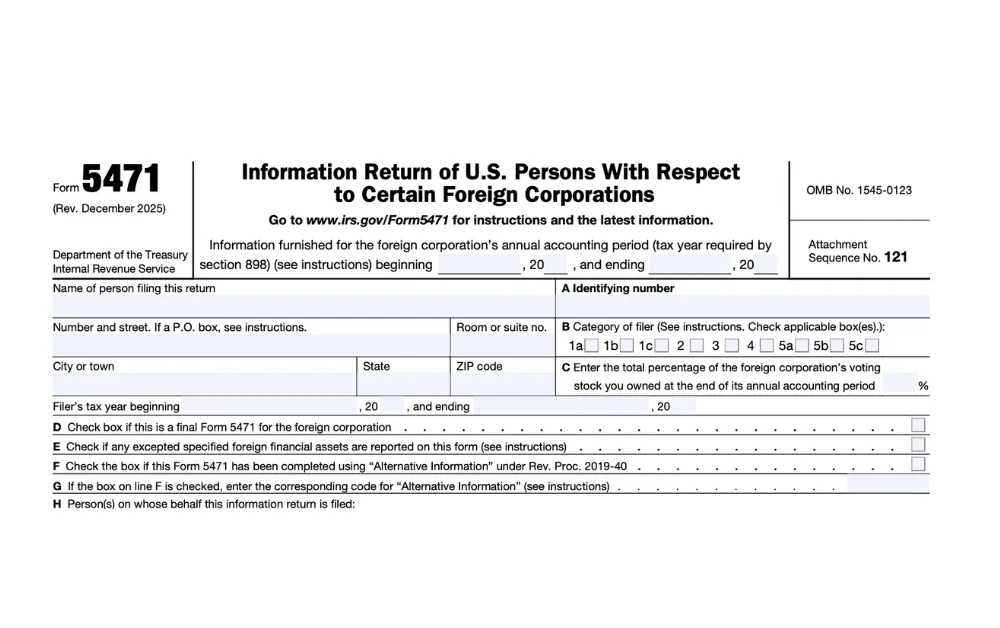
- Filing Form 5471 for a controlled foreign corporation that owns an FDE or operates a foreign branch
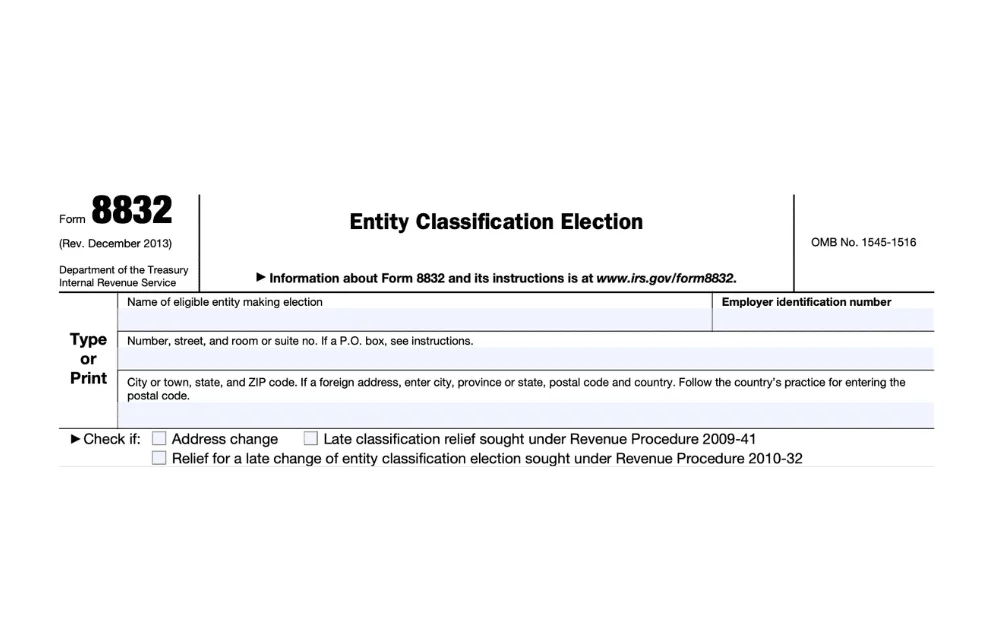
- Making a check-the-box election on Form 8832 to treat a foreign corporation as a disregarded entity

Not Sure If You’re Required to File Form 8858?
Here’s what Form 8858 requires, why it catches so many expat business owners off guard, and how Greenback handles it for you.
What Is a Foreign Disregarded Entity?
A foreign disregarded entity (FDE) is a business formed outside the United States that the IRS does not recognize as separate from its owner for tax purposes. The entity exists as a legal structure under local law, but for U.S. tax purposes, its income, expenses, assets, and liabilities are treated as belonging directly to the owner. The owner reports the business income on their personal return (Form 1040), typically on Schedule C.
Many Americans abroad prefer this structure because it provides limited liability under local law while avoiding the double taxation and complex compliance requirements of a foreign corporation (which would require Form 5471).
The most common examples include single-member foreign LLCs, UK limited companies with a sole U.S. owner who has elected disregarded entity treatment, and similar single-owner structures in other countries.

A foreign branch, which is not a separate legal entity but rather a division of a U.S. business operating in another country, also requires Form 8858 filing. The reporting requirements are the same whether your foreign operation is structured as an FDE or a branch.
Who Must File Form 8858?
You must file Form 8858 if any of the following apply:
| Filer Category | Who It Covers |
|---|---|
| Category 1 | U.S. persons who directly own an FDE or directly operate a foreign branch |
| Category 2 | U.S. persons who are the tax owner of an FDE or operate an FB indirectly through tiers of FDEs or partnerships |
| Category 3-5 | U.S. persons filing Form 5471 or Form 8865 for a CFC or controlled foreign partnership that owns an FDE or operates a foreign branch |
| Category 6 | Certain U.S. corporations that are partners in partnerships with dual consolidated losses |
Important distinction: tax owner vs. direct owner. The IRS separates these two concepts to prevent gaps in reporting. The tax owner is the person treated as owning the FDE’s assets for tax purposes. The direct owner is the legal owner. In most cases for individual expats, these are the same person, but in tiered structures (where one entity owns another), the tax owner and direct owner may be different, and both may have filing obligations.
If you own multiple FDEs or operate multiple foreign branches, you must file a separate Form 8858 for each one.
What Does Form 8858 Report?
Form 8858 functions like a mini financial report for your foreign entity, requiring detailed disclosure across multiple schedules.
| Schedule | What It Reports | Why It Matters |
|---|---|---|
| Schedule C | Income statement (revenue, expenses, profit/loss) | Shows the IRS the entity’s earnings, all converted to U.S. dollars |
| Schedule F | Balance sheet (assets, liabilities, equity) | Provides a snapshot of the entity’s financial position |
| Schedule J | Foreign income taxes paid or accrued | Supports Foreign Tax Credit claims on Form 1116 |
| Schedule M | Transactions between the FDE and its owner or related entities | Most commonly reviewed schedule during audits |
| Schedule C-1 | Foreign currency gains and losses | Applies when the FDE’s functional currency is not the U.S. dollar |
| Schedule G | Additional information (trust ownership, partnership interests, consolidated group status, GloBE rules) | Includes new Pillar Two/GloBE reporting for jurisdictions with minimum top-up taxes |
| Schedule H | Current earnings and profits with U.S. tax adjustments | Reconciles local accounting with U.S. tax rules |
| Schedule I | Asset transfers | Required when property is transferred to or from the FDE |
All financial information must be reported in U.S. dollars. You must convert amounts from the entity’s functional currency using the appropriate IRS exchange rate for the tax year. An organizational chart showing the ownership chain between you and the FDE must also be attached.
Why Is Form 8858 Complex for Expat Business Owners?
On paper, Form 8858 is “just an information return.” In practice, it is one of the more technically demanding forms for Americans operating businesses abroad because of how many moving parts it involves.
- Currency conversion across every schedule: Every line item on every schedule must be converted from the entity’s functional currency to U.S. dollars. This means income, expenses, assets, liabilities, taxes paid, and intercompany transactions all require accurate conversion using the correct rates. For entities operating in volatile currencies, this creates additional complexity.
- Schedule M intercompany reporting: The IRS pays close attention to transactions between the FDE and its owner. Loans, capital contributions, payments for services, and shared expenses must all be documented on Schedule M. This is the schedule most frequently reviewed during audits, and errors here are a common trigger for further IRS scrutiny.
- Coordination with other international forms: Form 8858 rarely exists in isolation. Depending on your business structure, you may also need to file Form 5471 (if you have a foreign corporation), Form 8865 (for foreign partnerships), Schedule C (for the business income itself), and possibly FBAR and Form 8938 if the entity holds foreign financial accounts above the reporting thresholds.
- Section 987 currency translation rules: For tax years beginning after December 31, 2024, updated Section 987 regulations change how foreign branch and FDE income is translated into U.S. dollars for tax purposes. These rules can affect the timing and character of income recognized on your return and require careful coordination with your broader tax strategy.
- GloBE/Pillar Two reporting: Schedule G, Line 14 now requires disclosure of whether your FDE operates in a jurisdiction that has adopted Qualified Domestic Minimum Top-up Tax (QDMTT), Income Inclusion Rule (IIR), or Undertaxed Profits Rule (UTPR) provisions. If the jurisdiction’s effective tax rate falls below 15%, additional top-up taxes may apply.
What Are the Penalties for Not Filing?
The penalties for failing to file Form 8858 are significant, especially considering the form is purely informational:
| Violation | Penalty |
|---|---|
| Failure to file Form 8858 on time | $10,000 per entity, per year |
| Continued failure after IRS notice (90+ days) | Additional $10,000 per 30-day period, up to $50,000 |
| Foreign Tax Credit reduction | 10% reduction, with additional 5% reductions for continued non-compliance |
| Willful non-compliance | Potential criminal penalties |

Even dormant FDEs with no income, no expenses, and no activity generally still require a Form 8858 filing. Failing to file for an inactive entity carries the same $10,000 penalty as failing to file for an active one. If you have created a foreign entity but are not currently using it, confirm with your tax professional whether a filing obligation exists.
When Is Form 8858 Due?
Form 8858 is filed as an attachment to your federal income tax return. The deadlines follow your Form 1040 schedule:
| Filer Location | Deadline | Extended Deadline |
|---|---|---|
| U.S.-based filers | April 15, 2026 | October 15, 2026 (with Form 4868) |
| Americans living abroad | June 15, 2026 (automatic) | October 15, 2026 (with Form 4868) |
Extensions for your Form 1040 automatically extend the due date for Form 8858. In some cases, a further extension to December 15 may be available.
Let Greenback Handle Your Form 8858
Form 8858 sits at the intersection of foreign entity classification, currency conversion, intercompany reporting, and coordination with other international tax forms. Getting any of these pieces wrong can trigger penalties, audit flags, or a reduction in your Foreign Tax Credit.
Greenback’s CPAs and Enrolled Agents prepare Form 8858 filings for Americans with foreign businesses every day. We’ll classify your entity correctly, prepare all required schedules with accurate currency conversions, ensure Schedule M is complete and audit-ready, and coordinate Form 8858 with your Schedule C, Form 1116, and any other required international forms.
No matter how late, messy, or complex your return may be, we can help. You’ll have peace of mind, knowing that your taxes were done right.
If you own a business abroad, our specialists handle Form 8858, Form 5471, and all complex business tax requirements. If you’re self-employed abroad, we can help you with Schedule C, estimated taxes, and business deductions.
If you’re ready to be matched with a Greenback accountant, click the get started button below. For general questions on taxes or working with Greenback, contact us, and one of our Customer Champions will happily address all your concerns.

Own a Foreign Business? File It Right.
This article is intended for informational purposes only and does not constitute legal or tax advice. While Greenback makes every effort to ensure the information is accurate and up-to-date, every tax situation is unique. For advice tailored to your specific situation, consult one of our expat tax professionals.
Related Resources
- What Tax Forms Do I Need to File for My Foreign Business?
- Form 5471: Who Must File, Deadlines, and How to Avoid Penalties
- Form 8865: 5 Things You Should Know
- Form 8832: Entity Classification Election
- Schedule C for American Expats: Your Business Tax Filing Guide
- Foreign Tax Credit Guide: How to Reduce U.S. Expat Taxes
- FBAR: What It Is, Who Must File, and How to Report Foreign Accounts
- Form 8938 Filing Requirements and Foreign Asset Reporting
- How to Start a Business Overseas as a U.S. Citizen
- Tax Deadlines for U.S. Expats

Featured In