GILTI High-Tax Exception for Expat Business Owners: How to Exclude High-Taxed CFC Income



The GILTI high-tax exception allows U.S. shareholders of controlled foreign corporations (CFCs) to exclude income from GILTI calculations when that income is already subject to a foreign effective tax rate above 90% of the maximum U.S. corporate rate. For the 2025 tax year (filed in 2026), the threshold is 18.9% (90% of 21%). If your foreign corporation pays taxes at or above this rate, you can elect to exclude that income from your GILTI inclusion entirely, often eliminating your U.S. tax on foreign business profits.
Starting with the 2026 tax year, the OBBB renamed GILTI to Net CFC Tested Income (NCTI) and changed the underlying rates: the Section 250 deduction dropped from 50% to 40% (raising the effective rate from 10.5% to 12.6%), and the indirect FTC cap increased from 80% to 90%. According to the IRS, the high-tax exception mechanism itself remains available under NCTI. Key points for expat CFC owners:
- 2025 filing (now): GILTI rules apply; high-tax exception threshold is 18.9%; QBAI exclusion still available
- 2026 filing (next year): NCTI rules apply; QBAI eliminated; effective rate rises to 12.6%; full FTC offset at ~14% foreign rate
- Election is all-or-nothing: Applies to ALL your CFCs consistently; you cannot cherry-pick
- No FTC on excluded income: Foreign taxes on excluded income cannot be claimed as credits
Here’s how the high-tax exception works for both the 2025 and 2026 tax years, when to elect it vs. using Section 962, and which countries typically qualify.

Do You Qualify for the GILTI High-Tax Exception?
Here’s how to determine if this exception is right for your situation and why the 2026 changes make it more important than ever.
What Is the GILTI High-Tax Exception?
The GILTI high-tax exception is a regulatory election that removes high-taxed CFC income from the GILTI regime before it reaches your U.S. return. Unlike the Foreign Tax Credit, which offsets U.S. tax after it’s calculated, or a Section 962 election, which reduces the rate you pay, the high-tax exception takes qualifying income out of the equation completely.
The IRS tests the exception at the “tested unit” level, not the whole corporation. A CFC with operations in multiple countries could have some income qualify and other income not, depending on local tax rates. However, the election itself is all-or-nothing: if you elect it, it applies to every tested unit across all your CFCs that meets the threshold.

The effective foreign tax rate uses actual taxes paid, not statutory rates. Deductions, incentives, tax holidays, and special regimes can push the effective rate well below the statutory rate.
Which Countries Typically Qualify?
Expats with CFCs in these countries most commonly benefit from the high-tax exception:
| Likely Qualifies (Above 18.9%) | Rate | Borderline | Rate |
|---|---|---|---|
| Germany | 26-33% | United Kingdom | 25% (incentives may reduce it) |
| France | 25% | Canada | 15-27% (varies by province) |
| Japan | 23.2% | Australia | 25-30% |
| Italy | 24% | South Korea | 19-24% |
| Belgium | 25% | Netherlands | 19-25.8% |
Countries with rates below 18.9%, like Singapore (17%), Hong Kong (16.5%), Ireland (12.5%), and the UAE (9%), generally do not qualify. For those, a Section 962 election with the Section 250 deduction is typically the better approach.
What Are the Trade-Offs?
The high-tax exception is the simplest strategy when it applies, but it comes with consequences that require careful analysis:
- You lose foreign tax credits on excluded income: When income is excluded from GILTI, the associated foreign taxes cannot be used as credits. If you have other U.S.-source income that could benefit from excess foreign tax credits, the exception may cost you more than it saves.
- You lose the QBAI deduction on excluded income: The tangible asset basis associated with excluded income no longer reduces your GILTI calculation. This matters for the 2025 tax year (the last year QBAI applies) if your CFC holds significant fixed assets.
- The election applies to all CFCs: If you own CFCs in both high-tax and low-tax countries, electing the exception excludes the high-tax income but does nothing for the low-tax income. In some cases, keeping all income in the GILTI calculation and using foreign tax credits from high-tax CFCs to offset the tax on low-tax CFCs produces a better overall result.
- Previously taxed income (PTI) treatment: Income excluded under the high-tax exception may qualify for the Section 245A dividends received deduction when later distributed (for corporate shareholders), rather than being treated as previously taxed income.
How Does the High-Tax Exception Compare to Other Strategies?
| Your Situation | Best Strategy | Why |
|---|---|---|
| CFC in the country with an effective rate above 18.9%, no other CFCs | High-tax exception | Complete exclusion; simplest compliance |
| CFCs in both high-tax and low-tax countries | Analyze with an accountant | Cross-crediting FTCs may produce better overall results |
| CFC in a low-tax country (below 13%) | Section 962 + Section 250 | Reduces effective rate to 10.5% (2025) |
| CFC effective rate between 14-18.9% | Foreign Tax Credits | FTCs may fully offset U.S. GILTI tax without losing credits |
| Individual shareholder (not C corp) | High-tax exception or Section 962 | Without either, GILTI is taxed at individual rates up to 37% |
How Do the 2026 OBBBA Changes Affect the High-Tax Exception?
The One Big Beautiful Bill Act (signed July 4, 2025) makes several changes for tax years beginning after December 31, 2025, that directly affect this analysis:
- The 18.9% threshold stays the same: The high-tax exception threshold is tied to 90% of the Section 11 corporate rate (21%), which OBBBA did not change. Income taxed above 18.9% continues to qualify.
- QBAI is eliminated: Under the renamed NCTI regime, there is no longer a deemed return on tangible assets. This means more income is subject to NCTI, making the high-tax exception more valuable for CFCs in high-tax countries because there is more income to exclude.
- The FTC haircut drops from 20% to 10%: With 90% of foreign taxes now creditable (up from 80%), the breakeven foreign tax rate where FTCs fully offset U.S. NCTI tax drops to approximately 14%. The FTC alone may now eliminate your U.S. liability at lower foreign rates than before, reducing the need for the high-tax exception in some cases.
- The Section 250 deduction drops from 50% to 40%: The effective NCTI rate rises from 10.5% to 12.6%, making the high-tax exception relatively more attractive for borderline cases where the alternative is paying the higher NCTI rate.

The interaction between the elimination of QBAI, the reduced FTC haircut, and the higher NCTI rate changes the math significantly for 2026. CFC owners who relied on QBAI to shield income may now need to rely on the high-tax exception for the first time. Conversely, those who used the high-tax exception may find FTCs more advantageous. Both scenarios require fresh modeling.
Let Greenback Determine Your Best GILTI Strategy
The high-tax exception is powerful but not always optimal. Whether it saves you money depends on your effective foreign tax rate (not the statutory rate), your full portfolio of CFCs, your other U.S. income, and how the exception interacts with foreign tax credits, Section 962 elections, and entity classification. The 2026 OBBBA changes may make last year’s strategy no longer applicable this year.
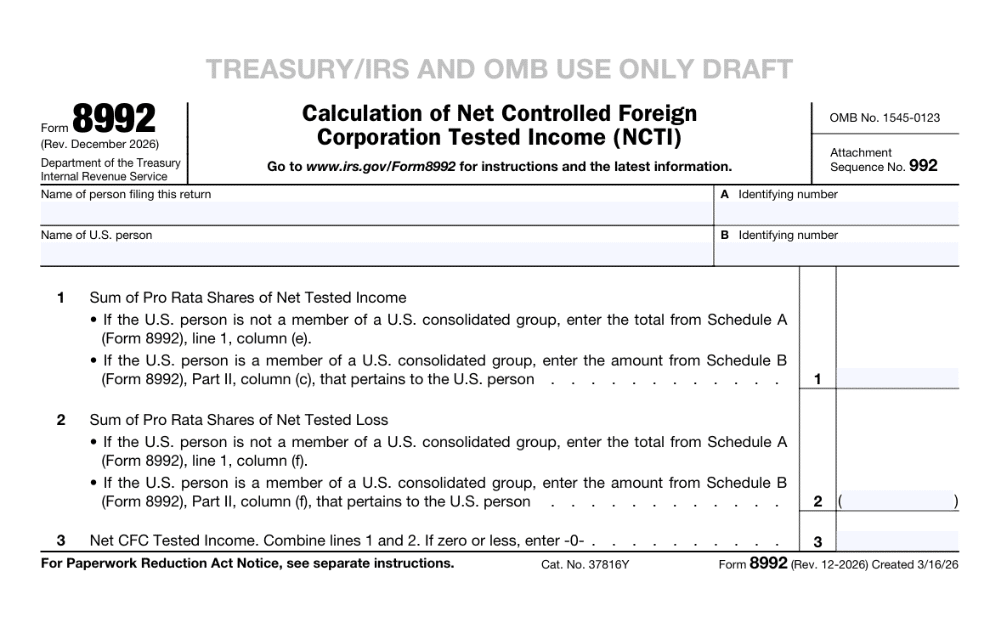
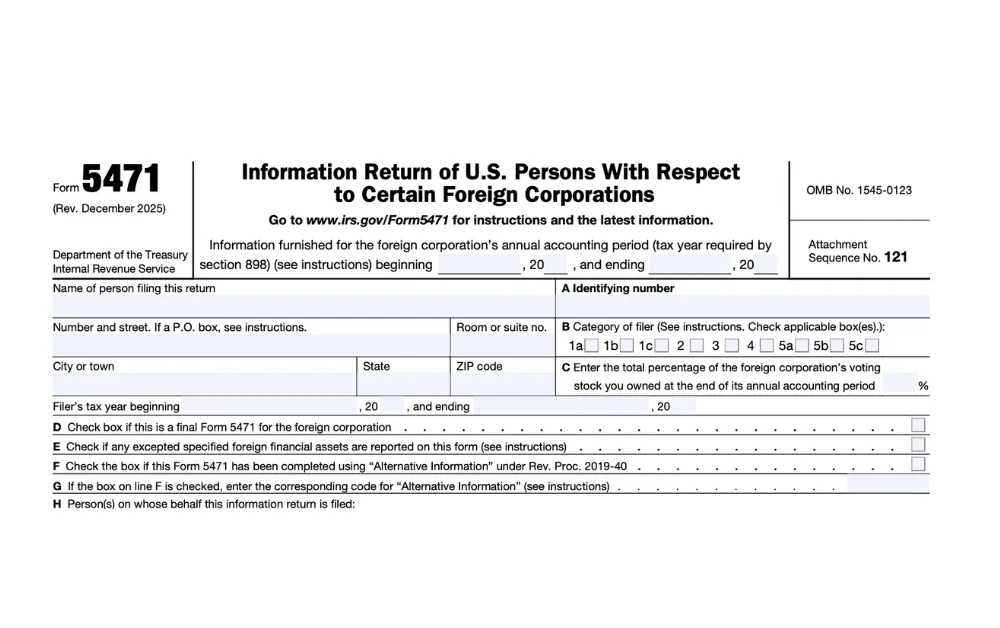
Our CPAs model each strategy using your actual numbers to find the approach that minimizes your total tax across all CFCs and all tax years. If you own a foreign business, we handle Form 8992, Form 5471, high-tax exception elections, and all complex business tax requirements as part of our small business tax preparation services.
No matter how complex your foreign business taxes are, you’ll have peace of mind knowing your taxes were done right. Have questions? Contact us, and one of our Customer Champions will be happy to help. If you’re ready to be matched with a Greenback accountant, click the get started button below.

You May Be Able to Eliminate GILTI Tax Completely
This article is for informational purposes only and does not constitute legal or tax advice. The GILTI high-tax exception involves complex tested-unit calculations, effective-rate determinations, and interactions with foreign tax credits and Section 962 elections. For guidance on your specific situation, contact Greenback to speak with an expat tax specialist.
Related Resources
- What Is GILTI and How Does It Affect My Expat Business?
- Section 962 Election: What It Is and Should You Make One?
- Section 250 Deduction: How Expat Business Owners Can Reduce Corporate Taxes
- NCTI (Net CFC Tested Income): 2026 Guide
- What Is a Controlled Foreign Corporation (CFC)?
- Form 8993: How Can It Reduce My U.S. Taxes on Foreign Business Income?
- Form 5471: Filing Requirements with Your Expat Taxes
- Foreign Tax Credit Guide
- Foreign Business Tax Reporting: Forms and Requirements
- Form 1116: How to Claim Your Foreign Tax Credit
Featured In





