Dual Citizenship Bill: What the Exclusive Citizenship Act Means for U.S. Expats


The dual citizenship bill, officially called the Exclusive Citizenship Act of 2025, is a proposal that would ban dual citizenship for Americans and require individuals to choose one nationality. The bill is not law, and dual citizenship remains fully legal today. Experts expect significant constitutional and administrative barriers to prevent the proposal from becoming a reality.
Here’s the most important thing to know: Nothing has changed for U.S. expats today. Dual citizenship is still legal, and there are no renunciation deadlines or requirements. This guide walks through what the proposal includes, how it could affect Americans abroad, and why experts believe it is unlikely to move forward.
Related Article: Which Countries Allow Dual Citizenship?
March 2026 Status Update
More than three months after its introduction, S.3283 remains stalled in the Senate Judiciary Committee with no hearings scheduled and no committee action taken. The bill has gained only one co-sponsor, Sen. Roger Marshall (R-KS). No companion bill has been introduced in the House of Representatives. GovTrack estimates a 3% chance of enactment. Democrats Abroad has formally condemned the proposal, and multiple legal analyses from immigration attorneys and constitutional scholars confirm the bill contradicts over 50 years of Supreme Court precedent protecting dual citizenship.
Bottom line: The bill has not moved. No action is required. Dual citizenship remains fully legal.

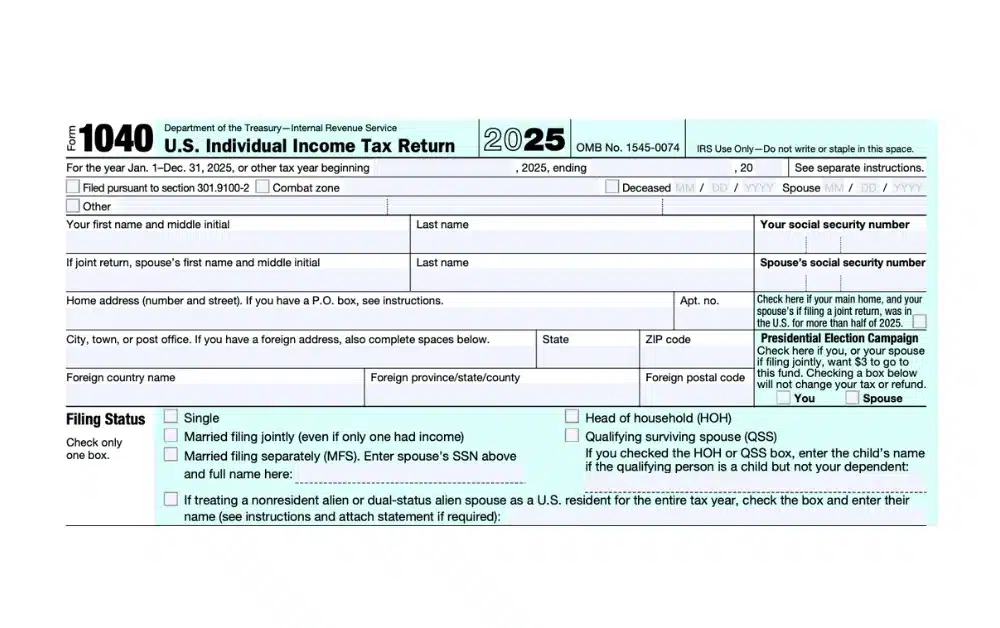
Proposed Laws Don’t Change Your Filing Requirements Yet
What the Dual Citizenship Bill Actually Proposes
The Exclusive Citizenship Act of 2025, introduced by Sen. Bernie Moreno (R-OH), seeks to:
- Ban dual citizenship for all U.S. citizens
- Require existing dual citizens to renounce one nationality
- Treat non-compliant individuals as having voluntarily relinquished U.S. citizenship
- Automatically strip citizenship from anyone who naturalizes in another country in the future
- Create a federal registry of dual citizens
- Reclassify former citizens as foreign nationals for immigration purposes
The bill is built around a single idea: U.S. citizens should owe sole and exclusive allegiance to the United States.
It introduces three significant changes:
1. Mandatory Renunciation for Existing Dual Citizens
If enacted, dual citizens would have one year to renounce either their foreign citizenship or their U.S. citizenship.
The bill would require all U.S. citizens to hold only one nationality. Existing dual citizens must renounce their foreign citizenship or their U.S. citizenship within one year, while future foreign naturalizations would automatically trigger loss of U.S. citizenship.
Anyone who misses the deadline would be treated as having voluntarily relinquished their U.S. citizenship, one of the bill’s most controversial points.
2. Automatic Loss of U.S. Citizenship for Future Naturalizations
After the bill takes effect, any U.S. citizen who voluntarily acquires a foreign citizenship would automatically lose U.S. citizenship upon naturalizing in that country.
This would affect standard expat settlement paths such as:
- Long-term residency leading to naturalization
- Dual-national rights for children
- EU citizenship pathways
- Spousal or family-based naturalization abroad
Related Article: Renouncing U.S. Citizenship: Costs, Tax Implications, and Requirements
3. Creation of a Federal Registry of Dual Citizens
The bill directs the State Department, DHS, and the Attorney General to create a centralized database of dual citizens and to classify noncompliant individuals as aliens under immigration law, meaning they would need a visa to visit the United States.
Is the Dual Citizenship Bill Likely to Become Law?
Most likely, no. The bill conflicts with Supreme Court rulings that prohibit stripping citizenship without a person’s voluntary consent, lacks bipartisan support, and would be nearly impossible to implement due to massive consular backlogs for renunciation appointments.
The bill faces three major obstacles:
1. Constitutional Precedent
The Supreme Court’s decisions in Afroyim v. Rusk (1967) and Vance v. Terrazas (1980) guarantee that:
- Citizenship cannot be taken away without an individual’s voluntary, intentional act
- Congress cannot redefine “intent” through deadlines or presumptions of relinquishment
The dual citizenship bill directly contradicts these rulings. Legal scholars and immigration attorneys have broadly concluded that the bill’s “automatic loss” provisions would face immediate constitutional challenge if enacted.
The “Voluntary Intent” Doctrine
Beyond basic precedent, the Supreme Court has established a strict “specific intent” requirement. This means the government cannot presume you intend to give up your citizenship just because you naturalized in another country or missed a filing deadline. To lose your citizenship, you must perform an expatriating act with the subjective, voluntary intent to relinquish it. Legal experts argue that any law attempting to “automatically” strip citizenship (as this bill proposes) would fail because it would bypass the mandatory intent requirement.
2. Administrative Impossibility
- Renunciation appointment backlog: 30,000+ cases
- Annual processing capacity: approximately 5,000 cases
- The bill would require millions of dual citizens to renounce their nationality within 12 months
The U.S. consular system cannot process the millions of renunciation cases this bill would require, rendering the proposal effectively unimplementable. Millions could lose citizenship, not because they chose to, but because they could not get an appointment in time.
Furthermore, the State Department’s 2026 budget request does not include funding to increase consular staffing for renunciations. Without a massive surge in federal funding and personnel, there is no logistical path for the government to process the millions of cases this bill would create.
3. The Bill Lacks Political Support
The bill was introduced by Sen. Bernie Moreno (R-OH) and has gained only one co-sponsor, Sen. Roger Marshall (R-KS). No Democrats have signed on, and no companion bill exists in the House of Representatives. Legislative forecasting models put the probability of enactment at roughly 3%. For now, this is not a policy that Congress appears prepared to advance.
For context, bills that restrict citizenship have been proposed before and have failed for similar reasons. They carry high political risk, affect millions of voters (including military families, corporate transferees, and Americans with ancestral ties to other countries), and invite constitutional challenges that can take years to resolve.
Other Related Proposals in 2026
While the Exclusive Citizenship Act is the broadest, other targeted measures have emerged that reflect a similar legislative trend:
- Disqualifying Dual Loyalty Act (H.R. 5817): Introduced by Rep. Randy Fine (R-FL), this bill would prohibit any individual holding foreign citizenship from being elected to the U.S. House or Senate. It focuses on the eligibility of lawmakers rather than the citizenship of the general public.
- Dual Loyalty Disclosure Act (H.R. 2356): A separate proposal by Rep. Thomas Massie (R-KY) that would require federal candidates to publicly disclose any dual citizenships they hold. This represents a “transparency-first” approach rather than a total ban.
- The SAVE America Act: Passed by the House in February 2026, this bill focuses on voter eligibility but mandates a federal verification process for citizenship. Critics note this provides the technical infrastructure that would be required to manage a federal citizenship registry.
- Birthright Citizenship Review: The Supreme Court is currently reviewing Executive Order 14160 regarding birthright citizenship for children of non-citizens. While a separate legal issue, the ruling (expected July 2026) will likely clarify how the court views “exclusive allegiance” in the modern era.
Is Dual Citizenship Still Legal Under U.S. Law?
Yes. Dual citizenship remains fully legal in the United States. The Exclusive Citizenship Act of 2025 has not been enacted and does not change current law. Americans can still hold more than one citizenship, and there are no renunciation deadlines or requirements today.
Under current U.S. law, there is no limit on how many citizenships a U.S. citizen can hold simultaneously. The U.S. government does not require you to formally declare or register your dual status.
For a complete list of countries that permit dual nationality, see our guide: Which Countries Allow Dual Citizenship?

Dual Citizen? Your Tax Situation May Be More Complex
If the Dual Citizenship Bill Ever Passed, What Would It Mean for U.S. Expats?
If enacted, the dual citizenship bill would require U.S. expats who hold another nationality to choose between their U.S. and foreign citizenships. Dual citizens would have one year to renounce one nationality, and future naturalizations abroad would result in automatic loss of U.S. citizenship.
Existing dual citizens abroad would face a decision:
Option 1: Keep U.S. citizenship
You would need to renounce your foreign citizenship, which could affect:
- Residency and long-term stays abroad
- Work authorization and business ownership
- Property rights
- Local healthcare and pension systems
- Family reunification pathways
Option 2: Keep foreign citizenship
You would need to formally renounce U.S. citizenship, which triggers:
- Expatriation tax rules (including the Exit Tax for covered expatriates)
- Visa requirements for future U.S. travel
- Loss of U.S. voting rights and federal benefits eligibility
For a full breakdown of how dual citizenship affects your U.S. tax return, including the FEIE, Foreign Tax Credit, and tax treaties, see: Do I Pay Taxes in Both Countries as a Dual Citizen?
Related Article: U.S. Exit Tax: What It Is and How It Works
Option 3: Do nothing
Under the bill, you would automatically lose U.S. citizenship after one year. This “automatic loss” is one of the bill’s most constitutionally vulnerable provisions and is likely unenforceable under decades of Supreme Court precedent requiring voluntary, intentional relinquishment.
Accidental Americans
Individuals who gained U.S. citizenship at birth, but did not actively choose it (also called Accidental Americans), would be forced to choose between nationalities. This is a major reason experts expect the bill to face constitutional hurdles. Courts have historically protected this group, making forced renunciation especially unlikely to survive legal challenge.
An estimated 85% of Accidental Americans are not currently filing U.S. tax returns. If you fall into this category, the most important step you can take right now is not to react to the bill, but to get compliant with your existing obligations. The IRS offers the Streamlined Filing Compliance Procedures to help non-compliant taxpayers catch up without penalties.
Tax Implications for Expats Under the Dual Citizenship Bill
The dual citizenship bill does not change U.S. tax law. If someone chose foreign citizenship under the Exclusive Citizenship Act, existing expatriation tax rules, including potential covered expatriate status and Exit Tax liability, would apply.
Key points:
- Covered expatriate status applies if net worth is $2 million or more, average annual income tax liability exceeds the IRS threshold (approximately $206,000 for 2025), or if tax compliance is incomplete
- Dual citizens at birth may qualify for exemptions from covered expatriate status
- Retirement accounts (IRAs) may be taxed as ordinary income upon expatriation; 401(k) accounts can sometimes be deferred if the 30-day Form W-8CE filing deadline is met
- Deemed sale rules can apply to worldwide assets, taxing unrealized gains as if you sold everything the day before expatriation
For detailed information on exit tax calculations, exemptions, and how to avoid covered expatriate status, see our guide: Renouncing U.S. Citizenship: Costs, Tax Implications, and Requirements
Travel and Passport Implications if Citizenship Is Lost
Under the bill, anyone who loses U.S. citizenship, whether voluntarily or automatically, would:
- Be classified as a foreign national
- Need a visa to enter the United States
- Lose U.S. consular protections overseas
For expats with close family in the U.S., this could be a major consideration. Former U.S. citizens who are classified as covered expatriates may also face restrictions on gifts and bequests to U.S. persons under Section 2801.
What U.S. Expats Should Do Right Now
You do not need to take any action based on this bill.
Dual citizenship remains legal. No deadlines apply. No new requirements exist. Here is what experts recommend:
1. Do not renounce U.S. citizenship based on this bill.
It is unlikely to pass and extraordinarily unlikely to survive judicial review. Renunciation is permanent, and the bill is not law.
Related Article: What Happens If You Renounce Your U.S. Citizenship?
2. Stay compliant with U.S. tax rules.
Five years of clean tax filings are essential for avoiding covered expatriate status if you ever choose to renounce in the future. This is true regardless of any legislation. Filing correctly now protects your options later.
Related Article: Do I Pay Taxes in Both Countries as a Dual Citizen?
3. Stay informed through credible, expat-focused sources.
Greenback will continue to monitor developments and translate complex proposals into clear, practical guidance. We will update this article if the bill’s status changes.
How Greenback Helps U.S. Expats
When policy proposals circulate online, it is easy to feel anxious, especially when you live abroad. Every return is prepared by a credentialed CPA or IRS Enrolled Agent with deep experience in U.S. tax law.
- Understand how U.S. tax law applies to your citizenship status
- Model potential outcomes if you are considering long-term planning abroad
- Avoid tax mistakes that could trigger covered expatriate classification
- Stay compliant with confidence, no matter where you live
If you are ready to be matched with a Greenback accountant, get started here. For general questions about dual citizenship and taxes, contact our Customer Champions.

Stay Prepared as Expat Tax Laws Evolve
This article is for informational purposes only and does not constitute tax, legal, or immigration advice. Legislative proposals are subject to change. Always consult with qualified professionals regarding your specific situation.
Related Resources
- Which Countries Allow Dual Citizenship?
- Do I Pay Taxes in Both Countries as a Dual Citizen?
- Renouncing U.S. Citizenship: Costs and Tax Implications
- U.S. Exit Tax: What It Is and How It Works
- Accidental American Taxes
- Streamlined Filing for U.S. Expats
- U.S. Tax Treaties
- U.S. Expat Taxes: The Complete Guide
- Form 8854: Filing to Renounce Citizenship
- Tax Help for Americans with Dual Citizenship