Form 1099-K for American Expats: What You Need to Know About Payment App Reporting in 2025
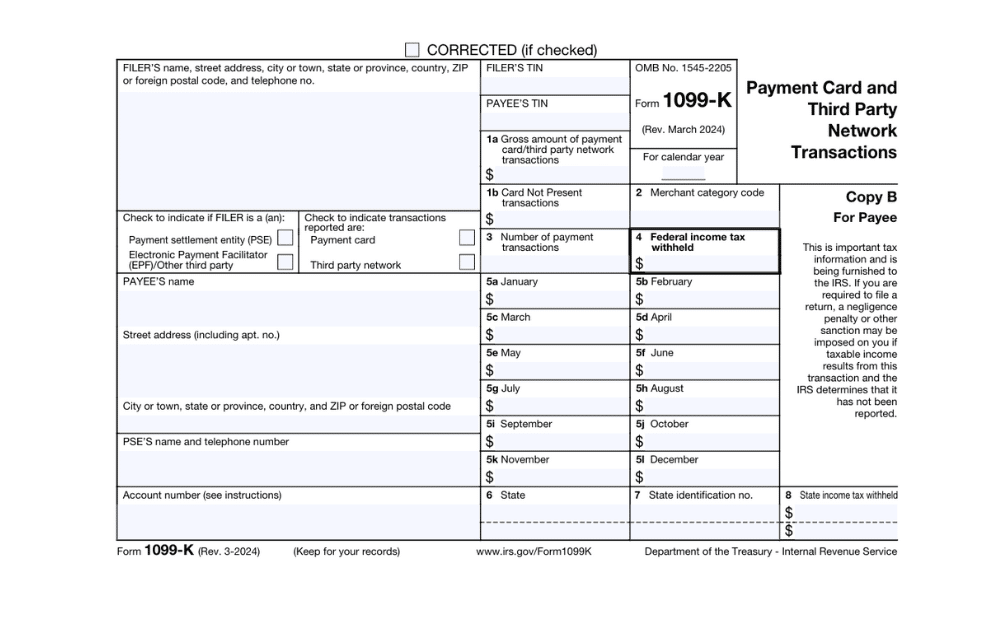


Here’s great news if you’re freelancing abroad or running an online business: the IRS has increased Form 1099-K reporting thresholds for third-party payment platforms like PayPal, Venmo, and similar services. Instead of receiving a Form 1099-K for amounts over $600, third-party settlement organizations now only report when you receive over $20,000 in payments AND have more than 200 transactions.
According to the IRS, this change comes from the One Big Beautiful Bill (OBBB) that retroactively reinstated the previous reporting threshold. For Americans earning income through payment apps and online marketplaces while living abroad, this means less paperwork confusion and clearer reporting obligations. Most importantly, when you properly use available exclusions like the Foreign Earned Income Exclusion, you’ll likely owe $0 in US taxes.
What Is Form 1099-K and Why Would I Receive One?
Form 1099-K is an IRS information return used to report payments you received during the year from credit cards, debit cards, stored-value cards, payment apps, or online marketplaces for goods or services.
You’ll most likely receive a Form 1099-K if you:
- Freelance for international clients who pay through PayPal, Wise, or similar platforms
- Sell goods through online marketplaces like Etsy, eBay, or Amazon
- Provide digital services and receive payment through Stripe or Square
- Accept credit card payments for any amount through your business
- Operate an e-commerce business while living abroad
- Resell concert tickets, sporting event tickets, or other items online
The key distinction is whether you’re using payment cards (credit/debit cards) or third-party settlement organizations (TPSOs) like payment apps and online marketplaces.
How Do the 2025 Form 1099-K Thresholds Work?
The reporting thresholds differ dramatically depending on how you receive payments.
Payment Cards: No Minimum Threshold
If you accept payment cards, you will receive a Form 1099-K for any amount, even $0.01. There is no minimum threshold for payment card transactions, and this requirement hasn’t changed.
Third-Party Settlement Organizations: $20,000 AND 200+ Transactions
TPSOs like PayPal, Venmo, or online marketplaces are required to report when total gross payments for goods or services exceed $20,000 AND there are more than 200 transactions. This is a significant increase from the $600 threshold that was previously scheduled to take effect.

Your state may have a lower reporting threshold, which could result in you receiving a Form 1099-K even if you didn’t exceed the federal threshold.
Example: You’re a freelance graphic designer living in Portugal. In 2025, you earn $18,000 through 150 PayPal transactions from various clients. You will NOT receive a Form 1099-K because you failed to meet both thresholds. However, if you also accepted a single credit card payment of $500, you WILL receive a separate Form 1099-K for that payment card transaction because payment cards have no minimum threshold.
Why Did the Form 1099-K Threshold Change?
The threshold change happened because of legislative action that reversed a lower reporting requirement that was creating confusion and overwhelming taxpayers with unnecessary forms.
Originally, the American Rescue Plan Act of 2021 (ARPA) lowered the reporting threshold to just $600 with no transaction minimum. Under the $600 threshold, millions of Americans would have received Forms 1099-K for casual transactions, gifts, and reimbursements that aren’t taxable income. This $600 threshold caused widespread concern among freelancers, gig workers, and small business owners who feared excessive paperwork and confusion.
The One Big Beautiful Bill (OBBB) retroactively reinstated the reporting threshold that existed before ARPA, requiring TPSOs to file Form 1099-K only when the gross amount of reportable payment transactions to a payee exceeds $20,000 and the number of transactions exceeds 200. This eliminated the problematic $600 threshold entirely.
What this means for you: If you’re a freelancer or small business owner abroad earning under $20,000 through payment apps, or if you have fewer than 200 transactions, you won’t receive a Form 1099-K from TPSOs. However, you must still report all income on your tax return, regardless of whether you receive the form.
Do I Have to Report Form 1099-K Income If I Live Abroad?
Yes. If you are a US citizen or resident alien, the rules for filing income tax returns are generally the same whether you are in the United States or abroad. You are subject to tax on worldwide income from all sources and must report all taxable income according to the Internal Revenue Code.
The United States employs citizenship-based taxation, meaning that your tax obligations follow you wherever you reside. Whether you receive a Form 1099-K or not, you must report all income earned during the year.
However, here’s the relief: most expat freelancers owe little to no US federal income tax when they properly use available exclusions and credits. Two out of three American expats owe $0 in US taxes after properly using these protections.
How Do I Report Form 1099-K Income on My Expat Tax Return?
When you receive a Form 1099-K, you’ll need to report the income on your US tax return using several forms:
- Schedule C – Report your business income and deductible expenses
- Schedule SE – Calculate your self-employment tax
- Schedule 1 – Report business income on your Form 1040
- Form 2555 – Claim the Foreign Earned Income Exclusion (if eligible)
Form 1099-K reports the gross payment amount in Box 1a, which shows the total dollar amount of reportable payment transactions. It doesn’t include adjustments for fees, credits, refunds, shipping, or discounts. This means you’ll need to account for these deductions separately on Schedule C.
The Two Main Protections That Help Me Owe $0 in US Taxes
Most self-employed American expats can significantly reduce or eliminate their US tax bill using these strategies.
Foreign Earned Income Exclusion (FEIE)
If you qualify for the FEIE, you can exclude up to $130,000 (2025 tax year) of your foreign earned income from US taxation. For digital nomads and freelance expats, this often eliminates federal income tax entirely.
Example: You’re a freelance writer living in Thailand, earning $95,000 annually through PayPal. You receive a Form 1099-K. After claiming the FEIE, your US federal income tax drops to $0. You’ll still owe self-employment tax, but no federal income tax.
Foreign Tax Credit
If you pay income taxes in your country of residence, you may benefit more from the Foreign Tax Credit, which provides a dollar-for-dollar credit against your US tax liability for foreign taxes paid. This works exceptionally well for expats in high-tax countries like Germany, France, or the UK.
What If I Receive an Incorrect Form 1099-K?
This happens more often than you’d think, especially with the threshold changes.
Typical situations where expats receive incorrect Forms 1099-K:
- Gifts and reimbursements: Payments of gifts and reimbursements for shared costs are not payments for goods or services and therefore are not reportable on Form 1099-K
- Personal items sold at a loss: If you sold used personal items for less than you paid, you likely don’t owe taxes on that transaction
- Incorrect amounts: Platform errors or currency conversion issues
If you believe the information on your Form 1099-K is incorrect, contact the filer whose name and contact information appear in the upper left corner. If necessary, request a corrected Form 1099-K from the filer.
If you can’t get a corrected Form 1099-K, don’t wait to file your return. You can zero out the error when you file your return by reporting the amount on Schedule 1 (Form 1040), Additional Income and Adjustments to Income.
Example: Your roommate sent you $8,000 through Venmo for their share of rent. You receive a Form 1099-K for this amount, but it’s a reimbursement, not income. On Schedule 1, you would report $8,000 in the entry space to offset this erroneous reporting.
What Happens If I Don’t Provide My SSN to Payment Platforms?
When payments to a payee exceed $20,000 and more than 200 transactions, many third-party ticket sales apps or online marketplaces are required to report the gross sales to the IRS. Your Social Security number needs to be reported on the Form 1099-K.
Failure to provide your Social Security number to the payment platform may result in backup withholding.
Backup withholding is tax that is deducted by a payor when the payee has:
- A missing or incorrect Taxpayer Identification Number (ITIN or SSN)
- Failed to show that they’re exempt from backup withholding
- A name on file that doesn’t match IRS or Social Security Administration records
The backup withholding rate is typically 24%, meaning the payment platform will withhold 24% of your payments and send it directly to the IRS.
What to do if you were subject to backup withholding: If backup withholding was applied to your payments, you should report the federal income tax withheld (shown on Form 1099-K, Box 4) when you file your tax return. This withheld amount can be credited against your total tax liability, and you may receive a refund if too much was withheld.
For expats: Make sure your payment platforms have your current information, including your foreign address and correct SSN or ITIN. This prevents backup withholding issues and ensures you receive accurate Forms 1099-K.
Do I Owe Self-Employment Tax on Form 1099-K Income?
Yes, if the income represents self-employment earnings. This is crucial for expat freelancers: the FEIE excludes income from federal income tax, but does NOT eliminate self-employment tax.
Self-employment tax applies at a rate of 15.3%, consisting of 12.4% for Social Security and 2.9% for Medicare.
However, many countries have Social Security totalization agreements with the US that can eliminate dual social security taxation. Countries with these agreements include Germany, the UK, Canada, Australia, Japan, France, and 25+ others.
Situations for Expats Receiving Form 1099-K
I Sold Personal Items on eBay. Do I Owe Taxes?
If you sold a used personal item for less than you paid for it, you may receive a Form 1099-K, but the sale proceeds do not increase your taxable income because you didn’t make a profit or gain.
Example: You sold your used laptop on eBay for $600 that you originally bought for $1,200. Even though you received a Form 1099-K, you have a loss of $600. Losses on personal items are not deductible, but they are not taxable income either.
I’m a Digital Nomad. How Does This Affect Me?
If you’re constantly moving between countries, you’ll still receive Forms 1099-K from payment platforms. The key is properly tracking your days abroad to qualify for the FEIE Physical Presence Test (330 days outside the US in any 12 months).
I Run an E-commerce Business. What Do I Need to Know?
Expats running online businesses through platforms like Shopify, Amazon, or Etsy will receive Form 1099-K for payment card and marketplace transactions. You’ll report gross receipts on Schedule C and deduct ordinary and necessary business expenses, just like US-based entrepreneurs.
I Resell Tickets Online. Is This Taxable?
If you buy and resell concert tickets, sporting event tickets, or other items through online marketplaces or ticket platforms, the income from these sales is taxable. According to Executive Order 14254, the IRS has increased scrutiny on ticket scalpers to ensure full compliance with tax laws.
For payments made after December 31, 2025, the reporting threshold for Form 1099-MISC or Form 1099-NEC drops to $2,000 or more for ticket resale activities. Even if you’re living abroad and reselling tickets as a side income, you must report this income and may receive multiple 1099 forms depending on the platforms you use.
What About Multiple Forms 1099-K?
If you get multiple Forms 1099-K, each reflecting different transactions, you should use all the forms and your other records to determine your tax liability when you file your return.
Many expats use multiple platforms, including PayPal for some clients, Stripe for others, and possibly credit card processing through Square. You may receive separate Forms 1099-K from each platform. Combine all income on Schedule C, along with any income that wasn’t reported on a 1099-K.
Critical reminder: The Form 1099-K reporting threshold doesn’t affect whether payments are taxable or whether a tax return must be filed. All income, no matter the amount, is taxable unless the tax law says it isn’t, even if you don’t get a Form 1099-K. Learn more about 1099s for expats living abroad.
What If I Haven’t Been Reporting Payment App Income?
If you’ve been receiving income through payment apps and haven’t been reporting it, don’t panic. The IRS offers the Streamlined Filing Compliance Procedures specifically for expats who need to catch up on unfiled returns.
This program allows you to file three years of delinquent tax returns and six years of FBARs without facing penalties, assuming your failure to file wasn’t willful.
Your Next Steps to File Correctly
Here’s your action plan if you receive a Form 1099-K:
- Verify the information – Check that amounts and your taxpayer identification number are correct
- Gather supporting records – Collect receipts, invoices, and expense documentation
- Convert foreign currency – Use IRS-approved exchange rates for the dates you received income
- Complete Schedule C – Report your business income and deductible expenses
- Calculate self-employment tax – Use Schedule SE
- Claim the FEIE or Foreign Tax Credit – Reduce or eliminate your US tax liability
- File by the deadline – June 15 for expats (automatic extension), or October 15 with an additional extension
Most expat freelancers and business owners who receive Forms 1099-K end up owing little to no US federal income tax when they properly apply available exclusions and credits.
After reading this, you should feel: “I know what I need to do, I’m probably not going to owe anything, and I know exactly what my next step should be.”
No matter how late, messy, or complex your return may be, we can help. Greenback is an American company founded in 2009 by US expats for expats. We focused exclusively on expat taxes and always have. Many of our CPAs and Enrolled Agents are expats themselves, and because they live in 14 timezones, they experience firsthand the challenges of living abroad.
If you’re ready to be matched with a Greenback accountant who specializes in Form 1099-K reporting for expats, click the get started button below. For general questions on expat taxes or working with Greenback, contact our Customer Champions.
Received a Form 1099-K? Get expert help reporting payment app income.
This article is for informational purposes only and does not constitute tax advice. Tax laws are complex and subject to frequent changes. For advice specific to your situation, consult with a qualified tax professional.