Can I Carry Over Unused Foreign Tax Credits to Future Years? (Foreign Tax Credit Carryover)



If you pay more in foreign taxes than your U.S. tax liability allows you to claim as a Foreign Tax Credit (FTC) in a given year, you can carry the unused portion back one year or forward up to 10 years. According to IRS Publication 514, you can carry over or carry back the excess to another tax year when you have room in your credit limit.
The Foreign Tax Credit carryover is especially valuable for Americans in high-tax countries like the UK, France, Germany, and Japan, where foreign taxes routinely exceed U.S. tax obligations. Common situations where a carryover applies:
- High-tax country residents whose foreign taxes exceed their U.S. tax bill year after year
- Taxpayers with fluctuating income who may have a higher U.S. tax liability in some years
- Expats returning to the U.S. who may use accumulated credits against future foreign-source income

Not Sure If You Have Unused FTC Carryovers?
Here’s how the FTC carryover works and why it matters for your tax strategy.
What Is the Foreign Tax Credit Carryover?
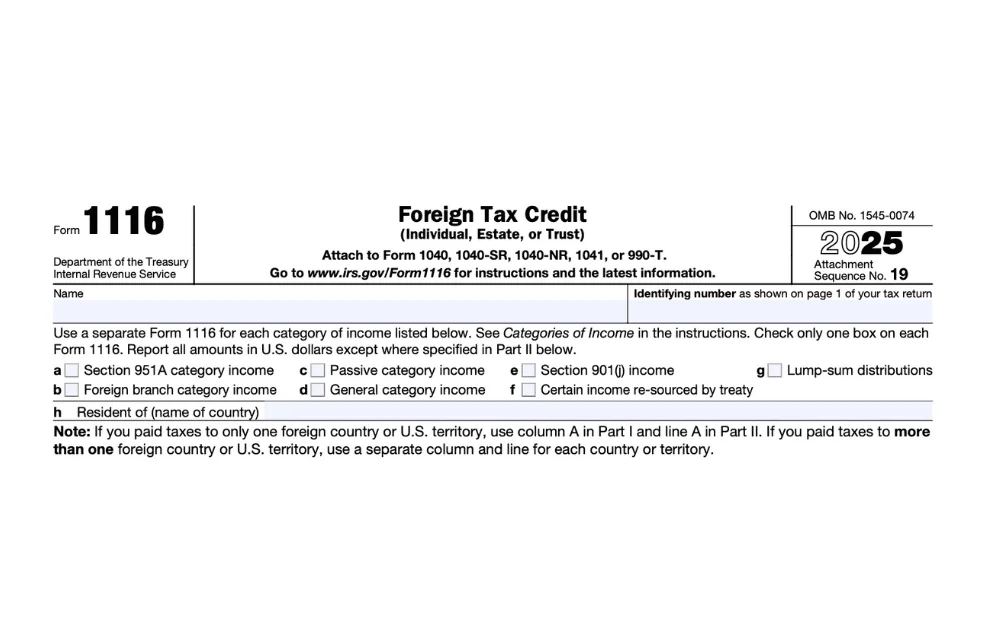
The U.S. taxes citizens and Green Card holders on worldwide income, regardless of where they live. To prevent double taxation, the IRS lets you claim a dollar-for-dollar Foreign Tax Credit for qualifying foreign income taxes you’ve paid. You claim the credit on Form 1116.
However, the credit is limited. You can only offset U.S. taxes on your foreign-source income, not your total U.S. tax bill. When your foreign taxes exceed that limit, the leftover amount becomes your Foreign Tax Credit carryover.
Example: You paid $18,000 in taxes to the UK in 2025, but your FTC limit on Form 1116 is $15,000. The $3,000 difference is your carryover. You can apply that $3,000 to a future year (or the prior year) when you have room under the limit.
How Long Can I Carry Forward or Carry Back Unused Credits?
The IRS allows you to carry your unused Foreign Tax Credits in two directions:
| Direction | Time Period | When It Helps |
|---|---|---|
| Carryback | 1 year prior | If you had a higher U.S. tax liability last year and room under the FTC limit |
| Carryforward | Up to 10 years | If you expect a higher U.S. tax bill or lower foreign taxes in future years |
After 10 years, any unused carry-forward credits expire permanently.
You must use current-year foreign taxes first before applying any carryover credits. When applying credits from prior years, you must start with the oldest year first (the credits closest to expiring).
When Does a Carryover Help the Most?
The FTC carryover is most valuable in specific situations:
- Moving from a high-tax to a low-tax country. If you’ve accumulated unused credits in the UK or Germany and then relocate to a lower-tax country, those carryover credits may finally have room to be applied.
- Income changes. A year with higher U.S.-source income (selling investments, rental income, or freelance work) can increase your U.S. tax liability enough to absorb carryover credits.
- Returning to the U.S. If you move back with accumulated FTC carryovers, you can only use them against foreign-source income, not U.S.-source income. Planning your final year abroad carefully can make a real difference.
What Are the Most Common Mistakes with FTC Carryovers?
The rules are straightforward in theory, but details trip up many taxpayers:
- Not tracking carryovers by income category. The IRS requires you to separate credits into categories, most commonly “general” (wages, self-employment) and “passive” (dividends, interest, rental income). Carryovers must stay in their original category. You cannot use a general category carryover against passive income, or vice versa.
- Mixing the credit and deduction. If you choose to deduct foreign taxes as an itemized deduction instead of claiming the credit, you cannot generate or use carryover credits for that year. The credit is almost always the better choice.
- Losing track of credits over time. With a 10-year window, it’s easy to lose track, especially if you’ve changed accountants or filed late. The IRS does not track your carryovers for you.
- Forgetting the GILTI exception. If you own a foreign corporation, credits related to GILTI income (Section 951A) cannot be carried forward or back.
 Pro Tip
If you are behind on your expat taxes, you may be able to use the Streamlined Filing Compliance Procedures to catch up without the usual penalties. This will allow you to claim the Foreign Tax Credit for past years and begin building your carryover.

Get Expert Help Maximizing Your Foreign Tax Credit Carryover
The FTC carryover can save you thousands over time, but only if your credits are properly calculated, categorized, and tracked across years. Getting this wrong means losing credits you’ve already earned.
If you’re an American living abroad dealing with a foreclosure or property issue, our CPAs and Enrolled Agents can handle the full picture, from Form 1099-A reporting to foreign asset compliance. If you own property abroad, our specialists are well-versed in the unique reporting requirements that come with cross-border real estate.
If you’re ready to be matched with a Greenback accountant, click the Get Started button below. For general questions on U.S. expat taxes or working with Greenback, contact our Customer Champions.

Make Sure You Don’t Lose Unused Foreign Tax Credits
The information provided is for general guidance only and should not be considered professional tax advice. Tax laws and regulations are subject to change, and individual circumstances may vary. Please consult with a qualified tax professional for specific advice regarding your tax situation.
Related Resources
- Foreign Tax Credit: How Expats Can Reduce U.S. Taxes
- How Do I Fill Out Form 1116 to Claim the Foreign Tax Credit?
- Form 1116 Explanation Statement: What You Need to File
- Foreign Earned Income Exclusion (FEIE): How to Claim It
- Foreign Tax Credit vs. FEIE: Which Should You Choose?
- Double Taxation: How to Protect Yourself as an Expat
- Streamlined Filing for U.S. Expats
- Form 1040 for U.S. Expats: Filing Made Simple