
Your Company Sent You Abroad. Your U.S. Tax Obligations Don’t Have to Feel Overwhelming.
Does Your Corporate Assignment Raise Questions Like These?
-
Relocated abroad by your employer with a compensation package that includes housing, cost of living adjustments, or other allowances.
You’re receiving employer-provided housing, COLA, school tuition reimbursement, or relocation benefits and need to understand how each component is taxed and what qualifies for the Foreign Housing Exclusion.
-
Receiving tax equalization support from your employer but unsure how it affects your personal U.S. filing.
Your employer manages gross-up calculations and reimbursements, but you still have personal Form 1040 filing obligations and need to coordinate employer-reported amounts with your return.
-
Holding RSUs, stock options, or other equity compensation that vested or were exercised while abroad.
You have employer equity grants that vested during your foreign assignment and need to properly source income between U.S. and foreign work periods for FEIE and FTC purposes.
-
Confused about whether to use the Foreign Earned Income Exclusion, Foreign Tax Credit, or both for optimal tax treatment.
You’re in a high-tax country and trying to determine the most tax-efficient combination of FEIE (up to $130,000), Foreign Housing Exclusion, and Foreign Tax Credits.
-
Behind on U.S. filing because the complexity of corporate benefits, treaty provisions, and dual obligations felt overwhelming.
You didn’t file during your assignment years because coordinating employer benefits, housing allowances, treaty positions, and dual-country reporting seemed too complicated to handle alone.
-
Uncertain whether your employer-provided housing qualifies for the Foreign Housing Exclusion and how to calculate it.
You receive a housing allowance or rent-free accommodation and need to determine if expenses exceed the base housing amount ($20,800 for 2025) and calculate the correct exclusion amount up to your location’s cap.
Start your U.S. expat tax return today.
"*" indicates required fields
Before you decide what to do next, it helps to understand how corporate assignments, employer benefits, and U.S. tax rules interact. These guides focus on the questions corporate expats most often encounter.

What Is the Foreign Housing Exclusion and How Do Corporate Expats Use It?
If your employer provides housing or a housing allowance as part of your international assignment, you may qualify for the Foreign Housing Exclusion beyond the standard Foreign Earned Income Exclusion. For 2025, the base housing amount is $20,800, with a general cap of $39,000 and higher limits for specific high-cost cities. This can significantly increase your total exclusion and reduce U.S. tax liability. Learn more about the Foreign Housing Exclusion
Tax Equalization: What It Means for Your Personal Filing
Many employers offer tax equalization to ensure you pay no more (and no less) in taxes than you would if you remained in the U.S. While your employer handles the equalization calculations, you still have personal U.S. filing obligations. Understanding how tax equalization works, what gets reimbursed, and how it affects your Form 1040 helps you stay compliant while your employer manages the gross-up. Learn more about tax equalization
Bona Fide Residence vs. Physical Presence Test: Which Test Works for Corporate Assignments?
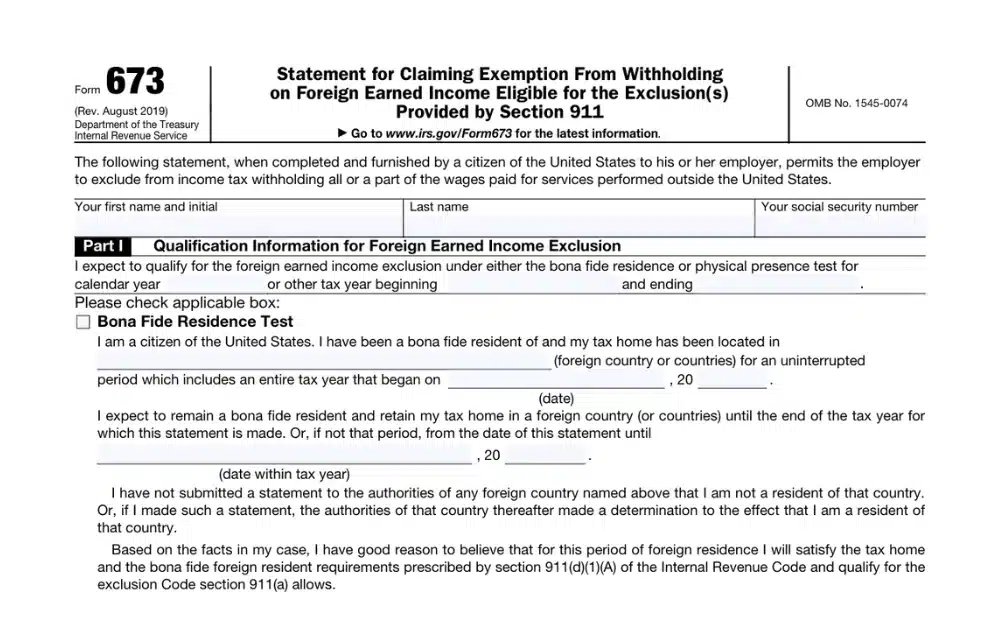
Corporate expats on long-term assignments often benefit from the Bona Fide Residence Test, which allows unlimited U.S. trips without losing qualification. If your assignment is shorter or you travel frequently for business, the Physical Presence Test may be more appropriate. Choosing the right test affects your Foreign Earned Income Exclusion eligibility and timing. Learn more about the Bona Fide Residence Test
How Do Treaty Benefits Affect Corporate Expats?
The U.S. has tax treaties with over 60 countries designed to prevent double taxation and provide specific benefits for corporate employees. Treaties can offer reduced withholding rates, tie-breaker rules for residency, and provisions for retirement contributions. However, the “saving clause” in most treaties means U.S. citizens still need to file U.S. returns. Understanding which treaty articles apply to your assignment helps maximize tax efficiency. Learn more about U.S. tax treaties
Totalization Agreements: Avoiding Double Social Security Tax
If you work for a U.S. company on temporary foreign assignment, you may be required to contribute to both U.S. Social Security and the host country’s social security system. Totalization Agreements with 30+ countries eliminate this double burden by establishing which country receives your contributions. Understanding whether your assignment qualifies for totalization protection can save thousands annually. Learn more about Totalization Agreements
How Corporate Expats File U.S. Taxes: Forms, Deadlines, and Employer Coordination
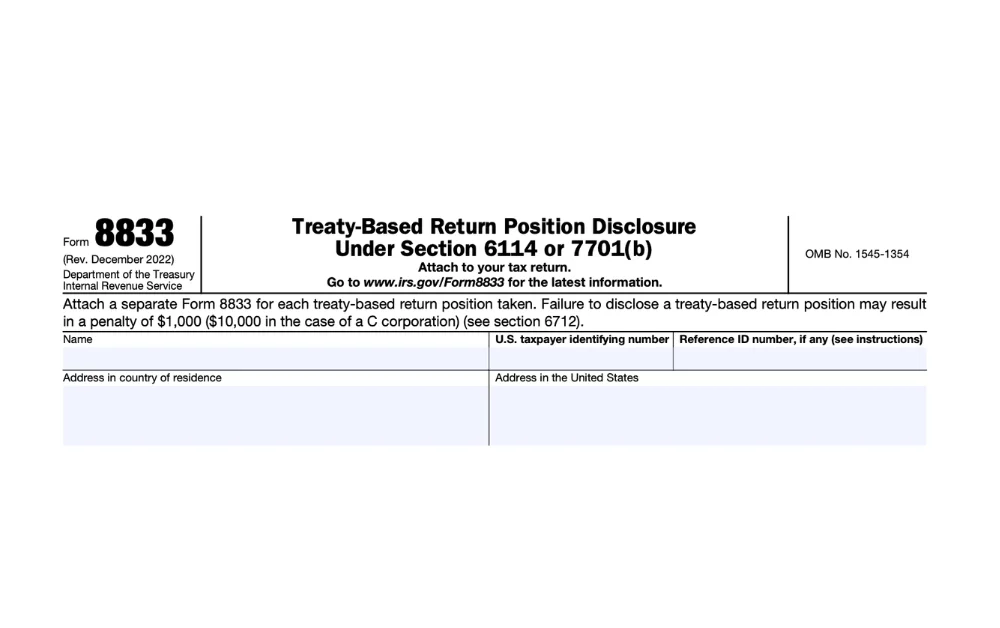
Corporate expats typically file Form 1040, Form 2555 (FEIE), Form 1116 (Foreign Tax Credit), and may need Form 8833 for treaty positions. If you have employer-provided stock compensation, foreign housing, or tax equalization, additional reporting is required. You’ll coordinate with your employer’s benefits team for W-2 information, housing documentation, and any gross-up calculations. Learn more about U.S. expatriate payroll taxationFeatured In






Real Stories From Corporate Expats Just Like You
 4.84/5
 4.9/5
4.9/5
 4.8/5
4.8/5
U.S. Tax Help for Corporate International Assignments
Corporate expats face unique complexity: employer benefits, housing allowances, equity compensation, treaty provisions, and dual-country obligations. Our services are designed to help you stay compliant, maximize available exclusions and credits, and coordinate with your employer’s tax team—whether you’re filing annually, catching up, or planning ahead.
Annual U.S. Tax Return for Corporate Expats
We prepare your U.S. tax return with full consideration of employer-provided benefits, housing allowances, equity compensation, and treaty positions. We apply the optimal mix of the Foreign Earned Income Exclusion (up to $130,000 for 2025), Foreign Housing Exclusion, Foreign Tax Credits, and treaty benefits to minimize U.S. tax liability. Our standard Federal Tax Return package includes Form 1040, Form 2555 (FEIE), Form 1116 (FTC), Form 8833 (treaty positions when applicable), all standard schedules, and up to 20 bank and brokerage transactions.
$565
USD
Foreign Housing Exclusion Calculation & Optimization
Corporate expats with employer-provided housing or housing allowances can exclude qualifying expenses beyond the standard FEIE limit. We calculate your Foreign Housing Exclusion correctly, ensure expenses exceed the base housing amount ($20,800 for 2025), and apply the appropriate cap for your location (general cap $39,000, with higher limits for cities like London, Tokyo, Hong Kong, and Geneva).
$565
USD
FBAR & FATCA Reporting for Corporate Expats
Foreign bank accounts, investment accounts, employer retirement contributions, and equity compensation accounts commonly trigger U.S. reporting requirements. We determine which accounts must be reported on FBAR (FinCEN Form 114), calculate the $10,000 aggregate threshold correctly, and prepare Form 8938 for FATCA compliance when your foreign assets exceed applicable thresholds. Our FBAR service starts at $125 for up to 5 accounts.
$125+
USD
Catch-Up Filing for Corporate Expats (Streamlined Filing Procedures)
If you’ve missed U.S. filings during your international assignment, the IRS Streamlined Filing Procedures provide a path to compliance without penalties. We prepare the required three years of returns, six years of FBARs, apply all available exclusions and credits retroactively, and help you certify that your failure to file was non-willful. Most corporate expats owe little or nothing after Foreign Housing Exclusion and Foreign Tax Credits are properly applied.
$1,750
USD
Strategic Tax Consultations for Corporate Assignments
If you’re considering an international assignment, recently relocated, or want to optimize your tax strategy, speak with an expat tax professional who understands corporate relocations, employer benefits, and treaty navigation. We help clarify which test to use (Bona Fide Residence or Physical Presence), explain how housing allowances and tax equalization work, discuss treaty benefits for your assignment country, and outline next steps for compliance. Consultations start at $250 for 30 minutes.
$250+
USD
Your Questions, Answered: US Tax Guides & Resources
Visit the Knowledge Center






FAQs for Corporate Expats
Can Greenback help me file U.S. taxes with employer-provided housing and benefits?
Yes, Greenback has deep expertise in corporate expat tax preparation with full consideration of employer-provided benefits. We prepare your Form 1040 including all employer housing allowances, tax equalization gross-ups, equity compensation (RSUs, stock options, ESPP), relocation benefits, and cost of living adjustments.
We apply the Foreign Earned Income Exclusion (up to $130,000 for 2025), Foreign Housing Exclusion (base amount $20,800, general cap $39,000, higher for expensive cities), Foreign Tax Credits (Form 1116), and treaty positions (Form 8833) to minimize U.S. tax liability. Most corporate expats in high-tax countries owe little or nothing after these protections are properly applied. Our federal return service starts at $565.
Learn more about our federal tax return preparation services.
Can Greenback coordinate with my employer’s tax equalization program?
Yes, Greenback works with corporate expats who have tax equalization packages. While your employer manages equalization calculations and provides reimbursements or withholdings, we ensure your personal U.S. return properly reports gross-up amounts included in your W-2, housing benefits (whether paid directly or reimbursed), employer tax reimbursements, and ensure alignment between your personal filing and your employer’s equalization methodology.
We coordinate documentation with your employer’s tax team when needed to prevent discrepancies and ensure accurate compliance. This coordination is included in our federal tax return preparation.
I haven’t filed U.S. taxes since my international assignment began. Can Greenback help me catch up?
Yes, Greenback has deep expertise in helping corporate expats catch up through IRS Streamlined Filing Procedures. Many corporate expats fall behind during assignments due to confusion about employer benefits, treaty provisions, or tax equalization coordination. We prepare the required three years of back returns, file six years of FBARs (foreign accounts often exceed $10,000 during assignments), apply all available exclusions retroactively (FEIE, Foreign Housing Exclusion up to location caps, Foreign Tax Credits), claim treaty benefits where applicable, and help you certify non-willful failure to file.
Most corporate expats face no penalties when properly using Streamlined Procedures, and many owe $0 after exclusions are applied. Our Streamlined Filing Package is $1,750.
Learn more about our Streamlined Filing services.
How does Greenback calculate the Foreign Housing Exclusion for corporate expats?
The Foreign Housing Exclusion allows you to exclude qualifying housing expenses beyond the standard $130,000 FEIE. For 2025, expenses must exceed the base housing amount of $20,800.
The general cap is $39,000, with higher limits for expensive cities (London: $67,000, Tokyo: $77,100, Hong Kong: $114,300, Geneva: $68,400). We calculate your exclusion by determining qualifying housing expenses (rent, utilities, insurance, parking), subtracting the base amount, applying your location’s cap, coordinating with employer-provided amounts or allowances, and ensuring proper documentation for employer-paid vs. employee-paid amounts. This calculation is included in our federal tax return preparation.
Can Greenback help me determine if treaty benefits apply to my corporate assignment and prepare Form 8833?
Yes, the U.S. has tax treaties with over 60 countries, and many provide specific benefits for corporate employees including reduced withholding rates on dividends/interest/royalties, tie-breaker residency rules when you’re resident of both countries, retirement contribution exemptions (UK pensions, Canadian RRSPs), and specific provisions for equity compensation and relocation benefits.
We identify applicable treaty articles for your assignment country, prepare Form 8833 to disclose treaty-based positions when required, ensure proper reporting of treaty benefits on your Form 1040, and coordinate treaty claims with FEIE and Foreign Tax Credits for maximum benefit. While most U.S. citizens still file U.S. returns due to treaty “saving clauses,” treaties often provide additional tax savings when properly claimed. This is included in our federal tax return preparation.
How does Greenback handle RSUs and stock options for corporate expats working abroad?
Employer equity compensation (RSUs, stock options, ESPP) that vests or is exercised during your foreign assignment requires proper income sourcing between U.S. and foreign work periods. We determine the portion of RSU/option income attributable to foreign services (which may qualify for FEIE or FTC), calculate the U.S.-source portion (which doesn’t qualify for FEIE), report vesting/exercise correctly on your W-2 reconciliation, apply proper capital gains treatment when shares are sold, and coordinate with your employer’s grant documentation and vesting schedules.
Proper sourcing can result in significant tax savings through FEIE and FTC application. This is included in our federal tax return preparation.
How much does Greenback charge for corporate expat tax preparation?
Our pricing is transparent and flat-fee based. Federal tax return preparation for corporate expats starts at $565, which includes Form 1040, Form 2555 (FEIE), Form 1116 (Foreign Tax Credit), Form 8833 (treaty positions when applicable), Foreign Housing Exclusion calculations, RSU/stock option sourcing, standard schedules, and up to 20 transactions. FBAR filing starts at $125 for up to 5 accounts. Streamlined Filing Package (3 years returns + 6 years FBARs) is $1,750. Strategic consultations for assignment planning start at $250.
Most corporate expats find our expertise saves more in taxes than our fees cost through proper application of exclusions, housing calculations, and treaty benefits. Use our pricing calculator to get an estimate.
Can Greenback help me understand if I need to pay Social Security tax to both the U.S. and my assignment country?
Yes, the U.S. has Totalization Agreements with 30+ countries (UK, Germany, France, Canada, Japan, Australia, Netherlands, Belgium, Switzerland, and others) to prevent double Social Security taxation. If you work for a U.S. employer on temporary assignment (typically under 5 years), you usually pay only into U.S. Social Security and receive a Certificate of Coverage.
If your assignment is longer or you work for a foreign employer, you may pay into the host country system. We help you determine which totalization agreement applies, understand whether you’re covered under the agreement based on assignment length and employer, ensure proper Social Security withholding on your W-2, coordinate with your employer’s payroll team if corrections are needed, and obtain Certificates of Coverage when applicable. Proper totalization can save thousands annually in duplicate contributions.
This guidance is included in our federal tax return preparation or available through a strategic consultation.
Get Help With Corporate Expat Taxes