How to Handle Cross-Border Invoicing and Currency Conversion for U.S. Expats
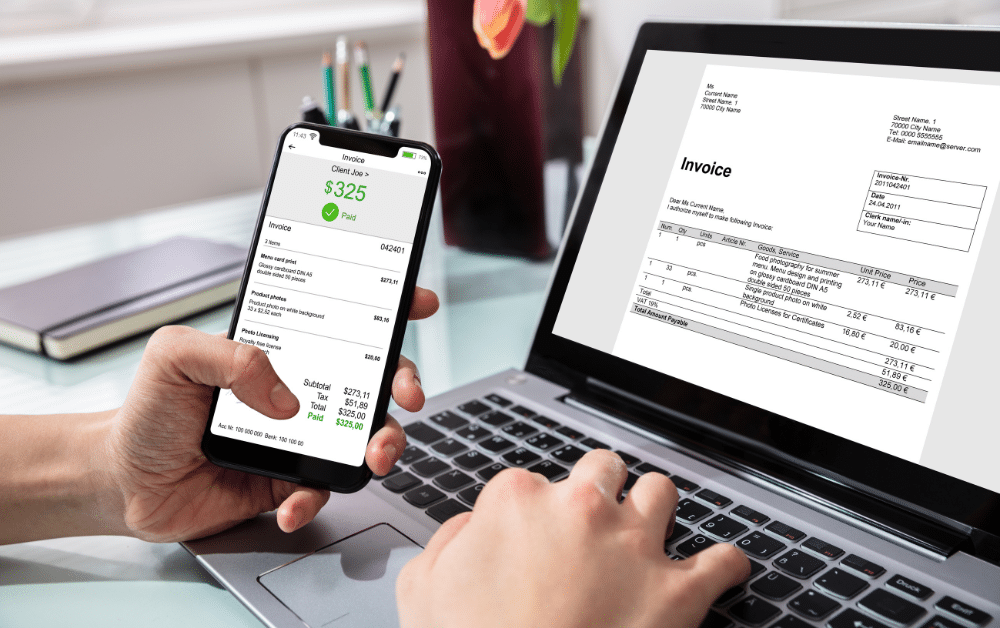


According to the IRS, you can use any posted exchange rate that you use consistently when converting foreign currency income to U.S. dollars for your tax return. Whether you invoice clients in euros, pounds, yen, or any other currency, the process is straightforward once you know the rules.
The bigger surprise for most freelancers and self-employed expats? Even when you’re invoicing clients abroad in foreign currencies, you still report everything to the IRS in U.S. dollars and owe U.S. self-employment tax on your net business income. But with the right approach to invoicing and currency conversion, you can simplify your tax filing while staying fully compliant.
Should I Invoice in USD, the Local Currency, or the Client’s Currency?
Your invoicing currency choice affects your cash flow and recordkeeping, but not your U.S. tax obligations. All foreign income must be reported in U.S. dollars, regardless of the currency you receive.
- Invoicing in USD keeps things simple for U.S. clients and eliminates currency conversion questions on your end. You receive exactly what you invoice, and your accounting stays in dollars. The downside? International clients may face unfavorable exchange rates when paying you, potentially making your services seem more expensive.
- Invoicing in your local currency works well when most of your clients are in your country of residence. You avoid bank conversion fees, your pricing stays consistent with local market rates, and you minimize exchange rate volatility. You’ll just need to convert those amounts to USD for your tax return.
- Invoicing in your client’s currency can make you more competitive in international markets. A German client paying in euros or a UK client paying in pounds faces no conversion uncertainty. The tradeoff is that you’ll receive payments in multiple currencies, requiring more detailed recordkeeping.

Many self-employed expats invoice international clients in USD while invoicing local clients in the local currency. This balanced approach keeps things simple for U.S. clients while remaining competitive locally.
Get Guidance On Multi-Currency Income Reporting
What Are the IRS Rules for Currency Conversion?
The IRS provides clear guidance: use the exchange rate prevailing when you receive, pay, or accrue the income. For most self-employed expats, this means using the spot rate on the date payment was received or the yearly average rate for steady, recurring income.
The yearly average rate works well for consistent monthly income, such as retainer fees. The IRS publishes annual average currency exchange rates that you can use for this type of income. For a complete guide on which rates to use and when, see our detailed IRS foreign exchange rates guide.
The spot rate applies to one-time transactions or irregular payments. If you receive a €15,000 payment on June 15, use the exchange rate from that specific date.
The critical requirement: consistency. Once you choose a method and source for exchange rates, you must use it for all similar transactions throughout the year. You can’t cherry-pick favorable rates for different invoices.
Acceptable exchange rate sources include:
- IRS published yearly averages
- U.S. Treasury reporting rates
- Posted rates from banks
- OANDA, XE, or similar currency converters (used consistently)

When using online currency converters, document which tool you used and save screenshots of the rates. The IRS may request this documentation if it has questions about your return.
How Do I Convert Multi-Currency Income for Schedule C?
Converting foreign currency income for your Schedule C requires a systematic approach. Start by organizing all invoices and payments by currency and date.
Step 1: Identify your income type
Steady monthly retainers qualify for yearly average rates. Project-based payments or irregular income require spot rates from the payment date.
Step 2: Convert each payment individually
For a €5,000 payment received on March 10, 2025, use the March 10 EUR/USD exchange rate. If you received consistent monthly payments of €5,000 throughout the year, you can apply the 2025 yearly average rate to your total annual income.
Step 3: Track conversion details
Create a spreadsheet documenting:
- Original currency and amount
- Payment date
- Exchange rate used
- Source of exchange rate
- USD equivalent
Real-world example:
Maria, a freelance translator in Barcelona, earned €60,000 in 2025 from steady monthly retainer clients. She also completed three one-time projects: €8,000 in March, €12,000 in July, and €5,000 in November.
For her retainer income: €60,000 ÷ 0.8527 (2025 IRS yearly average) = $70,363
For her project income, she uses spot rates:
- March: €8,000 ÷ 0.84 = $9,524
- July: €12,000 ÷ 0.86 = $13,953
- November: €5,000 ÷ 0.85 = $5,882
Total Schedule C income: $99,722
How Do Payment Platforms Affect My Taxes?
Cross-border payment platforms like Wise, PayPal, Revolut, and Stripe simplify international money transfers; however, they also create specific tax reporting requirements.
FBAR reporting: If your payment platform accounts are held with foreign financial institutions and exceed $10,000 in aggregate with your other foreign accounts at any point during the year, you must file an FBAR.
Which platforms require FBAR reporting?
- Wise: Foreign currency balances (EUR, GBP, etc.) are held in foreign banks and require FBAR reporting. USD balances held in U.S. partner banks typically don’t require FBAR reporting.
- Revolut: UK-regulated accounts require FBAR reporting when combined with other foreign accounts exceeding $10,000.
- PayPal: Accounts opened and regulated abroad may require FBAR reporting. U.S. PayPal accounts don’t trigger FBAR requirements.
- Stripe: Similar to PayPal, foreign-regulated accounts count toward FBAR thresholds.
Currency conversion and fees: Payment platforms don’t automatically apply IRS exchange rates. You’ll need to:
- Document the exchange rate when funds arrive in your account
- Track platform fees separately (these are deductible business expenses)
- Keep monthly statements showing all transactions
- Convert final USD amounts received to match your income reporting

Even small foreign currency balances in payment platforms count toward the $10,000 FBAR threshold when combined with your other foreign accounts. A $3,000 Wise EUR balance, plus a $7,500 local bank account, triggers FBAR filing requirements.
What Should I Include on My Invoices When Living Abroad?
Professional invoices provide legal protection and facilitate accurate payment processing for clients. Your invoices should include:
Essential information:
- Your legal business name and address abroad
- Your client’s business name and address
- Invoice number and date
- Detailed description of services provided
- Payment amount and currency
- Payment terms and due date
- Your payment method details
Tax-related considerations:
- If you have a U.S. business entity, include your EIN
- For foreign clients, clarify whether U.S. taxes apply (they typically don’t)
- Include any applicable local VAT or GST registration numbers
You generally don’t need to reference your self-employment tax obligations on client invoices. That’s a U.S. tax matter between you and the IRS, not your client’s concern.
Do I Owe Local Taxes on My Foreign Invoicing Income?
Your tax home and residency status determine whether you owe taxes to your country of residence. This creates potential dual tax obligations: U.S. taxes based on citizenship and local taxes based on residency.
When you likely owe local taxes:
- You’re a tax resident of your host country (often after 183 days)
- You’re running a business from that country
- You’re providing services to local clients
- Your business has a permanent establishment there
How to handle dual taxation:
- Use the Foreign Tax Credit if you pay taxes to a high-tax country. This provides a dollar-for-dollar credit against your U.S. tax liability.
- Use the Foreign Earned Income Exclusion (FEIE) if you qualify and live in a low-tax or no-tax country. You can exclude up to $130,000 of your 2025 foreign-earned income from U.S. federal income tax.
Critical point: The Foreign Earned Income Exclusion eliminates U.S. income tax on your excluded amount, but it doesn’t eliminate self-employment tax. You’ll still owe the full 15.3% self-employment tax on your net business income.
Example: James, a consultant in Berlin, earns $95,000 and pays $29,000 in German taxes. He claims the Foreign Tax Credit and offsets his entire U.S. tax liability. His effective U.S. income tax after credits: $0. However, he still owes approximately $13,714 in U.S. self-employment tax.
How Does Cross-Border Invoicing Impact My FEIE Eligibility?
Invoicing clients in multiple countries doesn’t prevent you from claiming the Foreign Earned Income Exclusion. What matters is where you physically perform the work, not where your clients are located.
The Physical Presence Test requires:
- You’re present in a foreign country or countries for at least 330 full days during any 12-month period
- The work was performed while physically outside the U.S.
The Bona Fide Residence Test requires:
- You’re a bona fide resident of a foreign country for an uninterrupted period that includes an entire tax year
- Your tax home is in that foreign country
Important distinctions for invoicing:
- Invoicing a U.S. client while living in Portugal? That income qualifies for FEIE.
- Invoicing a French client while living in Thailand? That income qualifies for FEIE.
- Invoicing anyone while visiting the U.S.? That income doesn’t qualify for FEIE.
Your client’s location is irrelevant. Only your physical location when performing the work matters for FEIE eligibility.
What Bookkeeping System Works Best for Global Freelancers?
Solid bookkeeping prevents tax season stress and ensures you maximize all available deductions.
Create a dual-currency tracking system:
- Record income in the original currency received
- Document the USD conversion rate and source
- Calculate the USD equivalent
- Track this information in a spreadsheet or accounting software
Separate your business banking:
- Maintain separate business accounts (even if you’re a sole proprietor)
- Keep all business income and expenses separate from personal transactions
- Save monthly statements from all payment platforms
- Download annual transaction reports before year-end
Track these expenses separately:
- Platform fees (Wise, PayPal, Stripe charges)
- Currency conversion costs
- Wire transfer fees
- Bank charges
All of these are deductible business expenses that reduce your net income on Schedule C.
Use accounting software designed for international business:
- QuickBooks Online
- Xero
- Wave (free option)
- FreshBooks
Most modern accounting platforms handle multi-currency transactions and generate reports that simplify tax preparation.
What Are the Most Common Invoicing Mistakes to Avoid?
- Using inconsistent exchange rates: Switching between spot rates and yearly averages for similar transactions creates red flags. Choose your method and stick with it.
- Forgetting to track platform fees: Transaction fees reduce your net income and lower your tax bill. Track them separately as business expenses.
- Ignoring foreign tax obligations: Just because you’re paying U.S. taxes doesn’t mean you can ignore local tax requirements. Research your host country’s tax rules for self-employed individuals.
- Assuming payment platforms don’t count as foreign accounts: Wise accounts with foreign currency balances, foreign PayPal accounts, and similar platforms may trigger FBAR reporting requirements.
- Not tracking all income sources: The IRS requires you to report all worldwide income. Missing payments from one platform or client can trigger penalties.
- Mixing business and personal expenses: Keep clear separation between personal living costs and legitimate business expenses. Your rent abroad is generally not a business expense unless you qualify for the home office deduction.
- Failing to make quarterly estimated tax payments: Self-employed expats must make quarterly estimated tax payments to avoid penalties, even if you’ll ultimately owe $0 after FEIE.
When Should I Consider Professional Help?
You’ll benefit from working with an expat tax specialist if:
- You invoice clients in three or more currencies
- Your foreign accounts exceed $10,000 (FBAR territory)
- You’re paying taxes to multiple countries
- You’re considering forming a foreign business entity
- You’ve fallen behind on U.S. tax filing
- Your income exceeds $100,000
- You have complex deductions or multiple income streams
At Greenback, we’re an American company founded in 2009 by U.S. expats for expats. We focused exclusively on expat taxes and always have. Many of our CPAs and Enrolled Agents are expats themselves, and because they live in 14 time zones, they experience firsthand the challenges of living abroad. They have the knowledge and patience to help you file correctly.
Take Control of Your Cross-Border Invoicing
Cross-border invoicing adds complexity to your self-employment taxes, but it’s manageable with the right systems. Track your currencies carefully, convert amounts consistently, and maintain detailed records of all transactions.
Remember the key principles: invoice in the currency that works best for your business, convert all transactions to U.S. dollars for your tax return using consistent rates, and report all worldwide income, regardless of where your clients are located.
No matter how late, messy, or complex your return may be, we can help. You’ll have peace of mind, knowing that your taxes were done right.
Get Expert Help Reporting Your Cross Border Income
This article provides general information about cross-border invoicing and currency conversion for U.S. expats and should not be considered specific tax advice. Tax situations vary based on individual circumstances, country of residence, and applicable tax treaties. Consult with a qualified expat tax professional to address your specific situation.
Related Resources
Self-Employment & Business:
- Schedule C for American Expats: Business Tax Filing Guide
- How to File Self-Employment Tax as US Expat (Step-by-Step)
- Do U.S. Expats Pay Self-Employment Tax?
- Schedule SE Self-Employment Tax Guide
- Foreign Business Expenses Tax Deductible for US Expats
- US Citizens Starting a Business Overseas: Money-Saving Tax Tips
- Do Overseas Contractors Pay Taxes? A Guide for Expats
Tax Benefits & Credits:
- Foreign Earned Income Exclusion (FEIE) Guide
- Foreign Tax Credit Complete Guide
- Digital Nomad Taxes: What U.S. Citizens Working Remotely Abroad Need to Know
Foreign Account Reporting: