Greece Digital Nomad Visa: Rules, Taxes, and How to Work From Greece
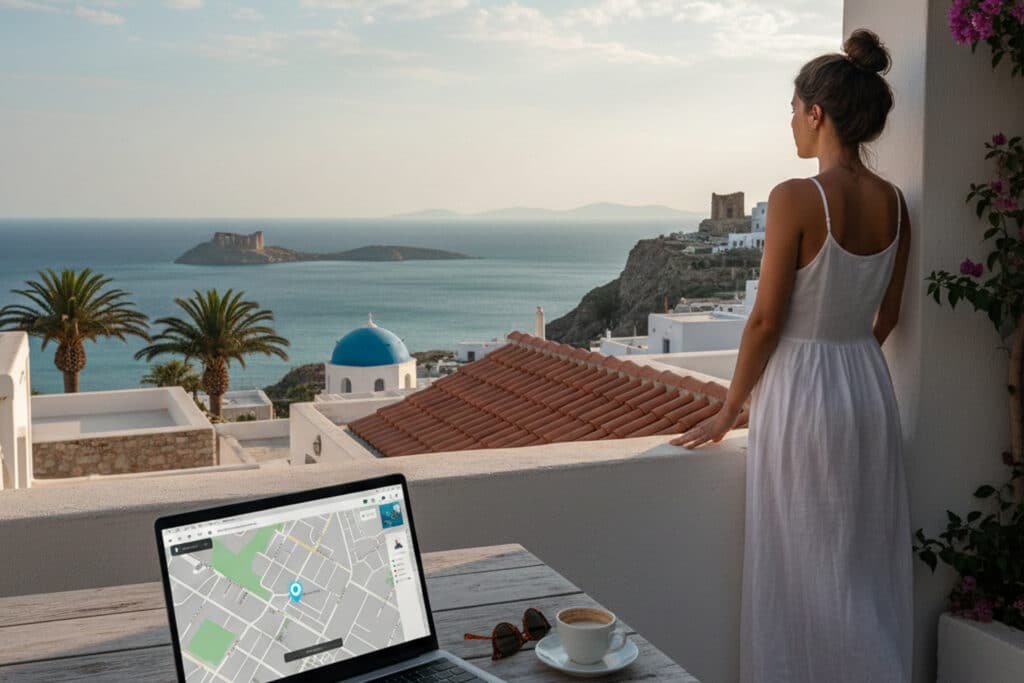


Greece’s digital nomad visa allows non-EU citizens to live in Greece while working remotely for employers or clients outside the country. It creates a legal framework for professionals who want to work from Greece without entering the local job market—and without setting up a Greek business.
Often described more broadly as a Greece remote work visa, this program has become a popular option for remote employees, freelancers, and business owners. But beyond visa eligibility, longer stays raise important questions around tax residency and U.S. tax compliance, especially for American citizens.
This guide explains how the program works, what’s required, and what to plan for before you relocate.
Moving Abroad Changes Your Taxes, Even If Your Job Doesn’t
What the Greece Digital Nomad Visa Allows You to Do
Greece introduced its digital nomad program to attract skilled remote workers who earn income abroad. The visa allows eligible individuals to:
- Live in Greece for up to 12 months
- Work remotely using digital tools
- Earn income exclusively from non-Greek employers or clients
- Apply for a renewable 2-year residence permit
- Bring qualifying family members (with restrictions)
While family members can live in Greece under this program, they are not permitted to work locally.
Who Qualifies: Eligibility, Income, and Key Conditions
Eligibility for Greece’s digital nomad program is based on citizenship, income level, and the nature of your work. These criteria are designed to ensure that participants are financially independent and do not compete with Greek workers.
The official Greece digital nomad visa requirements include:
Citizenship
- You must be a non-EU / non-EEA / non-Swiss citizen
Remote Work Only
- You must work remotely using digital technologies
- Employers or clients must be outside Greece
- Working for Greek companies or clients is prohibited
Minimum Income (Net, After Tax)
- €3,500 per month for a single applicant
- +20% for a spouse or partner
- +15% per child
Additional Requirements
- Proof of consistent income (bank statements or payslips)
- Private health insurance covering your stay in Greece
- Proof of accommodation (commonly a 6-month lease)
- Clean criminal background certificate
- Medical certificate
- Signed declaration confirming you will not work locally
Applying From Abroad vs. Applying in Greece
Greece accepts applications submitted either through a Greek consulate abroad or, in some instances, from within Greece. The core steps are similar, but the process can vary depending on where you apply.
In general, this is how to apply for the Greece digital nomad visa:
Applying From Outside Greece
- Submit your application at a Greek embassy or consulate
- Visa validity: 12 months
- Typical processing time: ~10 business days
- Government fee: approximately €75
Applying From Inside Greece
- Available to individuals already in Greece legally
- Application is made to the Ministry of Migration and Asylum
- Issued as a 2-year residence permit
- Fees typically total around €1,150
Application Forms and Required Documentation
There is no single standardized online application for a Digital Nomad Visa in Greece. Application forms and procedures vary depending on the authority handling your case.
Most applications require:
- Passport and photos
- Proof of remote work (employment contract, business registration, or client agreements)
- Proof of income
- Health insurance documentation
- Accommodation details
- Criminal record certificate
- Medical certificate
- Signed declaration of non-Greek employment
Where to Find Official Guidance and Updates
Official guidance on the Greece digital nomad visa is available on the official website of Greece’s Ministry of Migration and Asylum. Because requirements, fees, and procedures can change, we recommend reviewing official government sources before applying, especially if you are applying through a specific consulate.
Living and Working From Greece Long-Term
For many digital nomads, the bigger considerations arise after arrival, particularly when a short stay turns into something longer.
If you work from Greece for more than 183 days in a calendar year, you are generally treated as a Greek tax resident. This can trigger local tax obligations, even if your income comes entirely from abroad.
Understanding when tax residency applies, and how it interacts with your home country’s tax system, is important before committing to a long-term stay.
Our guide to expat taxes for Greece explains how Greek tax residency works, what income is taxable, and how U.S. expats typically coordinate both systems.
Tax Incentives and Where U.S. Citizens Need to Be Careful
Greece offers tax incentives designed to attract foreign professionals. Under Law 4825/2021, individuals who become Greek tax residents may qualify for a 50% income tax reduction for up to seven years, provided specific conditions are met.
However, these incentives do not override U.S. tax rules.
For U.S. citizens, Greek tax benefits must be coordinated carefully with U.S. filing obligations to avoid double taxation or missed exclusions.
U.S. Tax Obligations Don’t Stop at the Border
U.S. citizens are taxed based on citizenship, not residence. Living in Greece does not eliminate U.S. filing requirements.
Depending on your situation, you may still need to:
- File U.S. federal tax returns
- Report foreign bank accounts (FBAR)
- File FATCA disclosures
- Coordinate the Foreign Earned Income Exclusion (FEIE) or Foreign Tax Credits
Working remotely from another country often creates tax obligations in more than one place. Our guide to digital nomad taxes explains how U.S. filing rules, foreign tax residency, and common exclusions apply to remote workers living abroad.
Related Article: FEIE vs FTC: Which U.S. Expat Tax Strategy Is Best for You?
Is the Greece Digital Nomad Visa Worth It?
For many remote professionals, the answer is yes.
The Greece digital nomad visa offers:
- Legal residency
- A clear framework to work from in Greece
- A pathway to longer-term residence
- Potential tax incentives when structured correctly
But the benefits depend heavily on timing of immigration, tax residency rules, and cross-border tax planning.
How Greenback Expat Tax Services Can Help
Greenback specializes exclusively in U.S. expat taxes.
We help digital nomads:
- Plan before relocating
- Coordinate U.S. and foreign tax rules
- Optimize FEIE vs. Foreign Tax Credits
- Avoid double taxation
- Stay compliant as residency status changes
If you’re considering the Greece digital nomad visa, tax planning should be part of the decision, not an afterthought.
Ready to Work From Greece Without Tax Surprises?
Related Articles
Frequently Asked Questions
Yes. U.S. citizens are eligible to apply for the greece digital nomad visa as long as they meet the income, remote work, and documentation requirements. However, U.S. citizens should also plan for ongoing U.S. tax filing obligations, which continue regardless of where you live.
Yes. The program is often referred to informally as a remote work visa, but the official program name used by Greece is the Digital Nomad Visa. Both terms generally describe the same legal pathway for working remotely from Greece without local employment.
No. The visa strictly limits work to non-Greek employers or clients. Working for Greek companies, freelancing locally, or earning Greek-source income is not permitted under the digital nomad program.
Spending more than 183 days in Greece during a calendar year generally makes you a Greek tax resident. This can trigger Greek tax obligations on worldwide income, even if your employer is based abroad.
For U.S. citizens, this does not replace U.S. tax filing requirements and often requires coordination between both tax systems.
Yes. U.S. citizens remain subject to U.S. tax filing requirements even while living abroad. Depending on your situation, you may also have Greek tax obligations once you become a tax resident.
This is where proactive planning, such as coordinating the Foreign Earned Income Exclusion or Foreign Tax Credits, can make a significant difference.
Greece offers tax incentives for certain foreign professionals who become Greek tax residents, including a potential 50% income tax reduction for up to seven years under specific laws and conditions. These incentives must be carefully coordinated with U.S. tax rules to avoid unintended consequences.
Yes. Official guidance is provided by Greece’s Ministry of Migration and Asylum. Because procedures and fees can change, reviewing official government sources or confirming details with the relevant consulate is recommended before applying.
No. There is no single standardized online application form. Forms and procedures vary depending on whether you apply through a Greek consulate abroad or directly in Greece.
For U.S. citizens, speaking with a tax professional before relocating is strongly recommended. Decisions around timing, length of stay, and tax residency can affect how much tax you owe—and whether you qualify for key exclusions or credits.
Greenback Expat Tax Services specializes in U.S. expat taxes and works with digital nomads around the world. We help clients understand how living abroad affects U.S. filing requirements, coordinate foreign and U.S. tax rules, and plan ahead to avoid double taxation as residency status changes.