Late Tax Filing for U.S. Expats Explained: Penalties, Extensions, and How to Catch Up

- Do I Automatically Get More Time to File?
- What Penalties Will I Face for Filing Late?
- What's the Biggest Risk of Filing Late?
- How Do I Minimize the Damage?
- Common Late Filing Situations
- What If I'm Behind Multiple Years?
- Can I Get Penalties Waived?
- What Should I Do Right Now?
- Don't Let Late Filing Define Your Expat Tax Experience
- Related Resources:


Filing your U.S. tax return late as an expat triggers two separate penalties: a failure-to-file penalty of 5% of unpaid taxes per month (up to 25%), and a failure-to-pay penalty of 0.5% of unpaid taxes per month (up to 25%). Interest compounds on top of both. However, if you’re owed a refund or owe $0 after applying the FEIE or Foreign Tax Credit, there is no penalty for filing late because penalties are calculated on unpaid tax only.
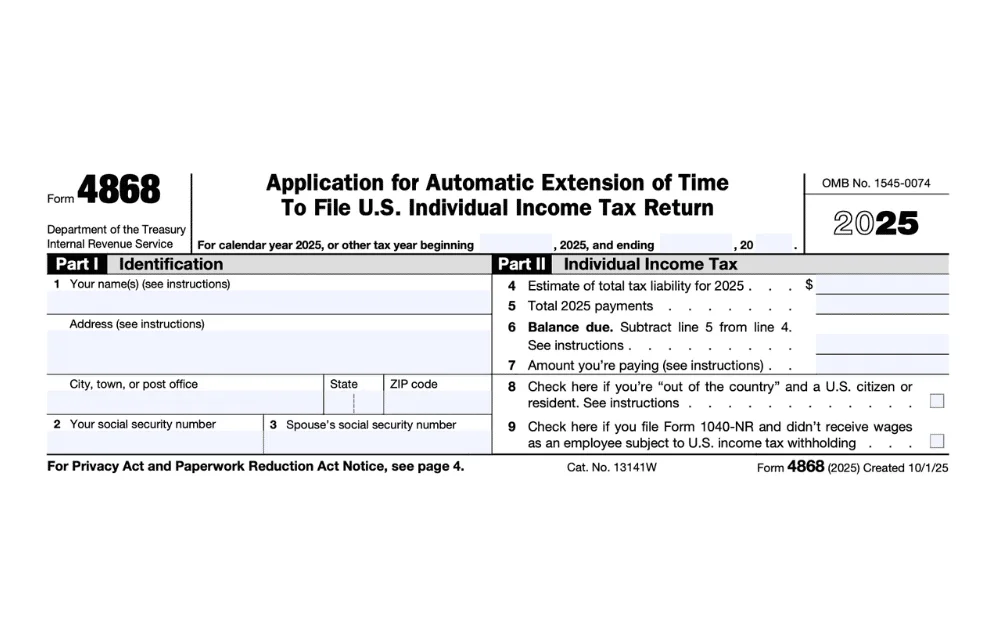
Americans living abroad get an automatic filing extension to June 15 (no form required) and can extend further to October 15 by filing Form 4868. According to the IRS, these extensions apply only to filing. Any taxes owed are still due by April 15 to avoid interest.
If you’re behind by multiple years, the Streamlined Filing Procedures let you catch up by filing three years of returns and six years of FBARs with no penalties for expats abroad, as long as your non-compliance was non-willful. The key is to come forward before the IRS contacts you. Here’s what to expect if you’ve filed late, how to minimize penalties, and the fastest path back to compliance.
Behind on Your U.S. Expat Taxes?
Do I Automatically Get More Time to File?
Yes. As an American living abroad, you automatically receive an extension to June 15 without filing any forms. This applies if your principal place of business or post of duty is outside the U.S. on the regular April 15 deadline.
Important Details
Payment deadline stays April 15. While you get extra time to file, any taxes owed are still due by April 15 to avoid interest charges. However, most expats don’t owe after applying the Foreign Earned Income Exclusion (up to $130,000 for 2025) or Foreign Tax Credit.
You can extend even further. Request an additional extension to October 15 by filing Form 4868 before June 15. For expats who can’t meet residency tests by the regular deadline, Form 2350 can extend the deadline into the following year.
Filing an extension protects you from failure-to-file penalties and preserves your ability to claim expat benefits, even if you’re uncertain about your final tax liability.
What Penalties Will I Face for Filing Late?
The Good News: Most Expats Face Zero Penalties
If you’re due a refund or owe $0, there are no penalties for filing late. The IRS only penalizes late filing when you owe taxes and don’t file on time. Given that 62% of expats owe nothing, most late filers face no financial penalties at all.
Penalties Only Apply If You Owe
Failure-to-File Penalty:
- 5% of unpaid taxes per month (or part of a month)
- Maximum 25% of unpaid taxes
- Only applies if you owe money
Failure-to-Pay Penalty:
- 0.5% of unpaid taxes per month
- Maximum 25% of unpaid taxes
- Applies even if you file on time but don’t pay
Combined Cap: When both penalties apply, the total is capped at 5% per month.
Interest Charges: Interest accrues on unpaid taxes from the original April 15 due date at 7% annually (compounded daily), regardless of extensions granted for filing.
Example Calculation
Tax owed: $5,000
Filed 3 months late
- Failure-to-file: $750 (5% × 3 months × $5,000)
- Failure-to-pay: $75 (0.5% × 3 months × $5,000)
- Interest (approximate): $88 (7% annual rate for 3 months)
- Total cost of late filing: $913
But here’s the reality: If you qualify for the Foreign Earned Income Exclusion or Foreign Tax Credit, you likely won’t owe that $5,000 in the first place.
What’s the Biggest Risk of Filing Late?
The most considerable risk isn’t penalties. It’s losing your Foreign Earned Income Exclusion eligibility, which could result in tens of thousands of dollars in additional taxes.
Critical FEIE Deadline
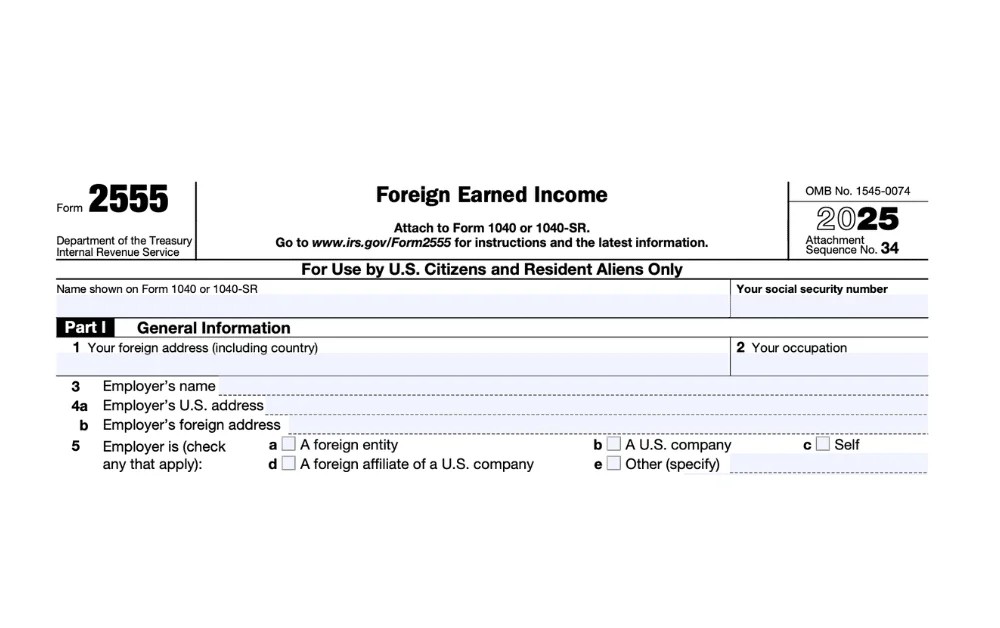
You must file Form 2555 by your extended due date to claim the Foreign Earned Income Exclusion. If you miss this deadline:
- IRS can revoke your FEIE election
- Once revoked, you cannot use it for 5 years
- You’ll owe U.S. taxes on income you previously excluded
Example Impact: If you earn $100,000 annually and lose FEIE eligibility for 5 years, you could pay an additional $60,000+ in U.S. taxes over that period.
Foreign Tax Credit Is More Forgiving
The Foreign Tax Credit is more flexible with timing, but late filing can still:
- Delay your ability to claim the credit
- Complicate carryback and carryforward calculations
- Create coordination issues with foreign tax timing
Worried about protecting your expat tax benefits? Greenback has deep expertise in helping late filers catch up while preserving FEIE eligibility and maximizing foreign tax credits. See how we help late filers →
How Do I Minimize the Damage?
Step 1: Determine if You Owe Taxes:
Use last year’s information or make quick calculations based on your foreign-earned income and foreign taxes paid. Most expats in high-tax countries owe nothing thanks to the Foreign Tax Credit. Those in low-tax countries can usually exclude up to $130,000 through the FEIE.
Step 2: Pay any estimated taxes owed:
Even if you can’t file immediately, paying what you estimate you owe by April 15 stops interest from accumulating. You can always get a refund later if you overpay.
Step 3: File an extension:
Request Form 4868 to extend to October 15 if you need more time to gather foreign tax documents or prepare accurately. This protects you from failure-to-file penalties.
Step 4: Gather essential documents systematically:
- Foreign income statements and pay stubs
- Foreign tax payment records and certificates
- Bank statements showing foreign account balances
- Any U.S. source income documents
Common Late Filing Situations
- Waiting for foreign tax documents? File Form 4868 extension by June 15 while estimating based on the previous year.
- Self-employed? FEIE cannot reduce self-employment tax. Pay estimated SE tax by deadlines even if income tax is excluded.
- Moving frequently? Use the bona fide residence test for more flexibility than the 330-day physical presence test.
- Just discovered filing obligations? You may qualify for streamlined procedures rather than standard late filing penalties.
What If I’m Behind Multiple Years?
Streamlined Filing Compliance Procedures
If you’re behind multiple years, consider the Streamlined Filing Compliance Procedures if your non-compliance was non-willful and you can file the last 3 years of returns plus 6 years of FBARs.
Benefits: Reduced or eliminated penalties, clear path to compliance, and protection from harsh late-filing consequences.
Note: If you’re only behind one year, file typically with extensions rather than using streamlined procedures designed for multi-year situations.
Can I Get Penalties Waived?
Yes, through two main IRS relief programs:
1. First-Time Penalty Abatement
If you’ve had a clean filing history for the past three years, the IRS may waive failure-to-file and failure-to-pay penalties upon request by phone or in writing.
2. Reasonable Cause Relief
Document circumstances beyond your control: natural disasters, serious illness, family emergencies, or unavoidable delays in receiving foreign tax documents. Supporting documentation (medical records, death certificates, proof of late foreign documents) is critical for approval.
What Should I Do Right Now?
Immediate Action Steps
- Assess tax liability using available information
- File extension (Form 4868) if needed for accuracy
- Pay estimated taxes to stop interest charges
- Gather documentation systematically
- Get professional help for complex situations (multiple countries, business income, significant investments)
Prevent Future Late Filing, Set up systems now:
- Digital folders for each tax year
- Calendar reminders for April 15, June 15, and October 15
- Quarterly tax situation reviews
- Annual December planning for FEIE vs Foreign Tax Credit strategy
Don’t Let Late Filing Define Your Expat Tax Experience
The stress of filing late is real, but understanding your options and taking action minimizes any negative impact. Remember: most expats owe nothing and face no penalties. Even if you do owe, strategic action and available relief programs protect you from worst-case scenarios.
Most importantly: Establishing good filing habits now prevents future complications and protects your valuable expat tax benefits for years to come.
Want to learn more about how Greenback helps late filers? Visit our Late Filers page to see how we’ve helped thousands get caught up without the stress.
If you’re ready to get caught up and establish a solid filing routine, click the Get Started button below. For general questions on US expat taxes or working with Greenback, contact our Customer Champions.
There’s a Right Way to Fix Late Expat Tax Filings.
This article is for informational purposes only and should not be considered legal or tax advice. Tax laws are complex and subject to change. Always consult a qualified tax professional for advice tailored to your specific situation.
Related Resources:

Featured In