What’s the Difference Between Earned and Unearned Income?

- What Counts as Earned Income?
- What Counts as Unearned Income?
- How Is My Earned Income Taxed?
- How Is My Unearned Income Taxed?
- Can I Qualify for the Earned Income Tax Credit?
- Why Does Income Type Matter for My Retirement Savings?
- Quick Reference: Earned vs Unearned Income
- How This Affects Your Expat Tax Strategy
- Get Expert Help With Your Income Classification
- Related Resources


The IRS treats your paycheck differently from your investment returns. For Americans living abroad, this distinction determines which tax breaks you can use, whether you can contribute to retirement accounts, and how much you’ll owe.
The rule is simple: earned income comes from work you do. Unearned income comes from sources where you’re not actively working. But the tax implications get more complex, especially when you’re managing both types of income from overseas.
What Counts as Earned Income?
Earned income is compensation you receive for services you provide. The IRS defines earned income as payment for work performed, whether as an employee or self-employed individual.
Common types of earned income:
For employees:
- Salaries and wages
- Bonuses and commissions
- Tips and gratuities
- Vacation pay and sick leave
- Severance pay
- Union strike benefits
- Long-term disability benefits received before the minimum retirement age
For self-employed individuals:
- Business profits (after expenses)
- Freelance income
- Consulting fees
- Professional services income

The work must be recent. Pension payments from past employment are not earned income, even though you earned them through prior work. The IRS considers them unearned income because you’re not currently working for that money.
Not Sure How Your Income Is Classified for U.S. Taxes?
What Counts as Unearned Income?
Unearned income (also called passive income) is money you receive without performing current services. Your money works for you rather than you working for your money.
Common types of unearned income:
Investment income:
- Interest from bank accounts, bonds, and CDs
- Dividends from stocks and mutual funds
- Capital gains from selling investments or property
- Cryptocurrency gains
Retirement and benefits:
- Pension payments
- Annuity distributions
- 401(k) and IRA withdrawals
- Social Security benefits
- Unemployment benefits
Rental and passive activities:
- Rental property income (in most cases)
- Royalties from intellectual property
- Income from partnerships where you don’t actively participate
Other unearned income:
- Alimony received (for divorces before 2019)
- Gambling and lottery winnings
- Jury duty pay
- Debt cancellation or forgiveness

Rental income can be tricky. If you’re actively managing rental properties as a real estate professional, it might qualify as earned income. For most landlords who aren’t full-time real estate professionals, rental income is unearned.
How Is My Earned Income Taxed?
Earned income faces the highest tax burden because it’s subject to multiple taxes:
Federal Income Tax
Earned income is taxed at your ordinary income tax rates, which range from 10% to 37% depending on your total income and filing status.
Payroll Taxes
This is where earned income gets expensive:
Social Security tax: 12.4% (split between employer and employee for W-2 workers; full amount for self-employed). Medicare tax: 2.9% (split between employer and employee for W-2 workers; full amount for self-employed). Additional Medicare tax: 0.9% on earnings above $200,000 (single) or $250,000 (married filing jointly)
Self-employed individuals pay the full 15.3% self-employment tax (Social Security plus Medicare) on their net business income. You can deduct half of this amount on your tax return, but you still pay the full amount.
Example: Maria earns $80,000 in salary working for a German company. Her employer withholds 7.65% ($6,120) for her portion of payroll taxes. The employer pays another 7.65% directly to the IRS. Maria also owes federal income tax based on her tax bracket.
Earned Income Benefits for Expats
The good news: earned income qualifies for the Foreign Earned Income Exclusion (FEIE), which lets you exclude up to $130,000 (2025 tax year) from U.S. taxation if you meet the physical presence test or bona fide residence test.
This is the most significant tax benefit available to working expats, but it only applies to earned income. Your investment income, pension payments, and rental income don’t qualify.
How Is My Unearned Income Taxed?
Unearned income avoids payroll taxes but still faces federal income tax. The rate depends on the type of unearned income:
Ordinary Income Rates (10% to 37%)
These types of unearned income are taxed at the same rates as earned income:
- Interest income
- Short-term capital gains (assets held one year or less)
- Ordinary dividends
- Pension and annuity payments
- Unemployment benefits
- Most rental income
Preferential Rates (0%, 15%, or 20%)
These types receive favorable tax treatment:
- Long-term capital gains (assets held more than one year)
- Qualified dividends
The rate depends on your total taxable income. For 2026, single filers with taxable income under $48,350 pay 0% on qualified dividends and long-term capital gains. Those above that threshold pay 15%, and high earners (over $533,400) pay 20%.
Net Investment Income Tax (3.8%)
High earners pay an additional 3.8% tax on investment income if their modified adjusted gross income exceeds:
- $200,000 (single)
- $250,000 (married filing jointly)
- $125,000 (married filing separately)
This tax applies to interest, dividends, capital gains, rental income, and royalties.
Example: David receives $25,000 in qualified dividends while living in Singapore. He’s single with a total taxable income of $150,000. His dividends are taxed at 15% ($3,750), not at his ordinary income rate of 24%. He doesn’t pay the 3.8% NIIT because his income is below $200,000.
No FEIE for Unearned Income
Here’s the critical limitation: the Foreign Earned Income Exclusion does not apply to unearned income. Your foreign dividends, rental income from U.S. properties, and pension payments are all fully taxable by the IRS.
You can use the Foreign Tax Credit to offset U.S. taxes if you paid foreign taxes on this income, but you cannot exclude it using the FEIE.
Can I Qualify for the Earned Income Tax Credit?
The Earned Income Tax Credit (EITC) offers a refundable credit to low- to moderate-income workers. For 2025, the credit ranges from $632 (for no children) to $7,830 (for three or more children).
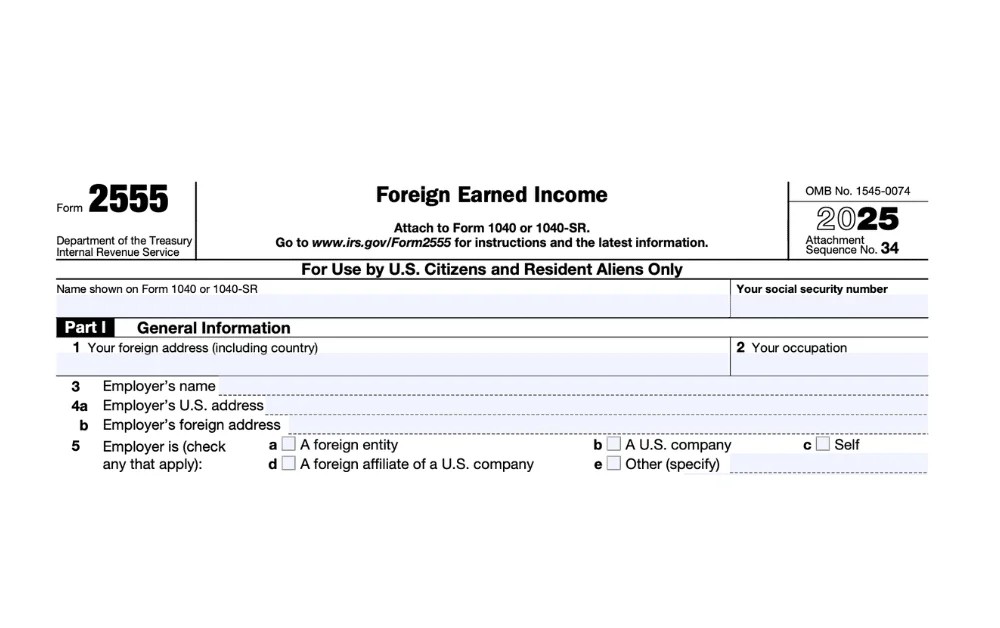
Critical restriction for expats: You cannot claim the EITC if you file Form 2555 to claim the Foreign Earned Income Exclusion. Most expats living abroad full-time use the FEIE, which makes them ineligible for the EITC.
The FEIE typically provides far more tax savings than the EITC for working expats, so this trade-off makes sense for most people.
Why Does Income Type Matter for My Retirement Savings?
Your ability to contribute to retirement accounts depends entirely on having earned income. Unearned income doesn’t count.
IRA Contribution Rules
To contribute to a Traditional or Roth IRA, you must have earned income equal to or higher than your contribution amount. For 2026:
- $8,000 contribution limit ($9,000 if age 50+)
- You need at least $8,000 in earned income to contribute the maximum
What doesn’t work:
- $50,000 in dividend income: Cannot contribute to an IRA
- $10,000 in rental income: Cannot contribute to an IRA
- $30,000 pension: Cannot contribute to an IRA
What does work:
- $15,000 in self-employment income: Can contribute the full $8,000
- $5,000 in wages + $8,000 in dividends: Can contribute up to $5,000 (limited by earned income)
401(k) Contributions
Employer-sponsored 401(k) plans also require that the participant have earned income. If you’re working abroad for a non-U.S. company, you typically won’t have access to a 401(k). Self-employed expats can set up Solo 401(k)s based on their self-employment income.
FEIE and Retirement Contributions
Here’s a strategic consideration: if you use the FEIE to exclude all your earned income from U.S. taxation, you technically have $0 of U.S. taxable compensation, which creates complications for IRA contributions.
Many expats in high-tax countries use the Foreign Tax Credit instead of the FEIE specifically to preserve their ability to make retirement contributions.
Quick Reference: Earned vs Unearned Income
| Earned Income | Unearned Income |
|---|---|
| Salaries and wages | Interest and dividends |
| Self-employment income | Capital gains |
| Bonuses and tips | Rental income (usually) |
| Commissions | Pension payments |
| Subject to payroll taxes | No payroll taxes |
| Qualifies for FEIE | Does not qualify for FEIE |
| Allows IRA contributions | Does not allow IRA contributions |
How This Affects Your Expat Tax Strategy
The earned vs. unearned distinction shapes your entire tax strategy as an expat:
If most of your income is earned:
- Use the FEIE to exclude up to $130,000 from U.S. taxes
- Consider whether you want to preserve IRA contribution ability
- Plan around the physical presence or bona fide residence tests
If most of your income is unearned:
- FEIE won’t help you
- Focus on the Foreign Tax Credit for any foreign taxes paid
- Take advantage of preferential capital gains rates
- Consider tax-loss harvesting strategies
If you have both types:
- Use FEIE for earned income
- Use the Foreign Tax Credit for unearned income
- Strategically plan which income to exclude and which to credit
Get Expert Help With Your Income Classification
Misclassifying income can cost you thousands in missed tax breaks or trigger IRS penalties. Our team specializes in helping expats optimize their tax strategies based on their unique income mix.
If you’re ready to be matched with a Greenback accountant, click the Get Started button below. For general questions on US expat taxes or working with Greenback, contact our Customer Champions.
Make Sure Your Income Is Reported the Right Way.
This article is intended for informational purposes only and does not constitute legal or tax advice. Tax situations vary significantly based on individual circumstances, and it is recommended that you consult with a qualified tax professional regarding your specific situation.
Related Resources
- Foreign Earned Income Exclusion: Complete Guide
- Filing Form 2555 for the FEIE
- Foreign Tax Credit: How It Works
- FEIE vs Foreign Tax Credit: Which Saves More?
- Do U.S. Expats Pay Self-Employment Tax?
- How to File Self-Employment Tax as a U.S. Expat
- U.S. Expat Tax Deductions and Credits
- U.S. Expat Taxes: Complete Overview
- Federal Tax Return Preparation Services
- Digital Nomad Taxes Guide