Best Countries for Americans to Move to in 2026



Moving abroad isn’t just about picking a beautiful place on a map. For Americans, the “best” country to move to depends on the cost of living, safety, language, healthcare, visa options, and how easily you can integrate into daily life.
Some countries stand out because they’re easy to settle into. Others offer lower costs, better work opportunities, or a slower pace of life. Below, we break down the best countries for Americans to live in 2026, organized by why people choose them, and how to decide which one fits your goals.
What Makes a Country a Good Choice for Americans?
Before comparing countries, it helps to understand the factors that matter most for Americans relocating abroad:
- Ease of relocation – visa availability, residency pathways, and bureaucracy
- Cost of living – housing, healthcare, food, and everyday expenses
- Safety & stability – personal safety, political stability, and infrastructure
- Language & culture – English use, cultural familiarity, and integration
- Healthcare access – quality, affordability, and availability
- Career or lifestyle fit – jobs, remote work, retirement, or quality of life
No single country checks every box, but many excel in specific areas.

Plan Your Move With Expert Tax Guidance
Popular & English-Speaking Options (Ease of Integration)
These countries tend to be the easiest for Americans to adjust to, thanks to language, cultural familiarity, and strong infrastructure.
Canada
Canada remains one of the most popular destinations for Americans. It offers cultural familiarity, English-speaking cities, strong public healthcare, and a stable economy. Proximity to the U.S. also makes it appealing for people who want to stay connected to family or work.
Ireland
Ireland combines an English-speaking environment with EU access. It’s known for a welcoming culture, strong quality of life, and growing opportunities in tech and multinational business.
Australia & New Zealand
Both countries rank highly for safety, healthcare, and quality of life. While the cost of living can be high, they’re attractive for professionals, families, and those seeking an outdoor-focused lifestyle.
European Favorites (Lifestyle & Culture)
Europe continues to attract Americans looking for culture, walkable cities, and strong social systems.
Portugal
Portugal is one of the most popular destinations for Americans thanks to its affordability, mild climate, safety, and welcoming attitude toward expats. It’s especially popular with retirees and remote workers.
Spain
Spain offers vibrant culture, excellent food, strong public healthcare, and a relatively affordable cost of living compared to other Western European countries. Many Americans are drawn to its social lifestyle and regional diversity.
Germany
Germany appeals to Americans seeking career opportunities, especially in engineering, technology, and manufacturing. It offers strong infrastructure, high salaries, and access to the broader EU.
United Kingdom
The UK remains familiar to many Americans, with shared language, world-class education, and a diverse economy. London and other major cities attract professionals and families alike.
Latin America (Affordability & Climate)
For Americans looking to reduce living costs while enjoying warmer weather, Latin America is a strong option.
Mexico
Mexico’s proximity to the U.S., affordable living, strong expat communities, and varied climates make it one of the most popular choices. Many Americans find it easy to integrate, especially in expat-heavy regions.
Costa Rica
Costa Rica is known for safety, political stability, nature, and a welcoming culture. It’s particularly popular with retirees and those seeking a slower pace of life.
Panama
Panama offers modern infrastructure, a growing expat community, and favorable residency programs. Its economy and logistics hub attract both retirees and professionals.
Asia (Career Opportunities & Safety)
Asia appeals to Americans seeking strong career prospects, safety, or lower costs paired with modern infrastructure.
Singapore
Singapore stands out for safety, efficiency, low taxes, and career opportunities. It’s especially attractive to professionals and families, though the cost of living can be high.
Japan
Japan offers exceptional safety, high quality of life, and a strong job market. While language can be a barrier, many Americans are drawn to its culture, reliability, and infrastructure.
Thailand
Thailand is popular with Americans seeking affordability, vibrant culture, and established expat communities. It’s a common choice for remote workers and early retirees.
How to Choose the Best Country for You
The “best” country depends on what you value most.
For ease of moving:
Canada, Ireland, Mexico
For affordability:
Portugal, Mexico, Thailand, Costa Rica
For career opportunities:
Germany, Singapore, Australia, Switzerland
For lifestyle & retirement:
Portugal, Spain, Costa Rica, New Zealand
Thinking about why you want to move abroad will narrow your options quickly.
Plan Your Move With Expert Tax Guidance
Exploring Each Country in More Detail
The sections above highlight why Americans choose certain countries, whether for affordability, career opportunities, lifestyle, or ease of moving.
Below, we take a closer look at each country, including what daily life is like, common relocation considerations, and practical factors Americans often need to plan for, such as healthcare, residency rules, and local tax systems.
If you’re seriously considering one of these destinations, it’s worth understanding how living there affects your U.S. tax obligations, since Americans are still required to file U.S. tax returns even while living abroad.
1. Canada
Canada is often the first country Americans consider when moving abroad, and for good reason. Shared language, cultural familiarity, strong public services, and proximity to the U.S. make it one of the easiest countries for Americans to settle into, whether moving alone or with family

Cost of Living Index (CLI)
With a Cost of Living Index of 72.6, Canada’s living costs are considered moderate on a global scale. On average, a family of four can expect monthly expenses (excluding rent) of about CAD 3,500. In contrast, rent for a two-bedroom apartment in a city center ranges from CAD 2,500 to CAD 3,500, depending on location.
Quality of Life Index (QLI)
Canada boasts a Quality of Life Index of 185.5, reflecting a high standard of living. The country ranks well in healthcare access, educational quality, and environmental quality.
Expats often praise Canada’s public services, and the country’s relatively low Pollution Index of 31.9 contributes to its high overall quality of life. Canada’s reputation for safety and peaceful living makes it a top choice for families.
Global Peace Index (GPI)
Ranked 11th globally on the Global Peace Index with a score of 1.449, Canada is one of the safest countries in the world. Its stable political system and low crime rates further enhance its appeal to expats seeking a secure environment. Additionally, the Safety Index of 73.8 underscores Canada’s reputation as a peaceful, safe country.
Economy and salaries
According to Statistics Canada’s Labour Force Survey, the average annual salary in 2025 was CAD $64,850, translating to an average monthly salary of CAD $5,404.
In terms of broader economic well-being, data from the OECD Better Life Index reveals that the average household net-adjusted disposable income per capita in Canada is approximately USD $34,421 annually. This reflects the financial comfort many expats can expect, particularly when combined with Canada’s strong public services and healthcare system.
| Pros | Cons |
| ✅ Good work-life balance ✅ High-quality universal healthcare ✅ Multicultural and welcoming society ✅ Strong economy and job opportunities | ❌ Cold winters in many regions ❌ Long wait times for some healthcare services ❌ High taxes: 15% federal rate + provincial rates ranging from 2% to 16%, for a combined rate of 23% to 31% depending on the province. |
Tax considerations for Americans living in Canada
Americans living in Canada generally need to file both U.S. and Canadian tax returns. Tax treaties, foreign tax credits, and reporting rules often help prevent double taxation, but the details matter, especially for employment income, retirement accounts, and investments.
2. Portugal
Portugal has become one of the most popular destinations for Americans seeking affordability, safety, and a relaxed lifestyle in Europe. It’s especially attractive to retirees, remote workers, and those looking for a lower cost of living without sacrificing healthcare or quality of life.

Cost of Living Index (CLI)
Portugal has a Cost of Living Index of 45.39, making it one of the more affordable countries in Western Europe. While the cost of living in major cities like Lisbon and Porto is higher, it’s still significantly lower compared to other European capitals. Rent for a one-bedroom apartment in city centers typically ranges from €700 to €1,200 (approx. $750 to $1,290 USD).
Quality of Life Index (QLI)
With a Quality of Life Index score of 167.68, Portugal ranks very high, reflecting the country’s excellent work-life balance, affordable healthcare, and pleasant environment. The Pollution Index is low at 28.63, contributing to a healthy and clean living environment.
The Climate Index is also very high at 97.60, making Portugal an ideal destination for those who enjoy sunny weather, with over 3,000 hours of sunshine per year.
Global Peace Index (GPI)
Portugal ranks 7th globally on the Global Peace Index, confirming its reputation as one of the safest countries in the world. The country’s Safety Index of 68.57 and a low homicide rate of 0.7 per 100,000 inhabitants highlight its secure environment, where expats can feel safe both in urban and rural areas.
Economy and Salaries
Expats who invest in property may benefit from Portugal’s Golden Visa program, which provides a pathway to residency through real estate investment.
According to the Statistics Portugal (Instituto Nacional de Estatística – INE), here are the key salary statistics for Portugal:
| Amount (EUR) | Amount (USD) | |
| Average Monthly Earnings (Q2 2025) | €1,505 | $1,615 |
| Minimum Wage (2025) | €820 | $880 |
| Pros | Cons |
| ✅ High quality of life ✅ Good healthcare system ✅ Golden Visa program for investors | ❌ High taxes ❌ Petty crimes in tourist areas ❌ Expensive imported goods |
While Portugal offers an excellent quality of life, wages are generally lower than in Northern Europe or the U.S., which is why it’s most popular with retirees, remote workers, and those with foreign income.
3. Mexico
Mexico is one of the most popular countries for Americans moving abroad, thanks to its proximity to the U.S., affordable cost of living, strong healthcare system, and large expat communities. Many Americans find it easy to integrate, especially in cities and regions with established expat populations.

While the Pollution Index is moderate at 58.36, Mexico’s cities are known for traffic congestion, as shown by its Traffic Commute Time Index of 39.36.
The Climate Index of 89.47 makes Mexico an attractive destination for those seeking pleasant weather throughout the year. Mexico’s affordable living costs and strong healthcare system continue to attract expats.
Cost of Living Index (CLI)
Mexico’s Cost of Living Index is 37.80, making it one of the most affordable countries for expats. Everyday expenses such as groceries, dining out, and rent are relatively low compared to most Western countries.
A meal at a local restaurant typically costs around 100-200 MXN (approximately $6-12 USD), while rent for a one-bedroom apartment in the city center averages around 10,000 MXN (approximately $550 USD).
Quality of Life Index (QLI)
With a Quality of Life Index of 126.6, residents enjoy a moderate living standard. The Health Care Index of 72.38 reflects access to high-quality healthcare.
Global Peace Index (GPI)
With a Global Peace Index score of 2.778, the country faces moderate safety challenges. However, regions such as Merida and parts of Mexico City are popular and relatively safe for expats.
Economy and Salaries
According to Data México (Mexican government website):
| Amount (MXN) | Amount (USD) | |
| General Minimum Wage (Daily, 2025) | 248.93 | $13.50 |
| Average Monthly Salary (General) | 15,000 – 20,000 | $800 – $1,070 |
| Pros | Cons |
| ✅ Low cost of living ✅ Warm climate ✅ Efficient public transportation | ❌ Safety concerns in some areas ❌ Language barrier ❌ Lower salaries compared to developed countries |
4. Switzerland
Switzerland appeals primarily to Americans relocating for specific career opportunities or seeking one of the highest standards of living in the world. While it consistently ranks at the top for safety, healthcare, and quality of life, it is also one of the most expensive and competitive countries for foreigners to move to.

Cost of Living Index (CLI):
Switzerland’s CLI of 123.35 places it among the most expensive countries in the world. Major cities like Zurich and Geneva are particularly costly, with high prices for rent, groceries, utilities, and everyday expenses. For example, a three-course meal for two at a mid-range restaurant can cost around CHF 140 (approx. $150 USD), and groceries such as eggs and milk are significantly more expensive compared to other European countries.
Quality of Life Index (QLI)
Switzerland boasts a Quality of Life Index of 204.0. With low levels of pollution and access to pristine natural environments, it’s a top destination for expats seeking a balanced and healthy lifestyle
Global Peace Index (GPI)
Switzerland ranks 6th globally in the Global Peace Index, with a score of 1.35. The country’s neutrality, low crime, and highly stable government contribute to its high ranking. It’s also considered one of the safest countries to live in.
Economy and Salaries:
Living in Switzerland comes with steep expenses. Rent alone can add significantly to these costs, with a typical three-bedroom apartment in the city center costing around CHF 4,300 (approximately $4,700 USD)
| CHF (Swiss Francs) | USD (US Dollars) | |
| Average gross monthly salary | 6665 | 7439 |
| Average salary for women | 6211 | 6935 |
| Average salary for men | 6963 | 7776 |
| Minimum wage in Geneva | 4426 | 4940 |
| Pros | Cons |
| ✅ Low crime rates ✅ Good work-life balance ✅ Efficient public transportation | ❌ Gender gap pay ❌ Limited job markets for foreigners ❌ Language barriers (multiple official languages) |
5. New Zealand
New Zealand attracts Americans looking for a high quality of life, strong work-life balance, and a safe, stable environment. It’s especially appealing to families and professionals who value access to nature, clean air, and a slower pace of life, while still benefiting from modern infrastructure and public services.

New Zealand ranks highly in life satisfaction, scoring 7.3 out of 10 on the OECD Better Life Index, well above the global average of 6.7. It’s also the number one country for life-work balance for the second year in a row.
Cost of Living Index (CLI)
New Zealand has a Cost of Living Index of 64.68, categorized as moderate. While daily expenses such as groceries and transportation are affordable.
Quality of Life Index (QLI)
With a Quality of Life Index of 185.24, New Zealand ranks very high globally, offering a clean environment and a well-balanced lifestyle. Ranked 14th in the world for quality of life, it scores particularly well in terms of pollution levels, healthcare access, and recreational activities. Its Pollution Index of 26.36 is considered low, making the air quality excellent and contributing to a healthier lifestyle overall
Global Peace Index (GPI)
New Zealand ranks 4th globally on the Global Peace Index with a score of 1.323, reflecting its safe and peaceful environment. While the Safety Index of 51.85 is moderate, crime rates are generally low, and the country’s strong political stability further adds to its appeal as a secure and welcoming place for expats.
Economy and Salaries
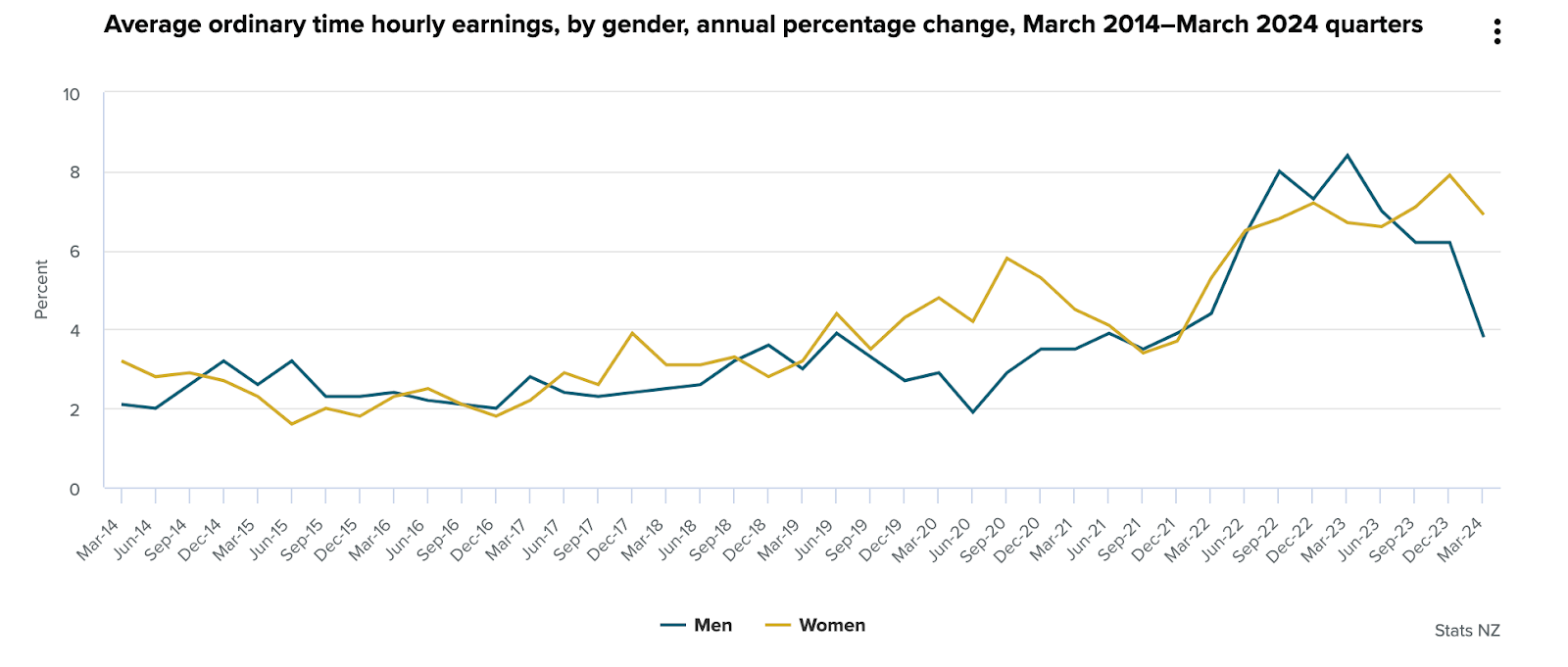
According to Stats NZ (the official statistics agency of New Zealand), in the year to March 2025, average ordinary time hourly earnings increased by 5.2%, bringing the average to $40.96 ZD per hour.
The Labor Cost Index (LCI), which measures wage cost inflation, showed a rise of 4.1% over the same period. Notably, average hourly earnings rose faster for women, increasing by 6.9% to $38.87 NZD, while men saw a 3.8% rise to $42.79 NZD.
Source: Stats NZ
Key industries driving wage growth include healthcare, social assistance, and education. Although women continue to receive higher annual percentage increases, there remains a gender pay gap, with men earning about $4 NZD more per hour on average.
| Pros | Cons |
| ✅ Low crime rates ✅ Good education system ✅ Universal healthcare system | ❌ Expensive housing market ❌ Potential for natural disasters (earthquakes) |
6. Australia
Australia appeals to Americans seeking strong job opportunities, a warm climate, and a lifestyle that prioritizes outdoor living and work-life balance. While major cities can be expensive, competitive salaries and high living standards make it a popular choice for skilled professionals and families.

Major cities like Sydney and Melbourne are known for their excellent healthcare, vibrant multicultural environments, and warm climates. Major cities like Sydney and Melbourne have higher living costs, particularly in housing (compared to New York City):
- Sydney: 77%
- Melbourne: 72%
- Brisbane: 69%
However, strong purchasing power and competitive salaries make it a desirable destination for skilled professionals.
Cost of Living Index (CLI)
Australia has a Cost of Living Index of 77.1, with cities like Sydney and Melbourne driving up the average. Daily expenses like rent, groceries, and utilities are significantly higher in these urban areas. For example, renting a one-bedroom apartment in Sydney’s city center can cost more than $2,000 USD a month.
Quality of Life Index (QLI)
Scoring 185.5 on the Quality of Life Index, the country is well-known for its excellent healthcare, clean environment, and outdoor lifestyle. The low pollution levels, access to nature, and a culture that promotes work-life balance contribute to a high level of well-being for expats.
Global Peace Index (GPI)
Ranked 19th globally on the Global Peace Index, the country enjoys political stability and low crime rates, especially in cities like Canberra, which has one of the highest safety ratings.
Economy and Salaries:
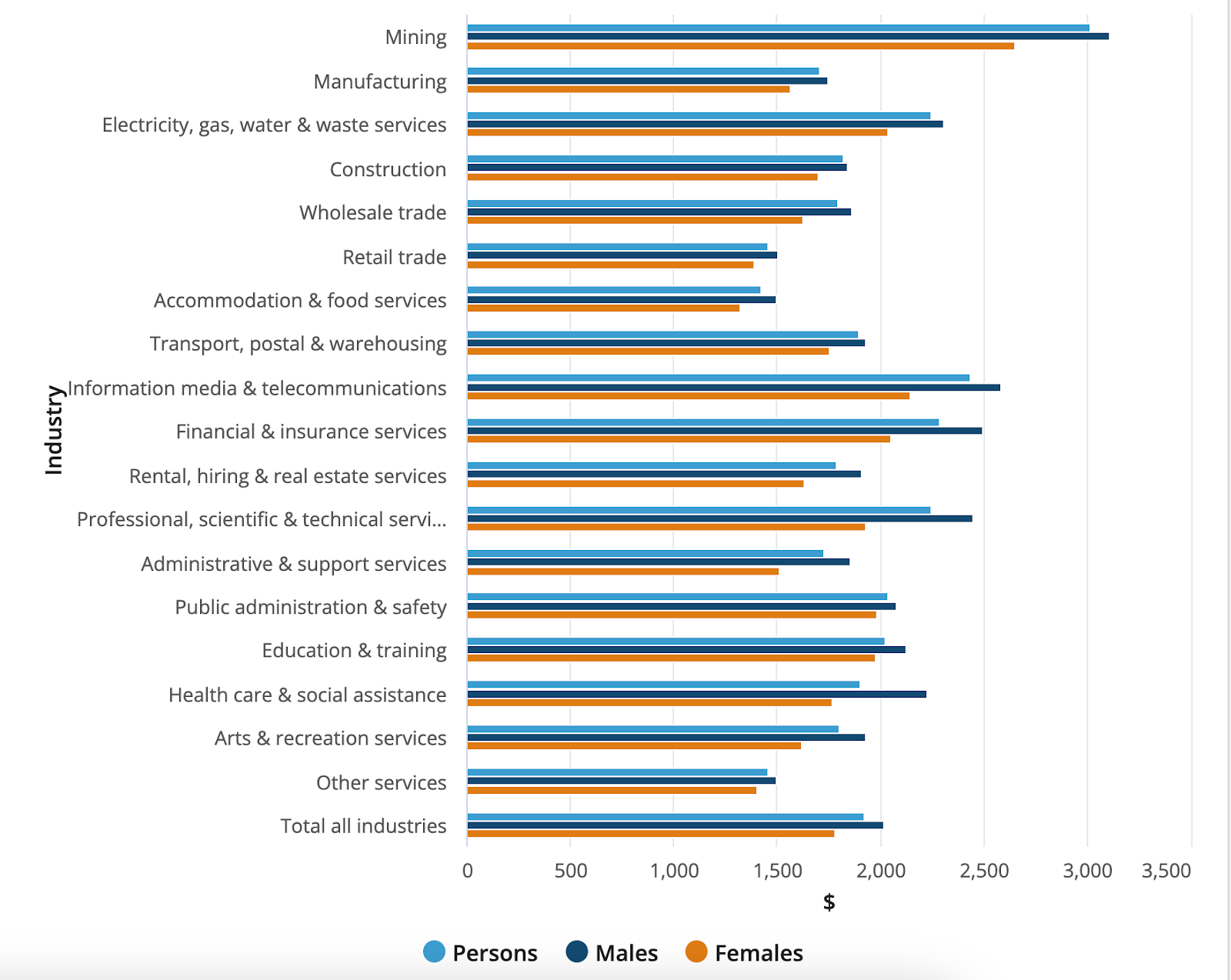
Source: The Australian Bureau of Statistics
The economy is strong, with job opportunities in IT, healthcare, and mining.
- Purchasing Power Index: 119.0 in cities like Sydney, meaning that salaries generally match or exceed the cost of living.
- Property Price to Income Ratio: 8.4, indicating that while salaries are strong, housing can be expensive, particularly in urban centers.
Here are some key insights from the Australian Bureau of Statistics:
| USD (US $) | |
| Average weekly salary for men | 1,721.60 |
| Average weekly salary for women | 1,245.70 |
| Pros | Cons |
| ✅ Multi-cultural society ✅ Good work-life balance ✅ Low population density ✅ Warm climate in many regions | ❌ Higher taxes ❌ Potential for extreme weather events ❌ Distance from other countries (geographical isolation) |
7. Singapore
Singapore is a top destination for Americans focused on career growth in a global business hub. Known for safety, efficiency, and excellent infrastructure, it’s particularly attractive to professionals in finance, technology, and international business, despite its higher cost of living.

Cost of Living Index (CLI)
Singapore has a Cost of Living Index of 84.86, ranking it among the most expensive places to live globally. A one-bedroom apartment in the city center, for example, can cost upwards of SGD $3,500 per month. However, the country’s high salaries and strong Purchasing Power Index of 109.17 help to balance these costs.
Quality of Life Index (QLI)
With a Quality of Life Index of 159.73, Singapore ranks high in terms of living standards. The country provides top-tier healthcare, education, and a safe environment. Singapore’s Health Care Index of 71.69 reflects the efficiency and quality of medical services, which are easily accessible to both locals and expats.
Although the Pollution Index of 32.83 is low, the country’s tropical climate, with a Climate Index of 57.45, can feel hot and humid year-round.
Global Peace Index (GPI)
Singapore is a very safe city, with a Safety Index of 77.01, underscoring the country’s low crime rates and political stability. Ranked 5th globally on the Global Peace Index, Singapore provides a secure environment for expats and their families. The country’s stringent laws and efficient policing further contribute to this sense of security.
Economy and Salaries
According to Singapore’s Ministry of Manpower:
| Salary (SGD) | Salary (USD) | |
| Average monthly salary (Q4 2025) | 6,792 | 5,028.08 |
| Highest median monthly salary by age (40-44 years) | 7,098 | 5,252.52 |
| Highest-paying occupation (Managers and Administrators) | 10,889 | 8,168.86 |
| Lowest-paying occupation (Cleaners, Labourers) | 1,861 | 1,377.14 |
| Median salary by education (Degree holders) | 8,190 | 6,060.60 |
| Highest-paying industry (Financial and Insurance Services) | 8,190 | 6,060.60 |
| Pros | Cons |
| ✅ High safety standards ✅ Efficient public transportation ✅ Multicultural environment ✅ Excellent healthcare and education ✅ Strategic location for travel in Asia | ❌ Hot and humid climate year-round ❌ Strict laws and regulations ❌ Limited space and outdoor activities ❌ Potential culture shock for some expats |
8. Spain
Spain draws Americans looking for culture, community, and a slower pace of life. Its strong public healthcare system, vibrant cities, and relatively affordable cost of living compared to other Western European countries make it appealing to both families and retirees.

Cost of Living Index (CLI)
Spain’s Cost of Living Index varies by city, with Barcelona at 56.2 and Madrid at 54.1. These costs are moderate compared to other major European cities. The Rent Index is 30.1 in Barcelona and 32.7 in Madrid, indicating that accommodation is relatively affordable, especially in suburban areas.
Expats can expect estimated monthly costs for a family of four to be around €2,511.2 (approx. $2,700 USD) without rent, and a single person’s estimated monthly costs are about €711.8 (approx. $765 USD).
Quality of Life Index (QLI)
Spain boasts a Quality of Life Index of 171.47, reflecting the high standard of living available to residents. Factors like Spain’s excellent healthcare system (with a Health Care Index of 73.25) and the moderate Pollution Index of 36.84 contribute to a pleasant living environment. Spain’s Safety Index of 63.61 also ensures a secure lifestyle for both expats and locals.
Global Peace Index (GPI)
Spain is ranked 23rd globally on the Global Peace Index, ensuring a relatively peaceful environment for expats. The country enjoys political stability and relatively low crime rates, particularly in suburban areas and smaller towns.
Economy and Salaries
According to Spain’s National Statistics Institute (Instituto Nacional de Estadística – INE):
| Amount (EUR) | Amount (USD) | |
| Average Monthly Earnings (Q1 2025) | €2,206.06 | $2,368 |
| Annual Salary (Women) | €24,359.82 | $25,457 |
| Annual Salary (Men) | €29,381.84 | $30,939 |
| Highest-Paying Sectors | Banking, Insurance, Health, Engineering, IT | N/A |
| Pros | Cons |
| ✅ Rich culture and history ✅ Efficient public transportation ✅ Strong expat communities | ❌ High unemployment rate ❌ Lower salaries compared to other Western European countries ❌ Slower pace of life (can be a pro for some) ❌ Language barriers (Spanish proficiency often required) |
9. Thailand
Thailand is a common choice for Americans seeking a significantly lower cost of living and an established expat lifestyle in Southeast Asia. It’s especially popular with remote workers and early retirees who prioritize affordability, healthcare access, and cultural experiences. Launched in July 2024, Thailand’s digital nomad visa, or formerly known as Destination Thailand Visa (DTV), is a flexible, long-term option for U.S. digital nomads.

While the cost of living is low, Thailand faces challenges in other areas, such as income inequality and pollution. The Income Gini Coefficient of 43.3% indicates a significant income gap, with wealth concentrated in urban areas. Additionally, Thailand ranks 25th globally on the Climate Change Performance Index, reflecting a moderate commitment to environmental sustainability.
Cost of Living Index (CLI)
Thailand’s Cost of Living Index is 35.96, categorizing it as very affordable compared to global standards. Daily expenses such as food, transport, and rent are significantly cheaper than in many Western countries.
For example, a one-bedroom apartment in the city center can range between THB 15,000-20,000 (approx. $420-560 USD), while food costs remain low, with local meals priced as low as THB 60-100 ($2-3 USD).
Quality of Life Index (QLI)
Thailand’s Quality of Life Index stands at 103.21, which is relatively low compared to other expat destinations. However, the country’s healthcare system ranks high with a Health Care Index of 77.22, providing expats with access to quality medical services at affordable rates.
The Pollution Index of 75.67, however, reflects the high pollution levels in urban centers like Bangkok, which may reduce overall living standards.
Global Peace Index (GPI)
Thailand ranks 75th globally on the Global Peace Index, placing it in the middle range for peace and political stability. Although there have been occasional political tensions, these do not typically affect expat communities. Thailand also boasts a Safety Index of 62.00, indicating a generally secure living environment.
Economy and Salaries
Thailand’s economy is diverse, driven by sectors such as tourism, agriculture, and manufacturing. Despite the country’s economic strengths, the Property Price to Income Ratio is 25.79, making real estate relatively expensive for locals and expats alike.
Source: CEIC
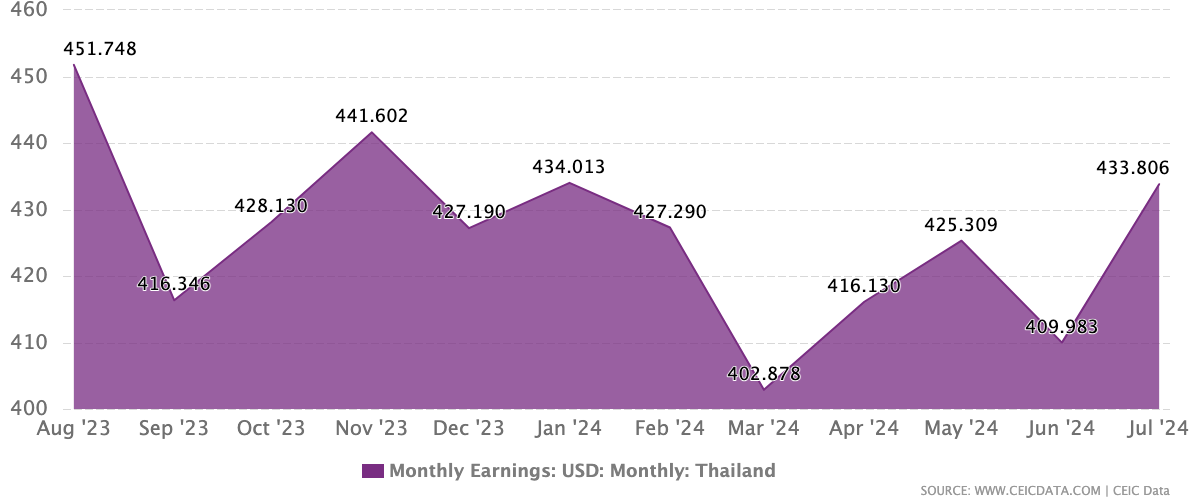
According to the National Statistical Office of Thailand and CEIC:
| Amount (THB) | Amount (USD) | |
| Average Monthly Household Income (2021) | 27,352 | $820 |
| Average Monthly Income (Bangkok and Surrounding Areas) | 39,100 | $1,170 |
| Average Monthly Income (Northeastern Region) | 21,394 | $640 |
| Average Monthly Earnings (July 2025) | 14,500 | $434 |
| Pros | Cons |
| ✅ Low cost of living ✅ Good healthcare system ✅ Rich culture and friendly people | ❌ Hot and humid climate ❌ Air pollution ❌ Traffic congestion in major cities |
Other Popular Countries Americans Consider
These countries frequently come up when Americans research moving abroad. While they aren’t covered in full detail above, each is a strong option depending on your goals, budget, and lifestyle preferences.
🇮🇪 Ireland
Best for: English-speaking EU access, tech careers, cultural familiarity
Ireland is a popular choice for Americans who want to live in Europe without a language barrier. Its strong job market—especially in technology, pharmaceuticals, and finance—combined with a welcoming culture makes it appealing to professionals and families alike. Housing costs can be high, particularly in Dublin, but many expats find the overall quality of life worth the tradeoff.
Learn more: U.S. tax considerations for Americans living in Ireland
🇬🇧 United Kingdom
Best for: Career opportunities, education, cultural familiarity
The UK remains a common destination for Americans thanks to shared language, world-class universities, and a diverse economy. While London is one of the most expensive cities in Europe, other regions offer a more affordable lifestyle with strong infrastructure and access to public healthcare through the NHS.
Related Article: How U.S. expats are taxed when living in the United Kingdom
Germany
Best for: Engineering, manufacturing, EU mobility
Germany attracts Americans seeking strong career prospects, particularly in engineering, technology, and industrial sectors. It offers excellent infrastructure, high salaries in skilled roles, and access to the broader European Union. While English is common in professional settings, daily life often requires some German proficiency.
Related Article: Tax rules for Americans living and working in Germany
Japan
Best for: Safety, reliability, career experience abroad
Japan is known for exceptional safety, efficient public services, and a high standard of living. Americans often move to Japan for career opportunities, cultural experience, or education. While the language barrier can be challenging, many expats value Japan’s reliability, healthcare quality, and overall stability.
Learn the U.S. expat tax obligations for Americans living in Japan
Costa Rica
Best for: Retirement, nature-focused lifestyle, stability
Costa Rica is especially popular with American retirees and remote workers seeking a slower pace of life, warm climate, and access to affordable healthcare. Its political stability and strong environmental protections add to its appeal. Income opportunities may be limited locally, so many expats rely on foreign income or retirement savings.
Read: What Americans living in Costa Rica need to know about U.S. taxes
Panama
Best for: Expat infrastructure, affordability, residency options
Panama offers modern infrastructure, a growing expat community, and residency programs that appeal to retirees and professionals alike. Its use of the U.S. dollar and well-developed healthcare system make the transition easier for many Americans, though income and tax rules vary depending on residency status.
Get tax planning tips for Americans living in Panama
Choosing the Right Country Is About Fit — Not Rankings
There’s no single “best” country for every American to move to. The right choice depends on what matters most to you, whether that’s affordability, safety, career opportunities, lifestyle, or ease of integration.
Some Americans prioritize staying close to family or avoiding a language barrier. Others are focused on lowering their cost of living, accessing healthcare, or building an international career. The countries in this guide represent some of the most common (and most practical) options for Americans to live in 2026.
One thing remains consistent no matter where you move: U.S. citizens are still required to file U.S. tax returns while living abroad, and local tax rules can significantly affect how and where you pay taxes. Understanding those rules early can help you avoid costly mistakes and make a more confident move.
If you’re planning a relocation, getting help moving abroad concerning taxes is worth thinking about as part of your overall decision.

Planning a Move Abroad? Make Sure Your Taxes Move With You
Frequently Asked Questions
Countries like Canada, Mexico, Portugal, and Ireland are often considered among the easiest for Americans due to clear residency pathways, established expat communities, and cultural familiarity. Ease can vary depending on whether you’re moving for work, retirement, or family reasons.
Countries such as Canada, Japan, Singapore, New Zealand, and Switzerland consistently rank highly for safety and political stability. Safety can also vary by region and city, so it’s important to research local conditions, not just national rankings.
Many Americans find the lowest overall cost of living in countries like Mexico, Thailand, Costa Rica, and parts of Central and Eastern Europe. While everyday expenses may be lower, income opportunities and access to services should also be considered.
Countries with long-standing expat communities, including Portugal, Mexico, Canada, Ireland, and Spain, are often viewed as especially welcoming to Americans. Language, local culture, and community size all play a role in how easily people integrate.
Yes. U.S. citizens are required to file U.S. tax returns regardless of where they live. Depending on your situation, tools like the Foreign Earned Income Exclusion, Foreign Tax Credit, and tax treaties may reduce or eliminate double taxation — but reporting requirements still apply.
Taxes shouldn’t be the only factor, but they can have a major impact on your finances. Different countries tax income, investments, and retirement accounts differently, and those rules interact with U.S. tax law. Understanding this upfront can influence where (and how) you choose to move.
Related Articles
This article is for general informational purposes only and should not be considered tax, legal, immigration, or financial advice. Tax laws and residency rules vary by country and are subject to change over time. Your personal situation may require additional guidance or professional support. For advice tailored to your circumstances, consult a qualified tax or legal professional.



Featured In





