How Are Canadian Pensions Taxed in the U.S.?
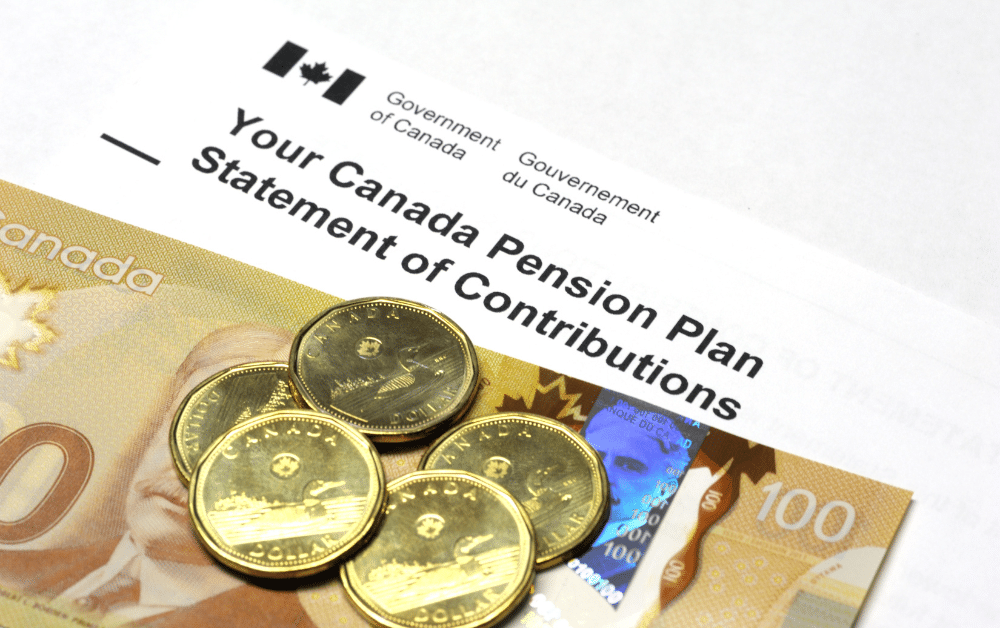


If you’re receiving Canada Pension Plan (CPP) or Old Age Security (OAS) benefits as a U.S. citizen or resident, you’ll be relieved to know the U.S.-Canada tax treaty prevents double taxation. According to the IRS, Canadian social security benefits paid to U.S. residents are taxed only in the United States and treated as U.S. Social Security benefits for tax purposes, with up to 85% potentially taxable. For the 2025 tax year, CPP pays a maximum of CAD $1,433 monthly for new retirees at age 65, while OAS provides up to CAD $740 monthly for those aged 65-74.
Understanding the Canadian pension table for U.S. taxpayers comes down to one factor: where you live when you receive benefits. Most Americans discover they won’t owe additional tax beyond what they already pay in their country of residence.
What Is the Canadian Pension Plan (CPP) and Old Age Security (OAS)?
The Canada Pension Plan (CPP) functions like U.S. Social Security. If you worked in Canada and earned at least CAD $3,500 annually, you and your employer each contributed 5.95% of earnings up to CAD $71,300 for 2025. You can start collecting as early as age 60 (reduced benefits) or delay until age 70 (increased benefits).
Old Age Security (OAS) doesn’t require contributions. Eligibility depends on Canadian residence after age 18. To receive OAS while living outside Canada long-term, you generally need 20 years of Canadian residence. Otherwise, you can receive payments for six years and one month after leaving Canada.
The Quebec Pension Plan (QPP) operates similarly to CPP for Quebec residents.
Receiving CPP or OAS? Make Sure You’re Taxed in the Right Country
How Does My Location Affect How Canadian Pensions Are Taxed?
Your tax residence status determines everything when it comes to the Canadian pension table for U.S. purposes.
If You Live in the United States
The treaty provides significant relief. Canadian social security benefits paid to U.S. residents are taxable only in the United States. Canada will not withhold tax from your payments, and you won’t need to file a Canadian tax return for these benefits.
For U.S. tax purposes, your CPP and OAS are treated exactly like U.S. Social Security benefits. This means up to 85% of your payments may be taxable, depending on your total income and filing status. The IRS uses the same income thresholds and calculations that apply to domestic Social Security.
Real Example: James lives in Florida and receives CAD $1,200 monthly (U.S. $880) from CPP and CAD $700 monthly (U.S. $515) from OAS. His total annual Canadian pension income is U.S. $16,740. He reports this on Form 1040 where U.S. Social Security benefits appear. Because his total income is modest, approximately 50% of his benefits are taxable, resulting in U.S. $8,370 added to his taxable income.
If You Live in Canada
For U.S. citizens or green card holders residing in Canada, the situation reverses. Your CPP and OAS benefits are taxable only in Canada, not in the United States. You’ll report these benefits on your Canadian tax return, and they’ll be fully taxable at your Canadian marginal tax rate.
You still must report the income on your U.S. return, but you’ll exempt it from U.S. taxation under the treaty. Many tax professionals recommend filing Form 8833 with your U.S. return to document this treaty exemption.
Real Example: Sarah lives in Toronto and receives CAD $1,100 monthly from CPP. On her Canadian T1 return, she reports the full CAD $13,200 as taxable income. When preparing her U.S. Form 1040, she reports the income but claims a treaty exemption using Form 8833, resulting in zero U.S. tax on her Canadian pension benefits.
How Do I Report Canadian Pensions on My U.S. Tax Return?
For U.S. residents, report your CPP and OAS on Form 1040, lines 6a and 6b (where Social Security benefits appear). Convert CAD amounts to U.S. dollars using the average exchange rate for the year. Service Canada sends an NR4 slip in February showing your annual payments.
For Canadian residents, report benefits on your T1 return using T4A(P) for CPP and T4A(OAS) for OAS. On your U.S. return, report the income but claim the treaty exemption using Form 8833, citing Article XVIII(5).

Canadian residents must still file a U.S. return if worldwide income exceeds filing thresholds ($14,600 for single filers under 65), even if owing zero U.S. tax. Failing to file can result in penalties regardless of tax owed.
What If I Receive Both U.S. and Canadian Pensions?
Many cross-border workers receive both U.S. Social Security and Canadian pensions. The totalization agreement prevents double social security taxation during working years and coordinates benefits.
Your U.S. Social Security is taxable in the U.S. as normal. If you’re a Canadian resident, you also report U.S. Social Security on your Canadian return but can claim a 15% treaty exemption.
Your CPP/OAS follows the rules based on where you live. U.S. residents report both U.S. Social Security and CPP/OAS as Social Security benefits, with up to 85% potentially taxable based on combined income.
Until January 2025, the Windfall Elimination Provision reduced U.S. Social Security for those receiving CPP/QPP. The Social Security Fairness Act eliminated these reductions, so you can now receive full benefits from both countries.
Do I Need to Report My Canadian Retirement Accounts?
While CPP and OAS have straightforward treaty treatment, other Canadian retirement accounts require additional reporting.
Registered Retirement Savings Plans (RRSPs) receive favorable tax-deferred treatment under the treaty. Since 2014, you no longer need Form 8891. Your RRSP grows tax-free for U.S. purposes until withdrawal, when you can typically use the Foreign Tax Credit to eliminate double taxation. See our complete RRSP guide.
Tax-Free Savings Accounts (TFSAs) are NOT tax-free for U.S. purposes. All TFSA income must be reported on your U.S. return and is subject to U.S. taxation. Learn more about TFSA consequences.
If you have Canadian financial accounts exceeding $10,000 total at any point during the year, you must file FinCEN Form 114 (FBAR). Penalties start at $12,921 per account. See when you need to report RRSPs on FBAR.
What Mistakes Should I Avoid With Canadian Pensions?
- Not filing U.S. returns because you owe $0. You must file to claim treaty benefits, even when owing no tax. The IRS can assess penalties regardless of tax due.
- Allowing Canadian withholding when living in the U.S. If Canada withholds 25% tax despite your U.S. residency, work with Service Canada to stop it and request a refund.
- Missing FBAR reporting. Canadian accounts exceeding $10,000 total must be reported. Penalties can be severe even if you owe no tax.
- Not planning around OAS clawback. If your income exceeds CAD $90,997 for 2025, Canada will claw back OAS. Factor this into your retirement planning.
What If I’m Moving Between the U.S. and Canada?
If you’re planning to move to Canada, your CPP contributions during Canadian employment won’t reduce U.S. tax liability, but you’ll eventually receive CPP benefits that coordinate with any U.S. Social Security you’ve earned.
For those returning to the U.S. after working in Canada, your CPP contributions remain yours. When you reach retirement age, you can collect CPP regardless of where you live, and it will be taxed only in the U.S. once you’re a U.S. resident.
Dual citizens should carefully time when they claim each pension to maximize benefits and minimize tax.
Get Expert Help With Canadian Pension Reporting
At Greenback, we’ve helped over 23,000 expats file more than 71,000 returns while maintaining a 4.9-star rating. Many of our CPAs and Enrolled Agents are expats themselves, living in 14 time zones.
We work with trusted Canadian tax partners for coordinated filing. You upload documents once, and we handle both U.S. and Canadian returns seamlessly.
No matter how complex your situation, you’ll have peace of mind knowing your taxes were done right.If you’re ready to be matched with a Greenback accountant, click the Get Started button below. For general questions on US expat taxes or working with Greenback, contact our Customer Champions.
Let Greenback Handle Your Cross-Border Pension Reporting
This article provides general tax information for educational purposes. Tax laws are complex and change frequently, and the Canada-U.S. tax treaty contains numerous specific provisions. Always consult with qualified tax professionals who specialize in U.S.-Canada cross-border taxation before making major decisions about your retirement benefits or filing strategy.
Related Resources
- U.S. Expat Tax Guide for Living in Canada
- Canadian RRSPs: Complete Guide for U.S. Expats
- Canadian TFSA Tax Consequences for Americans
- Retirement in Canada for U.S. Citizens: Tax Advice
- Filing Both U.S. and Canada Tax Returns
- How to Move to Canada: Complete Guide for U.S. Citizens
- Foreign Tax Credit: What U.S. Expats Need to Know
- Do I Pay Taxes in Both Countries as a Dual Citizen?