IRS Direct File Discontinued: How Greenback Can Help With Your Complicated Expat Taxes
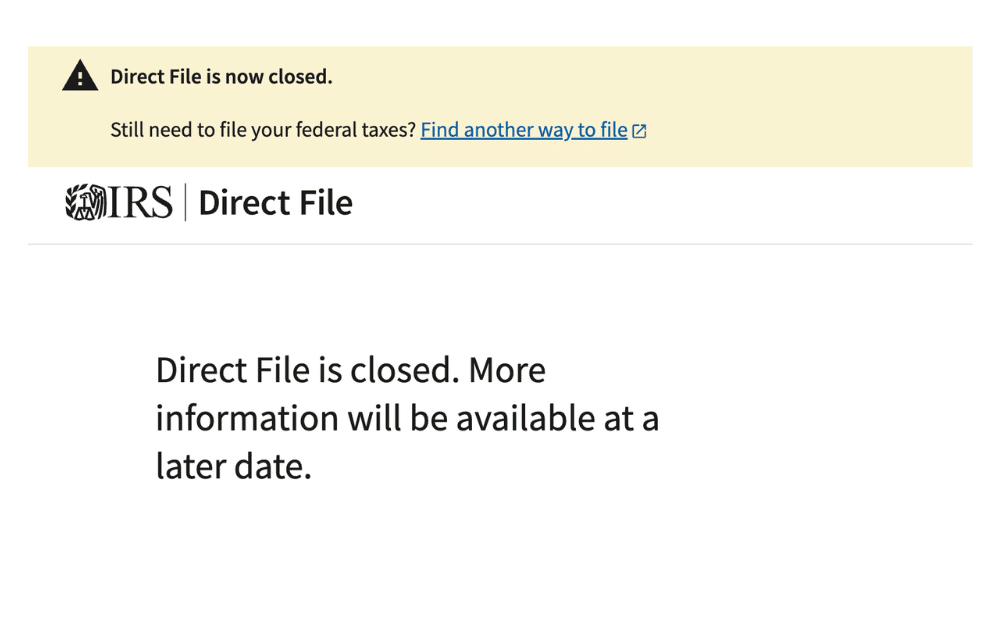


The IRS confirmed on November 4, 2025, that Direct File will be discontinued in Filing Season 2026, with no launch date set for the future. For American expats working through the complexities of US tax compliance from abroad, this news might feel like one more hurdle in what’s already a challenging process.
But here’s the relief you need: the average American spends about $140 preparing returns each year, and while Direct File’s simple interface worked for basic domestic filers, it was never built to handle the situations most expats face. Whether you’re claiming the Foreign Earned Income Exclusion, reporting foreign bank accounts, or managing foreign business income, you need more than a basic filing tool. You need experienced expat tax professionals who know your unique situation inside and out.
TLDR: The IRS discontinued Direct File for 2026, but this doesn’t affect most expats since the program never supported expat-specific forms like Form 2555, FBAR, or foreign tax credits. The good news: with the right exclusions and credits (like the $130,000 Foreign Earned Income Exclusion for 2025), most expats owe $0 in US taxes. If your situation involves foreign income, bank accounts, investments, or you’re behind on filing, professional help ensures you stay compliant and maximize your tax savings.
Living abroad and relied on Direct File? We’ll help you find your next step.
Why Was Direct File Discontinued?
The Treasury Department reported that Direct File had low participation and high costs compared to other free filing options. For tax year 2024, Direct File returns made up less than 0.5 percent of approximately 146 million returns filed, with costs of at least $138 per return accepted.
The program faced several limitations. Direct File was restricted to taxpayers with simple situations, supporting only Form W-2 wages, Social Security benefits, unemployment compensation, interest income, retirement income, and Alaska Permanent Fund Dividend income. It didn’t support self-employment earnings, rental or business income, itemized deductions, or state tax returns in most cases.
For expats specifically, Direct File never offered the specialized features needed for international tax compliance. There was no support for Form 2555 (Foreign Earned Income Exclusion), FBAR filing, Form 8938 (FATCA reporting), foreign tax credits, treaty benefits, or the dozens of other forms expats commonly need.
Does This Change What I Need to File as an Expat?
If you’re an American living abroad, Direct File’s discontinuation probably doesn’t change much for you. The program was never designed to handle expat tax situations in the first place. Here’s what you still need to report:
Foreign Earned Income
Whether you’re working for a foreign company, freelancing internationally, or running your own business abroad, you need to report all worldwide income to the IRS. For 2025, you can exclude up to $130,000 through the Foreign Earned Income Exclusion if you qualify.
Foreign Bank Accounts
If your foreign financial accounts exceeded $10,000 at any time during the year, you must file an FBAR. Miss this deadline, and penalties start at $10,000 per violation.
Foreign Investments
Own foreign mutual funds? You might be dealing with PFIC reporting on Form 8621. Foreign rental property? That’s Schedule E, which includes currency conversion calculations. Foreign business ownership? Welcome to Form 5471 and potentially GILTI tax.
Treaty Benefits
If you’re in a country with a US tax treaty, you might be eligible for special provisions that reduce or eliminate double taxation. But you need to know how to claim them correctly on Form 8833.
The complexity doesn’t go away just because a free filing tool is no longer available. In fact, it becomes even more important to get expert help.
Do I Need Professional Help With My Expat Taxes?
You’ll benefit from professional expat tax help if any of these situations apply to you:
- Digital nomads and location-independent workers: Moving between countries throughout the year? You need to track physical presence carefully to qualify for the Foreign Earned Income Exclusion and work through multiple countries’ tax rules.
- Self-employed expats and freelancers: Schedule C, Schedule SE, quarterly estimated taxes, and the interaction between self-employment tax and the FEIE make DIY filing risky. One mistake could cost you thousands.
- Foreign business owners: Form 5471 compliance is notoriously complex. GILTI tax, Subpart F income, and foreign entity classification require specialized expertise. The penalties for getting it wrong are severe.
- Late tax filers: Years behind on your tax returns? Streamlined Filing Procedures can help you catch up with minimal penalties. But you need to do it right the first time, or you risk losing this opportunity.
- Corporate expats: Your employer relocated you abroad? Foreign housing exclusion calculations, tax equalization, RSU reporting, and treaty provisions require careful attention to maximize your benefits.
- Green card holders and visa holders: First year as a US taxpayer? The transition from non-resident alien to resident alien status involves complex dual-status returns and treaty benefit claims.
- Investment and account holders: FBAR, FATCA, and PFIC reporting are serious compliance requirements with penalties that can exceed your account balances.
- Retirees living abroad: Foreign pension taxation, Social Security treaty benefits, and retirement account distributions all require specialized knowledge to optimize your tax situation.
- US-Canada or US-UK dual filers: Managing RRSP elections, TFSA reporting, UK pension reporting, or domicile issues? Country-specific expertise makes a massive difference.
- Anyone who’s overwhelmed: If you’re reading through IRS forms and publications feeling lost, that’s completely normal. US expat tax rules are genuinely complicated, and you shouldn’t have to figure them out alone.
What Are My Options Now That Direct File Is Gone?
While Direct File is gone, other free filing options exist, but they come with significant limitations for expats:
IRS Free File
Available if your adjusted gross income was under $84,000 in 2024. However, these commercial partners rarely support the complex expat forms you need, and coverage varies significantly between providers.
VITA/TCE
Volunteer Income Tax Assistance programs help taxpayers with income below $67,000, but volunteers typically aren’t trained in international tax issues. They usually can’t prepare returns involving foreign income, FBAR, or treaty benefits.
Commercial Software
Tax prep companies offer expat versions, but they’re guided interview tools that can’t catch errors before filing, provide strategic tax planning, or optimize your position when you’re paying taxes in multiple countries. Software asks questions; it doesn’t give answers.
The reality is that most expats need more than software. You need someone who knows both US tax law and the tax system in your country of residence. You need someone who can explain why claiming the Foreign Earned Income Exclusion might be better than the Foreign Tax Credit in your situation, or vice versa. You need someone who stays current on treaty provisions, IRS guidance, and reporting requirements that change regularly.
What Should I Do Next?
If you’re an American expat who needs to file taxes for 2025, don’t let the absence of Direct File stress you out. Here’s your action plan:
- Gather your documents: Collect all Forms W-2, 1099s, foreign income statements, bank account statements showing the highest balances, and records of foreign taxes paid.
- Assess your situation: Do you have foreign-earned income over $130,000? Multiple foreign bank accounts? Foreign investments or business ownership? Self-employment income? Each adds complexity that benefits from expert review.
- Consider your timeline: The standard tax deadline is April 15, but expats get an automatic extension to June 15. Need more time? File Form 4868 for an extension to October 15. Behind on multiple years? The sooner you start catching up, the better.
No matter how late, messy, or complex your return may be, we can help. You’ll have peace of mind, knowing that your taxes were done right.
If you’re ready to be matched with a Greenback accountant, click the get started button below. For general questions on expat taxes or working with Greenback, contact our Customer Champions.
Direct File is gone, but expert help for your expat taxes is right here. Get matched with a CPA who specializes in the forms Direct File never supported.
This article is for informational purposes only and does not constitute tax or legal advice. Tax laws and requirements are subject to change, and your individual tax situation may vary. Please consult with a qualified tax professional regarding your specific circumstances.