
You’re a U.S. Owner of a Foreign Business. Your Tax Obligations Are Unique.
Does This Sound Like Your Situation?
-
You own or manage a foreign corporation but aren’t sure which U.S. forms apply.
Your ownership percentage determines filing obligations, but the rules around Form 5471 categories and schedules feel impossible to interpret without expert guidance.
-
Form 5471 and its schedules feel overwhelming and intimidating.
You worry that missing even one schedule could trigger $10,000+ penalties, and the instructions don’t clearly explain which sections apply to your specific situation.
-
GILTI, Subpart F, and basis calculations are confusing and stressful.
You’re not confident how these anti-deferral rules apply to your business or whether you qualify for exceptions that could reduce your tax liability.
-
You’re unsure when foreign profits become U.S.-taxable income.
You don’t know if retained earnings, dividends, or certain passive income categories trigger immediate U.S. tax reporting obligations.
-
You want to make strategic business decisions but lack tax clarity.
Decisions around dividends, retained earnings, entity restructuring, or profit repatriation have tax consequences you can’t confidently evaluate on your own.
-
You need compliance support without spending hours on regulations.
The reporting requirements weren’t written for everyday business owners, and you want expert help to stay compliant while focusing on running your business.
Start your U.S. expat tax return today.
"*" indicates required fields
You Need Certainty. We Provide the Blueprint. Owning a foreign corporation comes with IRS rules most business owners never see. Our knowledge center breaks down those requirements in clear, practical terms so you understand what applies to you before you file.

Form 5471 & Controlled Foreign Corporations, What You Must Report
If you own part of a foreign corporation, Form 5471 and Controlled Foreign Corporation (CFC) rules may apply. Learn when reporting is required, what the IRS expects, and how ownership thresholds determine your filing category.
Understanding GILTI and Subpart F Income
If your foreign company generates active or passive earnings, you may face U.S. tax under GILTI and Subpart F Income rules. These guides explain how the calculations work and when high-tax exceptions or deductions can reduce your liability.
Using the Foreign Tax Credit to Prevent Double Taxation
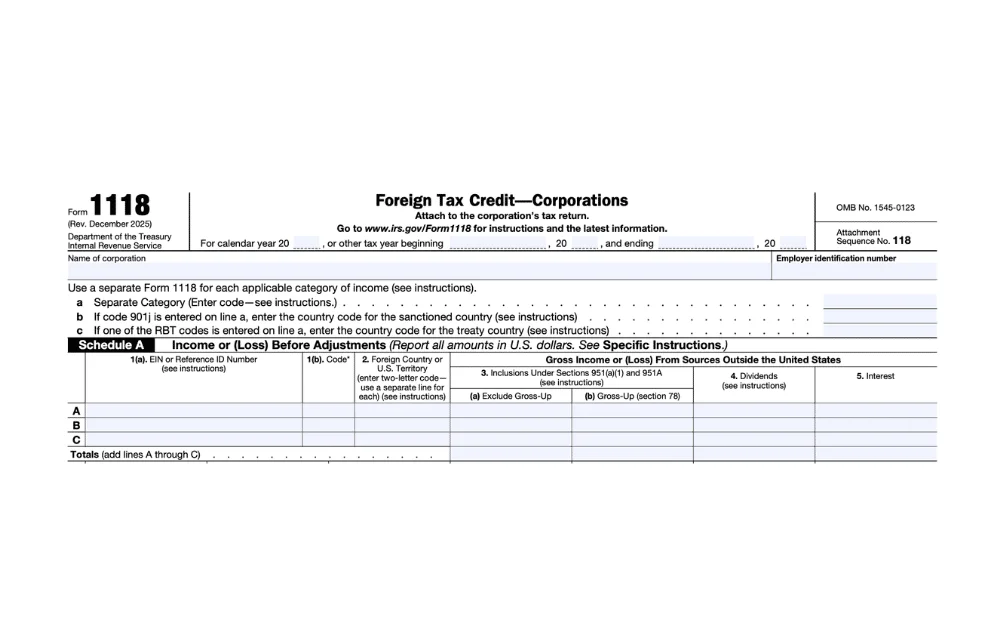
When your foreign corporation pays local taxes, the U.S. may still require you to report income. See how the Foreign Tax Credit offsets U.S. tax and when Form 1116 applies to business owners.
Choosing and Maintaining the Right Foreign Business Structure
From entity classification to local registration and annual reporting, your structure has major U.S. tax consequences. Learn how foreign corporations are treated and which forms you must file each year in our foreign business tax reporting guide.
Getting Back on Track If You’re Behind
Missed filing Form 5471, FBARs, or foreign income reporting in prior years? Streamlined procedures can help you catch up and avoid harsh penalties, especially if your oversight was non-willful.
Foreign Bank Account and Asset Reporting Requirements
If your business has foreign accounts or if you control accounts through your company you may need to file FBAR or FATCA reports. Learn which accounts count and how to avoid penalties.Featured In






Trusted by Americans Running Businesses Around the World
 4.84/5
 4.9/5
4.9/5
 4.8/5
4.8/5
Tax Help for Americans Who Own Businesses Abroad
Owning a foreign corporation comes with filing obligations, anti-deferral rules, and reporting requirements that are far more demanding than a standard expat return. These services are designed to help you stay compliant, avoid penalties, and manage the ongoing tax obligations associated with foreign ownership. We cover Form 5471 tax prep, GILTI Form 8992, and Subpart F Compliance.
Foreign Corporation Reporting (Form 5471 Preparation)
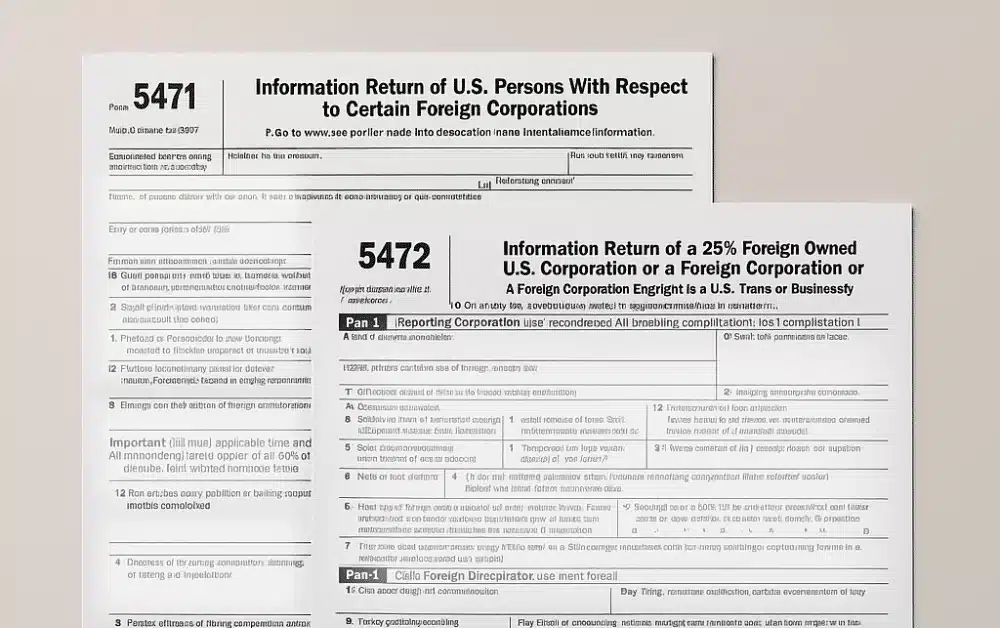
If you own shares in a foreign corporation, Form 5471 is required—and the penalties for getting it wrong are severe. We prepare the form, all required schedules, and ensure accurate reporting of ownership, earnings, Subpart F income, and tax attributes.
$750
USD
GILTI & Subpart F Compliance (Included with Form 5471)
Owning a foreign corporation may trigger GILTI or Subpart F taxation. We handle the calculations, determine whether the high-tax exception applies, and apply the Section 250 deduction when eligible—so you’re not paying more than required.
$700
USD
Individual Expat Tax Return (Coordinated With Your Business Filing)
Your personal U.S. tax return must reflect your foreign business income accurately. We coordinate your Form 1040 with your corporate filings, apply foreign tax credits correctly, and ensure your corporate ownership is reported seamlessly.
$565
USD
FBAR Filing for Business & Personal Accounts
If your combined foreign accounts exceeded $10,000 at any point during the year, FBAR reporting is required. We file for both personal and business accounts to keep you fully compliant.
$125+
USD
Streamlined Filing for Foreign Corporations (Catch-Up Compliance)
If you’ve fallen behind on filing Form 5471 or reporting your foreign corporation, we help you catch up through the IRS Streamlined Filing Procedures—often penalty-free if you qualify.
$1,750
USD
Entity Classification & Structuring Consultation
If you’re unsure whether your foreign business should be taxed as a corporation, partnership, or disregarded entity, we help you evaluate check-the-box elections, treaty classifications, and restructuring options that may reduce long-term tax exposure.
$250+
USD
Year-Round Tax Planning for Foreign Business Owners
Get strategic guidance on dividend planning, reinvestment strategies, transfer pricing considerations, salary vs. distribution decisions, and restructuring scenarios. Ideal for those wanting proactive support beyond annual compliance.
$250+
USD
Your Questions, Answered: US Tax Guides & Resources
Visit the Knowledge Center








Foreign Business Owner Tax FAQs
Can Greenback help me file Form 5471 for my foreign corporation?
Yes, we specialize in Form 5471 preparation for Americans who own foreign corporations. We prepare the complete form including all required schedules based on your ownership category (Category 2, 3, 4, or 5), accurately report ownership percentages, earnings and profits, Subpart F income, GILTI calculations, and tax attributes. We ensure nothing is missed that could trigger the severe penalties ($10,000+ per form) for incomplete filing.
Learn more about our small business tax services.
Can Greenback help me with GILTI and Subpart F compliance?
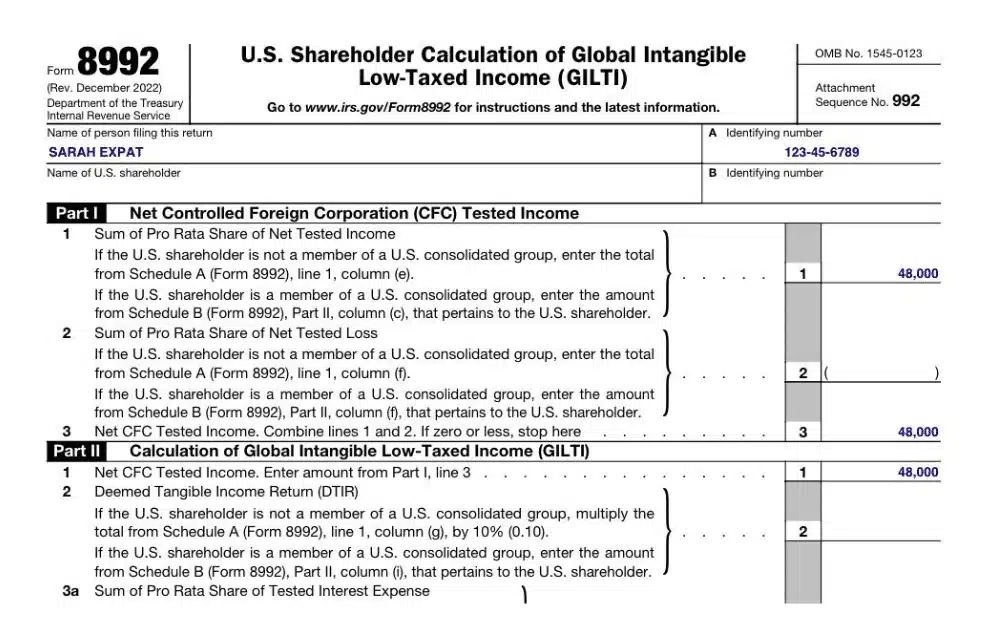
Yes, we handle all GILTI (Global Intangible Low-Taxed Income) and Subpart F calculations as part of your foreign corporation filing. We determine whether your foreign business income is subject to these anti-deferral regimes, calculate the taxable amounts using Form 8992, evaluate whether the high-tax exception applies to exclude certain income, and apply the Section 250 deduction when eligible to reduce your tax liability.
Learn more about our additional tax services.
Can Greenback coordinate my personal tax return with my foreign business filing?
Yes, your personal Form 1040 must accurately reflect your foreign business income, distributions, and ownership. We coordinate your individual return with your corporate filings to ensure seamless reporting, properly apply foreign tax credits to prevent double taxation, report your CFC ownership correctly, and handle the interaction between FEIE, FTC, and business income.
Learn more about our federal tax return preparation.
Can Greenback help me catch up if I missed Form 5471 in previous years?
Yes, we help foreign business owners who’ve fallen behind on Form 5471 filing through the IRS Streamlined Filing Procedures. This program allows you to file 3 years of delinquent returns and 6 years of FBARs with certification that your failure to file was non-willful. When properly filed through Streamlined procedures, most business owners avoid the severe Form 5471 penalties.
Learn more about our Streamlined Filing Package.
Can Greenback help me with FBAR filing for my business accounts?
Yes, if your foreign financial accounts (including business accounts) exceeded $10,000 combined at any point during the year, FBAR filing is required. We determine which business and personal accounts must be reported, calculate the aggregate threshold correctly including accounts you have signature authority over, and electronically file through FinCEN’s system. Our FBAR service starts at $125 for up to 5 accounts.
Learn more about our FBAR filing services.
Can Greenback help me choose the right entity classification for my foreign business?
Yes, entity classification has significant U.S. tax consequences, and we provide strategic consultation on this issue. We evaluate whether your foreign entity should be taxed as a corporation, partnership, or disregarded entity, advise on Check-the-Box elections (Form 8832) to optimize tax treatment, assess treaty classification considerations, and analyze restructuring scenarios that could reduce long-term tax exposure.
Schedule a consultation to discuss your entity structure.
Can Greenback provide year-round tax planning for my foreign business?
Yes, we offer strategic tax planning beyond annual compliance. Our consultation services help with dividend planning and timing decisions, salary vs. distribution optimization, reinvestment strategies to minimize GILTI, transfer pricing considerations for related-party transactions, and restructuring scenarios for changing business needs. Proactive planning can save tens of thousands in taxes.
Learn more about our consultation services.
How much does Greenback charge for foreign business tax services?
Our pricing is transparent and flat-fee based. Form 5471 preparation starts at $750. GILTI and Subpart F compliance is $700. Federal tax return with business coordination starts at $565. FBAR filing is $125+ for up to 5 accounts. Streamlined Filing Package (3 years + 6 years FBARs) is $1,750. Consultations start at $250.
Use our pricing calculator to get an estimate for your specific situation.
File Your Foreign Business Taxes Correctly. Avoid Severe Penalties.