How Does the Foreign Housing Exclusion Work for Expats?

- Who Qualifies for the Foreign Housing Exclusion?
- How Much Can I Exclude for Housing Costs?
- What Housing Expenses Qualify?
- How Do I Calculate My Foreign Housing Exclusion?
- What's the Difference Between Exclusion and Deduction?
- Can Married Couples Both Claim It?
- How Do I Claim the Foreign Housing Exclusion?
- What Mistakes Should I Avoid?
- Should I Use Housing Exclusion or Foreign Tax Credit?
- What If I Missed Claiming It on Past Returns?
- Next Steps
- Related Resources


Here’s the relief you’ve been looking for: According to IRS data, the majority of American expats who properly claim available exclusions and credits owe $0 in U.S. federal taxes. The Foreign Housing Exclusion lets you exclude thousands more beyond the Foreign Earned Income Exclusion by deducting qualifying housing costs from your taxable income.
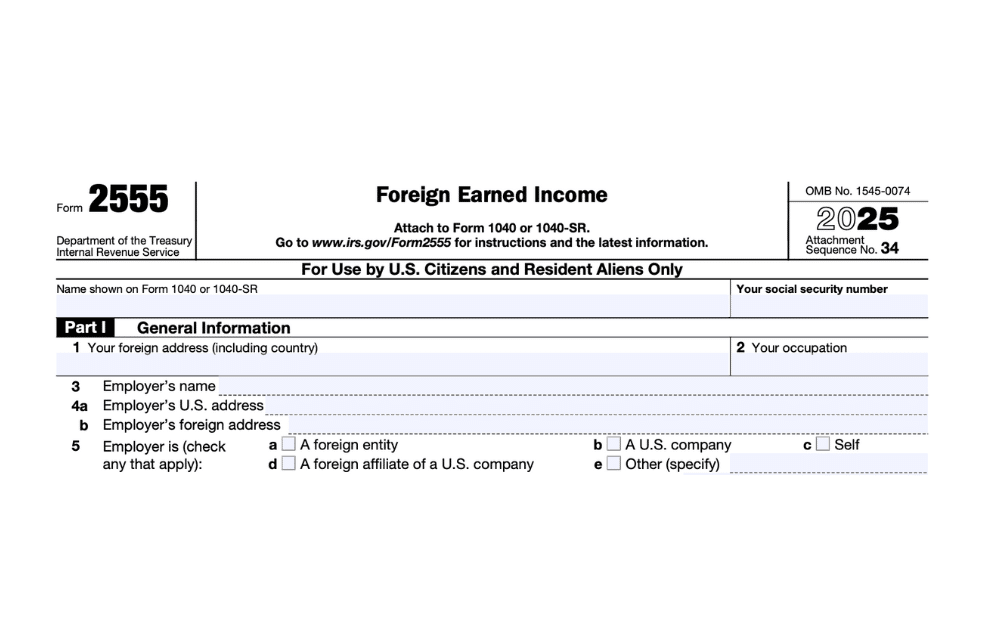
For the 2025 tax year, you can exclude housing costs beyond a base amount of $20,800, up to $39,000 for most locations (significantly more in high-cost cities like Hong Kong, London, or Tokyo). Better yet, if you already qualify for the FEIE, claiming this exclusion requires no extra forms—just complete Form 2555.
Who Qualifies for the Foreign Housing Exclusion?
You qualify for the Foreign Housing Exclusion if you meet these requirements:
Pass the Same Tests as FEIE
You must first qualify for the Foreign Earned Income Exclusion by passing either:
- Physical Presence Test: Be physically present in foreign countries for at least 330 full days during any 12-month period
- Bona Fide Residence Test: Establish genuine residence in a foreign country for an entire calendar year (January 1 through December 31)
Exceed the Base Housing Amount
Your qualifying housing costs must exceed $20,800 for the 2025 tax year (16% of the $130,000 FEIE limit). This base amount represents what the IRS considers typical U.S. housing costs.
Have Foreign Earned Income
You must have foreign earned income from work performed abroad (salaries, wages, self-employment income).
See If I Qualify for the Foreign Housing Exclusion
How Much Can I Exclude for Housing Costs?
For the 2025 tax year, the standard housing exclusion cap is $39,000 (30% of the $130,000 FEIE limit). However, if you live in a high-cost city, your limit could be significantly higher.
High-Cost City Limits
The IRS publishes adjusted limits for expensive cities in Notice 2025-16. Some examples for 2025:
- Hong Kong: $114,300
- Russia (Moscow): $108,000
- Geneva: $102,600
- Bermuda: $90,000
- Singapore: $82,900
- Tokyo: $67,700
- London: $67,000
- Paris: $65,700
Check the current Form 2555 instructions for the complete list, as limits are updated annually.
If You Qualified for Only Part of the Year
If you moved abroad mid-year or only qualified for part of 2025, you must prorate both your base amount and your cap based on the number of qualifying days.
Formula: (Annual Amount ÷ 365) × Qualifying Days = Your Prorated Amount
What Housing Expenses Qualify?
The IRS allows specific housing-related expenses, but not all costs qualify.
Qualified Housing Expenses
- Rent for your principal foreign residence
- Utilities (electricity, gas, water, heating oil)
- Real and personal property insurance (homeowner’s or renter’s insurance)
- Occupancy taxes (not deductible elsewhere on your return)
- Nonrefundable fees paid for securing a lease
- Rental of furniture and accessories
- Residential parking fees
Expenses That Don’t Qualify
- Mortgage principal or interest payments
- Purchased furniture or home improvements
- Domestic labor (maids, housekeepers, gardeners)
- Television services, internet, or telephone charges
- Costs deemed lavish or extravagant for your location
How Do I Calculate My Foreign Housing Exclusion?
Here’s the step-by-step process for calculating your 2025 exclusion:
Step 1: Total Your Qualifying Housing Expenses
Add up all expenses that qualify under IRS rules for your time abroad in 2025.
Step 2: Subtract the Base Housing Amount
$20,800 for a full year (or prorated if you qualified for fewer days)
Step 3: Compare to Your Location’s Cap
Use the lower of:
- Your total from Step 2, OR
- Your city’s maximum limit ($39,000 standard, or higher for designated cities)
Step 4: Apply the Exclusion
The amount from Step 3 is your Foreign Housing Exclusion, which reduces your taxable income on top of your FEIE.
Real-World Examples
Example 1: Standard City – Berlin
Marcus earns $95,000 in Berlin and qualifies for FEIE all year under the Physical Presence Test.
Housing expenses:
- Rent: $30,000
- Utilities: $1,440
- Renter’s insurance: $600
- Total: $32,040
Calculation: $32,040 – $20,800 base = $11,240 housing exclusion (under $39,000 cap)
Result: FEIE covers all income, $0 U.S. tax owed
Example 2: High-Cost City – Hong Kong
Jennifer earns $150,000 in Hong Kong and qualifies for FEIE all year under the Bona Fide Residence Test.
Housing expenses:
- Rent: $54,000
- Utilities: $3,600
- Insurance: $800
- Total: $58,400
Calculation: $58,400 – $20,800 base = $37,600 housing exclusion (under Hong Kong’s $114,300 cap)
Combined strategy:
- FEIE excludes: $130,000
- Housing excludes: $37,600
- Standard deduction covers the remaining $17,600
Result: $0 U.S. federal tax owed
Example 3: Partial Year – Singapore
David moved to Singapore on May 1, 2025, and qualified under the Physical Presence Test for 245 days. He earned $120,000 with $25,600 in housing expenses for 8 months.
Prorated calculation:
- Base: ($20,800 ÷ 365) × 245 = $13,975
- Singapore cap: ($82,900 ÷ 365) × 245 = $55,705
- Housing expenses: $25,600
- Minus prorated base: -$13,975
- Housing exclusion: $11,625
Combined with prorated FEIE ($87,260), David significantly reduces his U.S. tax liability.
What’s the Difference Between Exclusion and Deduction?
For Employees: Claim the Foreign Housing Exclusion on Part VI of Form 2555, which reduces your gross income directly.
For Self-Employed: Claim the Foreign Housing Deduction on Part IX of Form 2555, which appears on Schedule 1 as an adjustment to income. Important: This deduction doesn’t reduce self-employment tax (15.3%).
Both: If you had W-2 and self-employment income in 2025, you can claim both, allocating housing expenses proportionally.
Can Married Couples Both Claim It?
If you’re married and live in the same household, only one spouse can claim the housing exclusion. In most cases, filing jointly with one housing exclusion provides better tax outcomes than filing separately.
Exception: If you maintain separate foreign households not within commuting distance, each spouse can claim their own exclusion on separate returns (though filing separately often results in higher combined taxes due to less favorable brackets).
How Do I Claim the Foreign Housing Exclusion?
- Step 1: Qualify for FEIE by passing either the Physical Presence Test or the Bona Fide Residence Test.
- Step 2: Complete Form 2555 Parts I-V for FEIE, then Part VI for housing exclusion (employees) or Part IX for housing deduction (self-employed).
- Step 3: Attach Form 2555 to your Form 1040. The exclusion flows through automatically.
- Step 4: Keep receipts and proof of payment for all housing expenses in case of an IRS audit.
What Mistakes Should I Avoid?
- Excluding full rent: You must subtract the $20,800 base amount first
- Including non-qualifying expenses: Phone, internet, and furniture don’t qualify
- Using outdated figures: 2025 uses $130,000 FEIE and $20,800 base (not 2024’s $126,500 and $20,240)
- Forgetting to prorate: Partial-year qualifying requires a prorated base amount and cap
Should I Use Housing Exclusion or Foreign Tax Credit?
The Foreign Housing Exclusion works best combined with FEIE in low-tax countries (UAE, Singapore, Portugal). Consider the Foreign Tax Credit instead if you live in high-tax countries (Germany, France, UK, Canada) where foreign taxes exceed U.S. taxes.
Many expats strategically combine both: use FEIE and housing exclusion for earned income, then apply Foreign Tax Credit for remaining or passive income. Learn more about choosing between FEIE and FTC.
What If I Missed Claiming It on Past Returns?
If you didn’t claim the Foreign Housing Exclusion on previous returns, you might be owed refunds. Through IRS Streamlined Filing Compliance Procedures, you can file amended returns for prior years. Many expats in high-cost cities discover they paid thousands more than necessary. The key is coming forward voluntarily before the IRS contacts you.
Next Steps
The Foreign Housing Exclusion can save you thousands when combined with the Foreign Earned Income Exclusion—especially valuable for expats paying high rent in expensive cities.
No matter how late, messy, or complex your return may be, we can help. Greenback is an American company founded in 2009 by U.S. expats for expats. We’ve helped over 23,000 expats file over 71,000 returns while maintaining a 4.9-star average on TrustPilot. Our CPAs and Enrolled Agents live in 14 time zones, and they have the knowledge and patience to help you claim every exclusion you’re entitled to.
If you’re ready to be matched with a Greenback accountant, click the get started button below. For general questions, contact our Customer Champions.
Claim the Foreign Housing Exclusion Correctly
This article is for informational purposes only and does not constitute tax advice. Tax laws are complex and subject to change. Always consult with a qualified tax professional regarding your specific situation.
Related Resources
- How to Claim the Foreign Earned Income Exclusion
- Filing Form 2555 for FEIE and Housing Exclusion
- Physical Presence Test Requirements
- Bona Fide Residence vs. Physical Presence Test
- Foreign Tax Credit: How Expats Can Reduce Taxes
- FEIE vs. FTC: Which Strategy Saves More?
- Form 1040 for Expats: Complete Filing Guide
- Mid-Year Moves: Prorating Your Exclusion
- Streamlined Filing for Catching Up on Taxes
- Digital Nomad Tax Guide